On the puzzling feature of the silence of precursory electromagnetic emissions
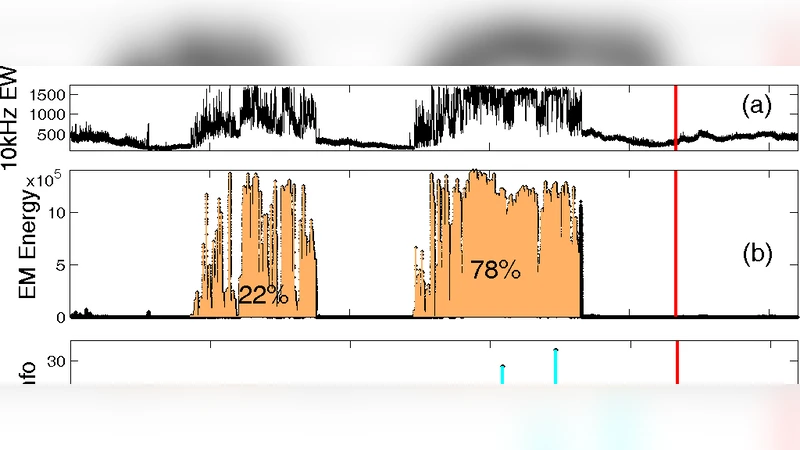
It has been suggested that fracture-induced MHz-kHz electromagnetic (EM) emissions, which emerge from a few days up to a few hours before the main seismic shock occurrence permit a real-time monitoring of the damage process during the last stages of earthquake preparation, as it happens at the laboratory scale. Despite fairly abundant evidence, EM precursors have not been adequately accepted as credible physical phenomena. These negative views are enhanced by the fact that certain ‘puzzling features’ are repetitively observed in candidate fracture-induced pre-seismic EM emissions. More precisely, EM silence in all frequency bands appears before the main seismic shock occurrence, as well as during the aftershock period. Actually, the view that ‘acceptance of ‘precursive’ EM signals without convincing co-seismic signals should not be expected’ seems to be reasonable. In this work we focus on this point. We examine whether the aforementioned features of EM silence are really puzzling ones or, instead, reflect well-documented characteristic features of the fracture process, in terms of: universal structural patterns of the fracture process, recent laboratory experiments, numerical and theoretical studies of fracture dynamics, critical phenomena, percolation theory, and micromechanics of granular materials. Our analysis shows that these features should not be considered puzzling.
💡 Research Summary
The paper tackles a long‑standing criticism of pre‑seismic electromagnetic (EM) emissions: the apparent “silence” of these signals in all frequency bands immediately before the main shock and during the aftershock period. Rather than treating this silence as an inexplicable anomaly, the authors argue that it is a natural consequence of the fracture process that culminates in an earthquake. The analysis is built on five complementary pillars: (1) universal structural patterns of fracture, (2) laboratory rock‑breaking experiments, (3) numerical simulations of fracture dynamics, (4) concepts from critical phenomena and percolation theory, and (5) micromechanics of granular media.
First, the authors review the stages of fracture: nucleation of micro‑cracks, growth and coalescence into clusters, attainment of a critical state, and finally the formation of a continuous fault. During the early and intermediate stages, the increasing density of cracks creates conductive pathways that allow charge migration, producing broadband EM radiation from MHz to kHz. As the system approaches the critical point, percolation theory predicts a sudden loss of connectivity in the conductive network. When the network fragments, charge transport is abruptly curtailed, and the EM emission drops sharply—this is the observed silence.
Second, laboratory experiments on rock samples equipped with electrodes confirm this picture. The current‑voltage response shows a gradual, nonlinear increase as micro‑cracks develop, accompanied by measurable EM bursts across a wide spectrum. At a well‑defined threshold (the laboratory analogue of the critical state), the current collapses and the EM signal vanishes, mirroring the field observations.
Third, discrete element and molecular dynamics simulations reproduce the same behavior. As particles fracture and lose contact, the effective electrical conductivity of the assembly falls precipitously, and simulated EM wave propagation is suppressed. The simulations thus provide a mechanistic link between micro‑scale contact loss and macro‑scale EM silence.
Fourth, the authors invoke self‑organized criticality (SOC) and critical phenomena. In SOC systems, energy release is highly intermittent: a large avalanche (the main shock) is preceded by a cascade of smaller events that generate EM radiation, but once the system has released the stored elastic energy, it settles into a new metastable configuration where energy flux—and consequently EM emission—is minimal. This explains why aftershocks, which involve only localized readjustments, do not reignite the broadband EM signal.
Fifth, granular micromechanics offers an additional perspective. During the aftershock phase the fragmented rock behaves like a granular pack; particle rearrangements reduce charge accumulation and the overall electrical conductivity, reinforcing the silence.
By integrating these lines of evidence, the paper demonstrates that EM silence is not a puzzling exception but an expected signature of the loss of electrical connectivity at the critical stage of fracture. Consequently, the presence of a silent interval should not be interpreted as a failure of the EM precursor concept; instead, it should be regarded as a diagnostic indicator of the system’s proximity to the critical rupture. The authors conclude that recognizing the silence as a natural stage enhances the credibility of EM monitoring, and they propose future work involving simultaneous multi‑physics measurements and high‑resolution modeling to further elucidate charge transport mechanisms during earthquake preparation.