Co-Evolution of Friendship and Publishing in Online Blogging Social Networks
In the past decade, blogging web sites have become more sophisticated and influential than ever. Much of this sophistication and influence follows from their network organization. Blogging social networks (BSNs) allow individual bloggers to form contact lists, subscribe to other blogs, comment on blog posts, declare interests, and participate in collective blogs. Thus, a BSN is a bimodal venue, where users can engage in publishing (post) as well as in social (make friends) activities. In this paper, we study the co-evolution of both activities. We observed a significant positive correlation between blogging and socializing. In addition, we identified a number of user archetypes that correspond to “mainly bloggers,” “mainly socializers,” etc. We analyzed a BSN at the level of individual posts and changes in contact lists and at the level of trajectories in the friendship-publishing space. Both approaches produced consistent results: the majority of BSN users are passive readers; publishing is the dominant active behavior in a BSN; and social activities complement blogging, rather than compete with it.
💡 Research Summary
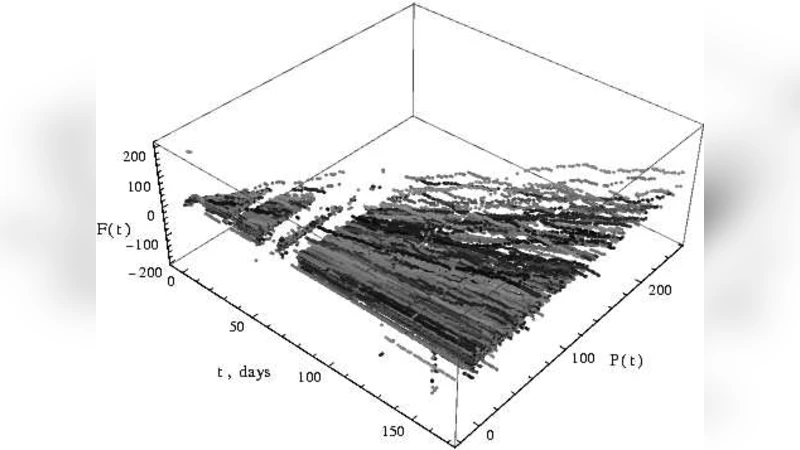
The paper investigates the joint dynamics of publishing and social activities within a blogging social network (BSN), using LiveJournal as a case study. Approximately 2,000 randomly selected LiveJournal accounts were monitored over a 140‑day period in 2011, resulting in 1,836 valid user trajectories after filtering out extreme outliers. Each user’s activity is represented as a three‑dimensional trajectory T = {t, P(t), F(t)} where t is time, P(t) the cumulative number of posts, and F(t) the cumulative number of friends.
Two complementary analytical approaches are employed. At the microscopic level, the trajectories are discretized into event sequences comprising post additions (Π+), friend additions (Φ+), friend removals (Φ−), and rare combined events (ΠΦ). For each user a 16‑dimensional transition‑probability vector ψ_T is computed, capturing the likelihood of each event following another. Euclidean distance‑based clustering yields twelve micro‑clusters (µ_k), each characterized by dominant transition patterns. These clusters map onto four behavioral archetypes: “readers” (no observable events), “mainly bloggers,” “mainly socializers,” and “blogger‑socializers.” Markov‑chain visualizations show that the most frequent transition is Π+→Π+, indicating repeated posting, while social events occur less often but follow recognizable patterns.
At the macroscopic level, each trajectory is fitted with a quadratic function G(t) = a₀ + a₁t + a₂t² for both P(t) and F(t). Depending on the sign and magnitude of a₁ and a₂, the dynamics are classified into seven shapes (constant, linear increase/decrease, super‑linear, sub‑linear, etc.). Combining the classifications for publishing and friendship yields 49 macro‑clusters (M_PF). The largest macro‑cluster (41 % of users) exhibits constant P and F, corresponding to “readers.” Other prominent macro‑clusters represent “mainly bloggers” (≈15 %), “blogger‑socializers” (≈9 %), and a small “mainly socializer” group (≈3 %). Notably, a strong linear relationship F ≈ 9 · P is observed across most trajectories, indicating that friend acquisition scales proportionally with posting activity.
Comparing the two methods reveals overall agreement on the dominance of passive readers, but the macro‑level analysis underestimates the socializer proportion because it averages out small, frequent friend‑addition/removal events that are captured in the micro‑level transition vectors.
The study concludes that publishing and socializing in LiveJournal are positively correlated: active bloggers tend to acquire friends faster than inactive users. However, the majority of users are passive consumers, and social activities tend to complement rather than compete with publishing. These findings suggest that encouraging content creation can simultaneously drive network growth, offering practical insights for the design and management of online communities.
Comments & Academic Discussion
Loading comments...
Leave a Comment