How science maps reveal knowledge transfer: new measurement for a historical case
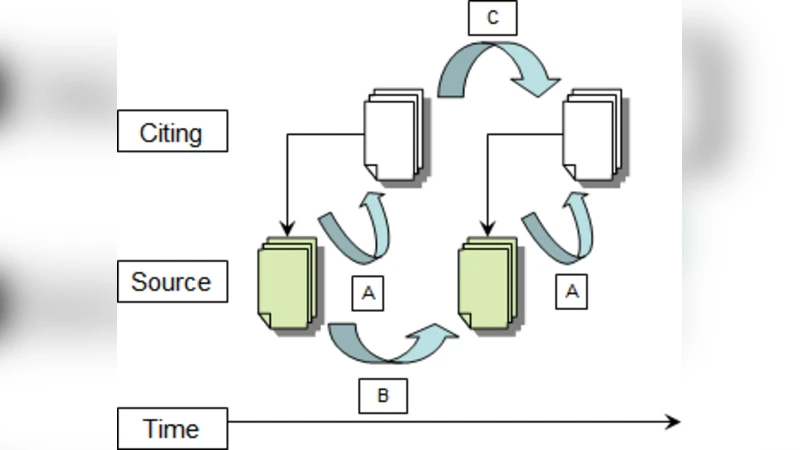
Modelling actors of science via science (overlay) maps has recently become a popular practice in Interdisciplinarity Research (IDR). The benefits of this toolkit have also been recognized for other areas of scientometrics, such as the study of science dynamics. In this paper we propose novel methods of measuring knowledge diffusion/integration based on previous applications of the overlay methodology. New indices called Mean Overlay Distance and Overlay Diversity Ratio, respectively, are being drawn from previous uses of the Stirling index as the main proxy for knowledge diversification. We demonstrate the added value of this proposal via a case study addressing the development of a rather complex discourse in biology, usually referred to as the Species Problem. The selected topic is known for a history connecting various research fields and traditions, being, therefore, both an ideal and challenging case for the study of knowledge diffusion.
💡 Research Summary
The paper introduces two novel quantitative indicators—Mean Overlay Distance (MOD) and Overlay Diversity Ratio (ODR)—to measure knowledge diffusion and integration using science overlay maps combined with the Stirling diversity index. While overlay maps have become a popular visual tool for mapping the disciplinary composition of research outputs, existing applications of the Stirling index have largely been static, capturing diversity at a single point in time without accounting for temporal dynamics. To address this gap, the authors propose MOD, which quantifies the average spatial distance between two sets of publications (e.g., successive years) in a multidimensional topic space derived from subject categories and keyword vectors. By calculating the mean Euclidean or cosine distance between all pairs of papers across the two sets, MOD reflects how far the “knowledge footprint” has moved over time. Complementarily, ODR is defined as the ratio of the Stirling diversity values of the later set to the earlier set; values greater than one indicate an increase in disciplinary diversity, while values below one signal convergence.
The methodology is demonstrated on a historically complex case: the “Species Problem” in biology, a debate concerning the definition and boundaries of biological species that has involved philosophers, systematists, molecular biologists, ecologists, and more. The authors extracted all relevant articles from the Web of Science spanning 1970‑2020, constructed topic vectors for each article using TF‑IDF‑weighted keywords and WoS categories, and reduced dimensionality with a combination of PCA and t‑SNE. For each year, the collection of articles was overlaid onto a base science map, producing a series of yearly overlay maps. MOD and ODR were then computed pairwise between consecutive years, yielding a time series that captures both the magnitude of knowledge shift (MOD) and the direction of diversity change (ODR).
Empirical results reveal distinct phases in the evolution of the Species Problem. In the early 1990s, the emergence of molecular techniques and systems ecology introduced new conceptual tools, leading to a sharp rise in MOD and an ODR exceeding 1, indicating both a spatial shift and an expansion of disciplinary diversity. The introduction of DNA barcoding (mid‑1990s) produced the highest MOD values, reflecting a rapid re‑orientation of research focus. By the mid‑2000s, the field reconsolidated around phylogenetics and biogeography; MOD declined and ODR fell below 1, signifying a contraction of the knowledge space and reduced diversity. A second wave of diffusion began after 2010, when data science and network theory were applied to species delimitation, again raising MOD and pushing ODR above unity, suggesting a renewed interdisciplinary expansion.
The discussion emphasizes that MOD and ODR together provide a richer picture than citation counts or simple publication tallies. MOD captures the “distance” of knowledge migration, identifying moments when new paradigms emerge or old ones fade, while ODR quantifies whether such migrations are accompanied by diversification or convergence of disciplinary inputs. The authors argue that these metrics are broadly applicable to other research topics, policy‑relevant technology domains, or emerging scientific fields, offering a systematic way to monitor knowledge dynamics for funding agencies and research managers.
Limitations are acknowledged: the construction of topic vectors depends on database coverage, keyword extraction, and dimensionality‑reduction choices, all of which can affect distance calculations. The authors propose future work to test alternative distance measures (e.g., Mahalanobis distance), explore non‑linear embedding techniques, and integrate real‑time bibliometric streams to develop a dynamic monitoring dashboard. In sum, the paper contributes a methodological advance that bridges visual science mapping with rigorous quantitative assessment of knowledge diffusion, demonstrated through a historically intricate case study.