Polynomial Transformation Method for Non-Gaussian Noise Environment
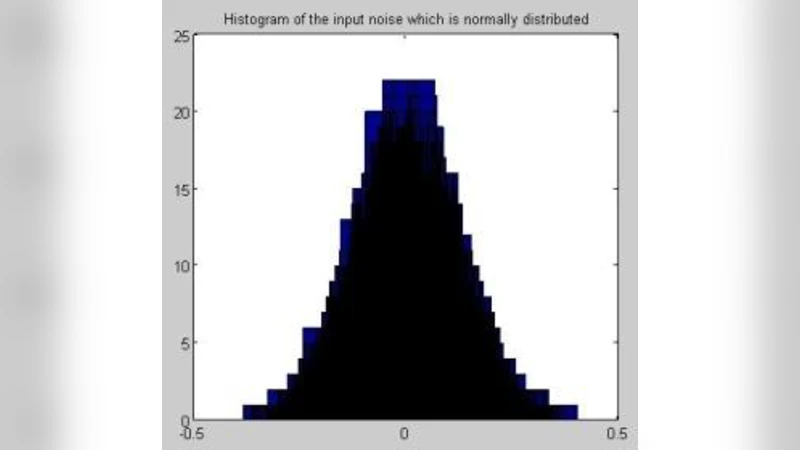
Signal processing in non-Gaussian noise environment is addressed in this paper. For many real-life situations, the additive noise process present in the system is found to be dominantly non-Gaussian. The problem of detection and estimation of signals corrupted with non-Gaussian noise is difficult to track mathematically. In this paper, we present a novel approach for optimal detection and estimation of signals in non-Gaussian noise. It is demonstrated that preprocessing of data by the orthogonal polynomial approximation together with the minimum error-variance criterion converts an additive non-Gaussian noise process into an approximation-error process which is close to Gaussian. The Monte Carlo simulations are presented to test the Gaussian hypothesis based on the bicoherence of a sequence. The histogram test and the kurtosis test are carried out to verify the Gaussian hypothesis.
💡 Research Summary
The paper tackles the long‑standing problem of detecting and estimating signals when the additive noise is markedly non‑Gaussian—a situation that frequently occurs in radar, communications, biomedical instrumentation, and many other real‑world systems. Classical detection and estimation theory is built on the assumption that noise follows a Gaussian distribution, which simplifies analysis because only second‑order statistics are needed. When the noise exhibits heavy tails, skewness, or impulsive behavior, those Gaussian‑based methods become sub‑optimal or even fail.
To address this, the authors propose a two‑stage approach. First, the observed data (x
Comments & Academic Discussion
Loading comments...
Leave a Comment