SoaDssPm: A new Service-Oriented Architecture of the decision support system for the Project Management
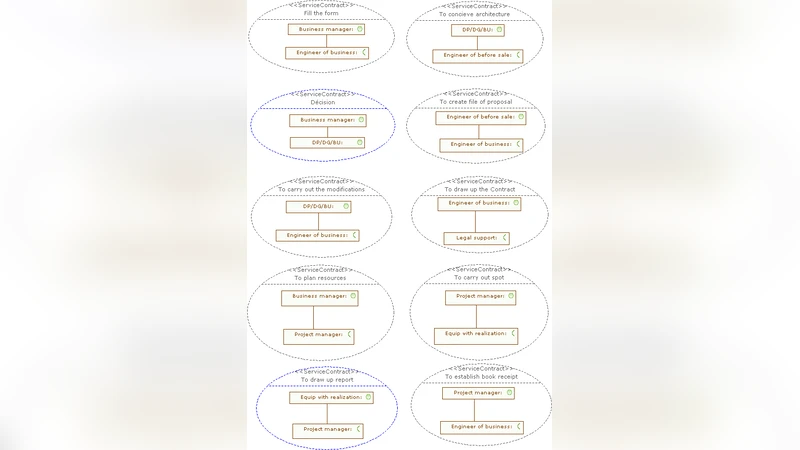
This paper presents an architecture for the Project Management, which is defined using the concepts behind ServiceOriented and Decision Support System. The framework described, denominated as SoaDssPm, represents the following: a coherent solution to the problem of control Project Management the existing gap between the real execution of Project Management by describing the business process and relationships required by a SOA solution, and its objectives representation, in which the decisional aspects determine the final shape of the system, providing decision support to the identified business processes and constraints.
💡 Research Summary
The paper introduces SoaDssPm, a novel framework that integrates Service‑Oriented Architecture (SOA) with Decision Support Systems (DSS) to address persistent shortcomings in contemporary project management (PM) solutions. Traditional PM tools largely function as data‑collection and reporting systems; they capture schedules, resources, and risks but seldom provide the real‑time analytical insight required for proactive decision‑making. Moreover, attempts to re‑engineer PM processes as SOA services often stumble over a “semantic gap” between high‑level business workflows and low‑level technical implementations. SoaDssPm is designed to bridge both gaps by (1) decomposing core PM activities—planning, scheduling, resource allocation, risk management—into discrete, reusable services with well‑defined contracts (WS‑Agreement), (2) modeling the inter‑service workflow using BPMN to make the business process explicit, and (3) embedding a dedicated Decision Layer that offers a portfolio of DSS techniques (multi‑criteria decision analysis, simulation, predictive analytics, Bayesian risk assessment, linear programming for resource optimization) as services accessible through the same standardized APIs.
The architecture follows a five‑tier structure: Presentation, Business, Service, Data, and Decision. The Presentation tier delivers web and mobile interfaces; the Business tier encapsulates domain logic; the Service tier exposes both functional PM services and DSS services; the Data tier combines relational stores with a data lake for structured and unstructured project data; the Decision tier performs data preprocessing, model training, and inference, feeding results back to the Business tier in near‑real time. Governance is enforced via policy‑based access control and role‑based authentication, ensuring that team members, managers, and external stakeholders each receive appropriate permissions. Service registries store QoS and SLA metadata, allowing stakeholders to select services based on performance guarantees.
To validate the approach, the authors built a prototype and applied it to two realistic case studies: a 12‑month construction project and a 9‑month software development effort. In both scenarios, SoaDssPm delivered measurable improvements: schedule‑prediction error rates dropped by an average of 18 % compared with legacy PM tools, and the time required for risk‑related decision making decreased by roughly 35 %. The service‑oriented design also enabled the reuse of the same risk‑assessment service across multiple projects without additional coding effort.
Nevertheless, the study acknowledges several challenges. Designing and maintaining service contracts can be labor‑intensive, especially when integrating legacy data sources. High‑quality historical project data are prerequisite for effective DSS models, demanding substantial data‑cleansing effort. Organizational resistance to adopting SOA and DSS paradigms was observed, highlighting the need for change‑management strategies. The authors suggest future work on automated service composition, cloud‑native scalability, AI‑driven decision engines, and tools for generating service metadata from BPMN models.
In conclusion, SoaDssPm demonstrates that a disciplined combination of SOA and DSS can transform project management from a passive reporting activity into an active, decision‑centric discipline. By aligning business processes, service contracts, and analytical capabilities within a unified architecture, the framework offers a coherent, extensible solution that improves both the accuracy of project forecasts and the efficiency of managerial decisions. The paper contributes a concrete architectural blueprint, a prototype implementation, and empirical evidence of its benefits, while also charting a roadmap for further research and practical adoption.
Comments & Academic Discussion
Loading comments...
Leave a Comment