Directed d-mer diffusion describing Kardar-Parisi-Zhang type of surface growth
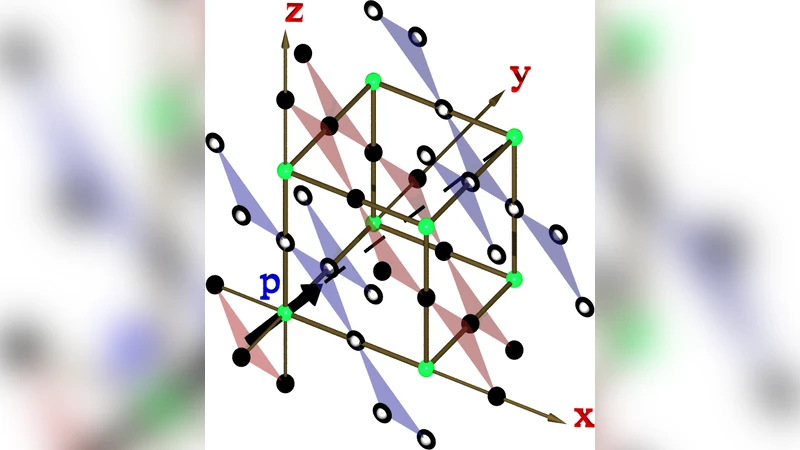
We show that d+1-dimensional surface growth models can be mapped onto driven lattice gases of d-mers. The continuous surface growth corresponds to one dimensional drift of d-mers perpendicular to the (d-1)-dimensional “plane” spanned by the d-mers. This facilitates efficient, bit-coded algorithms with generalized Kawasaki dynamics of spins. Our simulations in d=2,3,4,5 dimensions provide scaling exponent estimates on much larger system sizes and simulations times published so far, where the effective growth exponent exhibits an increase. We provide evidence for the agreement with field theoretical predictions of the Kardar-Parisi-Zhang universality class and numerical results. We show that the (2+1)-dimensional exponents conciliate with the values suggested by Lassig within error margin, for the largest system sizes studied here, but we can’t support his predictions for (3+1)d numerically.
💡 Research Summary
The paper presents a novel mapping of the Kardar‑Parisi‑Zhang (KPZ) surface‑growth problem onto a driven lattice‑gas model composed of “d‑mers”, i.e., clusters of d adjacent spins. By discretising the continuous height field h(x,t) on a (d+1)‑dimensional lattice and assigning a binary spin σ = ±1 to each site, the authors group d consecutive spins into a single d‑mer. The d‑mers lie on a (d‑1)‑dimensional hyperplane and the whole surface evolution is interpreted as a one‑dimensional drift of these objects perpendicular to that plane. In this picture, an upward step of the surface corresponds to a forward hop of a d‑mer, while a downward step corresponds to a backward hop. The dynamics is a generalized Kawasaki exchange: two neighboring d‑mers may swap positions only if the exchange respects the KPZ non‑linear term λ(∇h)², thereby ensuring that the microscopic particle motion reproduces the macroscopic KPZ equation.
To make large‑scale simulations feasible, the authors implement a bit‑coded algorithm. Each spin is stored as a single bit, and the presence of a d‑mer is detected by fast bit‑wise operations. This compression dramatically reduces memory consumption and maximises cache efficiency, yielding speed‑ups of one to two orders of magnitude compared with conventional Monte‑Carlo implementations. Using this method they simulate systems up to 10⁹ sites in two dimensions and up to several hundred million sites in three, four and five dimensions, with time steps extending to 10⁶–10⁷ Monte‑Carlo sweeps.
The main observable is the surface roughness W(L,t)=⟨
Comments & Academic Discussion
Loading comments...
Leave a Comment