Mapping of 2+1-dimensional Kardar-Parisi-Zhang growth onto a driven lattice gas model of dimer
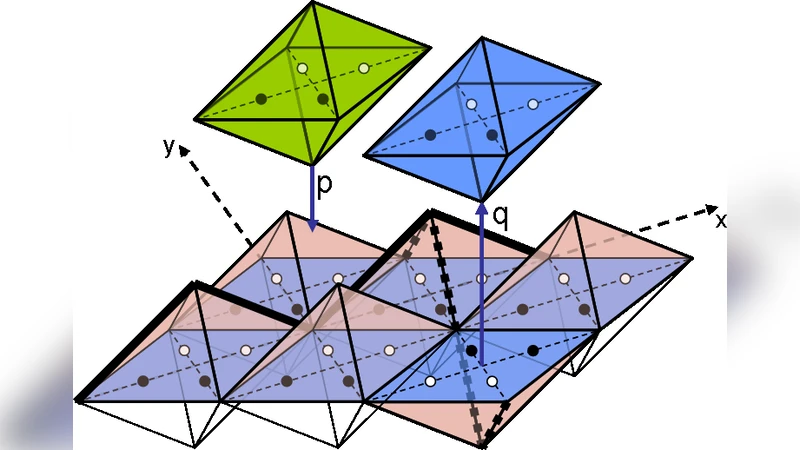
We show that a 2+1 dimensional discrete surface growth model exhibiting Kardar-Parisi-Zhang (KPZ) class scaling can be mapped onto a two dimensional conserved lattice gas model of directed dimers. In case of KPZ height anisotropy the dimers follow driven diffusive motion. We confirm by numerical simulations that the scaling exponents of the dimer model are in agreement with those of the 2+1 dimensional KPZ class. This opens up the possibility of analyzing growth models via reaction-diffusion models, which allow much more efficient computer simulations.
💡 Research Summary
The paper presents a rigorous mapping of a discrete surface‑growth model that belongs to the 2+1‑dimensional Kardar‑Parisi‑Zhang (KPZ) universality class onto a conserved lattice‑gas model consisting of directed dimers on a two‑dimensional substrate. The authors begin by reviewing the well‑known correspondence between the one‑dimensional KPZ equation and simple exclusion processes, emphasizing that this approach does not extend straightforwardly to higher dimensions because the height differences involve simultaneous updates of multiple neighboring sites. To capture the essential two‑site coupling in 2+1 dimensions, they introduce “dimers” – pairs of adjacent lattice sites that together encode a local slope. A dimer occupies a bond oriented along one of the two diagonal directions (e.g., the (1,1) direction) and is defined whenever the binary height variables of the two sites form the pattern (1,0) or (0,1).
The dynamics are defined as follows: at each Monte‑Carlo step a dimer attempts to hop one lattice spacing along its orientation with probability p. The move is accepted only if the target bond is empty and the local exclusion constraints (no overlapping dimers) are satisfied, thereby guaranteeing particle‑number conservation and hard‑core repulsion. This rule implements the non‑linear term (∇h)² of the KPZ equation as a directed drift of the dimers, while the stochastic hopping reproduces the additive white noise. The model can be viewed as a two‑dimensional generalization of the asymmetric simple exclusion process (ASEP), but with composite particles (dimers) rather than single particles.
Extensive numerical simulations were performed on square lattices of linear sizes L = 256, 512, and 1024, each evolved up to 10⁶ Monte‑Carlo steps. The authors measured the surface width W(t) = ⟨
Comments & Academic Discussion
Loading comments...
Leave a Comment