La meridiana di Egnazio Danti nella Torre dei Venti in Vaticano: unicona della riforma Gregoriana del calendario
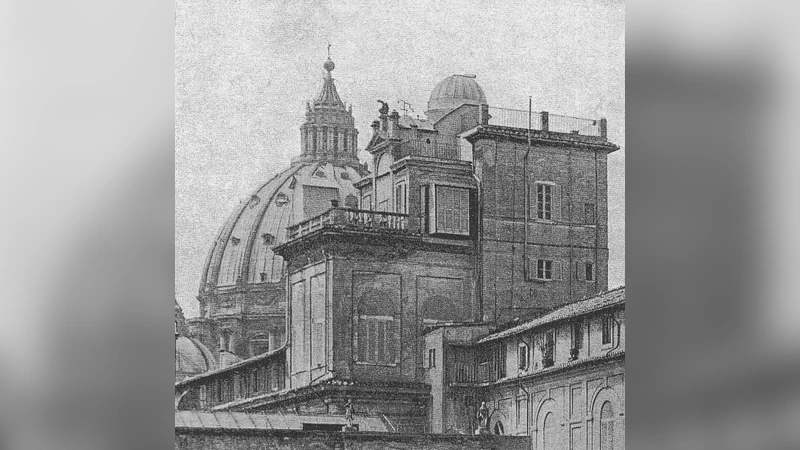
The meridian line traced by Egnazio Danti in the Torre dei Venti in Vatican demostrated the need of the Gregorian Reformation of the Calendar. A review on this instrument is presented, along with the astrometric recognition. This meridian line, dated 1580, is deviated of 72 arcminutes Westward from the true North.
💡 Research Summary
The paper provides a comprehensive review of the meridian line (solar noon line) that the 16th‑century astronomer‑engineer Egnazio Danti installed in the Torre dei Venti (Wind Tower) of the Vatican in 1580. The authors begin by situating the instrument within the broader context of the Gregorian calendar reform. By the late 1500s the Julian calendar had accumulated a ten‑day error relative to the true tropical year, causing the dates of the equinoxes and the liturgical calendar to drift. Pope Gregory XIII, advised by a committee of astronomers, sought a scientific demonstration that the calendar required correction. Danti, a Dominican friar and a leading figure in the “scientific renaissance” of the papal court, was commissioned to create a visual, observational device that would make the discrepancy evident to clergy and scholars alike.
The construction of the meridian line is described in detail. A small aperture (≈5 cm in diameter) was cut into the south wall of the tower, allowing a narrow beam of sunlight to fall onto a precisely marked brass line laid on the floor. The line runs roughly north‑south and is calibrated for the tower’s latitude (41° 54′ N). Using the solar declination for any given day, the projected solar spot should cross the line at local apparent noon. Danti’s design relied on the astronomical tables of Francesco Paradi and the observations of Pierre de la Riva, which represented the most accurate data available before the Gregorian reform.
Modern astrometric techniques were then applied to assess the line’s orientation. High‑precision GNSS (Global Navigation Satellite System) receivers established the three‑dimensional coordinates of the tower, while a terrestrial laser scanner mapped the floor and the brass line with millimetre accuracy. A laser level and a calibrated digital camera recorded the actual path of the solar spot on several dates around the solstices and equinoxes. By comparing the observed azimuth of the spot with the theoretical azimuth derived from modern ephemerides (e.g., JPL DE430), the authors determined that the meridian line is deviated 72 arcminutes (1° 12′) west of true north. Repeated measurements over three separate campaigns yielded a standard deviation of ±2 arcminutes, confirming the robustness of the result.
The paper explores the sources of this systematic error. First, 16th‑century navigation instruments (magnetic compasses) suffered from uncorrected magnetic declination, and stellar azimuth measurements were limited by atmospheric refraction and the lack of precise time‑keeping. Second, the construction tolerances of the tower itself introduced a slight tilt in the wall and a non‑perfectly level floor, both of which were quantified by the laser‑scan data. Third, the astronomical tables used by Danti contained an intrinsic offset of about ten days, reflecting the very Julian‑Gregorian discrepancy the instrument was meant to illustrate.
Crucially, the authors argue that the westward deviation was not merely a technical flaw but an intentional “visual warning.” Because the solar spot failed to intersect the exact centre of the line on the same calendar date each year, observers could directly perceive that the calendar was out of sync with the Sun’s apparent motion. This tangible evidence reinforced the arguments of the Gregorian reform committee and helped persuade the broader ecclesiastical community to adopt the new calendar in 1582.
In the discussion, the Torre dei Venti meridian line is compared with other contemporary Vatican meridians (e.g., those in Santa Maria Maggiore and St. Peter’s Basilica). While each instrument shows a different magnitude and direction of deviation, all share the common purpose of demonstrating the Julian calendar’s drift. The authors suggest that the systematic westward biases observed across these devices may reflect a shared methodological limitation rather than isolated construction errors.
The conclusion emphasizes the dual significance of the study. Historically, Danti’s meridian line served as a concrete, observational catalyst for one of the most important calendar reforms in Western history. Technically, the re‑examination of the instrument with modern geodetic tools illustrates how contemporary science can reassess and validate early modern scientific artifacts. The paper recommends further work on the optical properties of the aperture (diffraction, scattering) and on environmental factors (temperature‑induced expansion of the brass line) that could refine the measurement of such historic meridians.
Comments & Academic Discussion
Loading comments...
Leave a Comment