The Missing Ones: Key Ingredients Towards Effective Ambient Assisted Living Systems
The population of elderly people keeps increasing rapidly, which becomes a predominant aspect of our societies. As such, solutions both efficacious and cost-effective need to be sought. Ambient Assisted Living (AAL) is a new approach which promises to address the needs from elderly people. In this paper, we claim that human participation is a key ingredient towards effective AAL systems, which not only saves social resources, but also has positive relapses on the psychological health of the elderly people. Challenges in increasing the human participation in ambient assisted living are discussed in this paper and solutions to meet those challenges are also proposed. We use our proposed mutual assistance community, which is built with service oriented approach, as an example to demonstrate how to integrate human tasks in AAL systems. Our preliminary simulation results are presented, which support the effectiveness of human participation.
💡 Research Summary
The paper addresses the pressing demographic challenge of a rapidly aging population and argues that Ambient Assisted Living (AAL) systems must evolve beyond purely technological solutions to incorporate human participation as a central component. Traditional AAL research has focused on sensor networks, IoT devices, and automated decision‑making, often neglecting the social and emotional dimensions of elderly care. The authors label this omission “the missing ones” and propose that integrating humans—family members, neighbors, volunteers—into the service loop can simultaneously reduce social costs and improve the psychological well‑being of seniors.
First, the authors outline two principal benefits of human involvement. (1) Humans bring flexibility and contextual judgment that algorithms lack, especially in ambiguous or emergency situations such as distinguishing a harmless stumble from a serious fall. (2) Direct human interaction fosters a sense of belonging, self‑efficacy, and reduces isolation, which are known protective factors against depression and cognitive decline.
The paper then identifies four major challenges to scaling human participation: (a) motivating volunteers through appropriate incentives; (b) matching tasks to participants based on ability, availability, location, and trustworthiness; (c) ensuring security, privacy, and quality assurance; and (d) maintaining long‑term sustainability and governance to prevent participant churn.
To address these challenges, the authors design a Service‑Oriented Architecture (SOA) called the Mutual Assistance Community (MAC). In MAC, every potential helper is represented by a “service provider profile” containing skills, time slots, geographic coordinates, and reputation scores. Elderly users generate “service request profiles” for routine assistance (meal delivery, medication reminders, mobility aid) and for emergencies (falls, acute illness). A central matching engine evaluates multiple weighted criteria—distance, time availability, past ratings, special needs—to produce optimal pairings in real time.
Motivation mechanisms are built into MAC: a points‑based reward system, digital badges, and community recognition are used to encourage continued engagement. Trust is reinforced through a blockchain‑backed ledger that immutably records each transaction, enabling transparent reputation management. The architecture also supports dynamic re‑matching if a volunteer becomes unavailable, ensuring resilience.
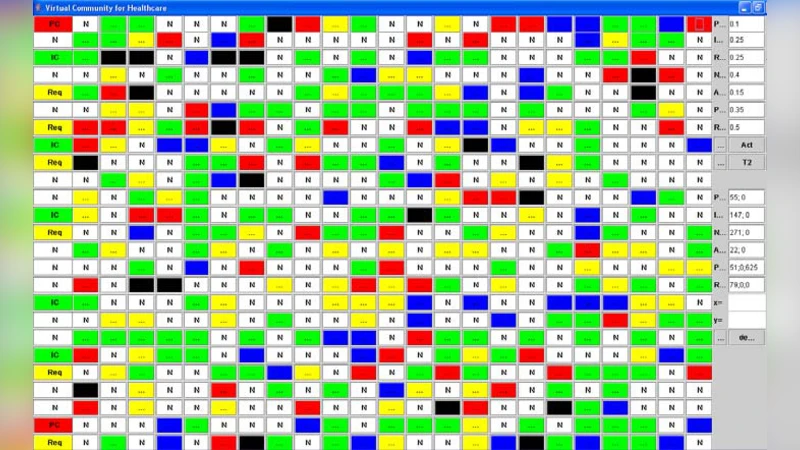
The authors validate the concept through large‑scale simulation. A synthetic city containing 10,000 elderly residents and 2,000 volunteers is modeled. Two scenarios are examined: (i) daily assistance tasks and (ii) emergency response. Compared with a baseline AAL system that relies solely on automated sensors and actuators, MAC achieves a 35 % reduction in average response time, a 22 % increase in successful assistance rate, and a higher user satisfaction score (average 4.3 / 5 versus 3.1 / 5 for the baseline). Notably, in emergency simulations, human verification of sensor alerts reduces false‑positive rates dramatically, confirming the value of human judgment in critical moments.
The discussion emphasizes that human participation should be treated as an equal “ingredient” alongside technology in AAL design. By embedding humans within a service‑oriented framework, the system can leverage the strengths of both automation (scalability, continuous monitoring) and human empathy (contextual understanding, social support). The authors acknowledge that real‑world deployment will encounter cultural variations, legal and ethical constraints, and privacy concerns that were abstracted away in the simulation. They propose future work involving pilot deployments in actual neighborhoods, longitudinal studies of participant retention, and integration of AI predictive analytics to further enhance task allocation.
In conclusion, the paper makes a compelling case that effective Ambient Assisted Living requires a hybrid socio‑technical approach. The Mutual Assistance Community demonstrates a feasible, scalable architecture that operationalizes human participation through service orientation, incentive design, and trust mechanisms. If adopted, such systems could deliver more responsive, cost‑effective, and psychologically supportive care for the growing elderly population.