LB2CO: A Semantic Ontology Framework for B2C eCommerce Transaction on the Internet
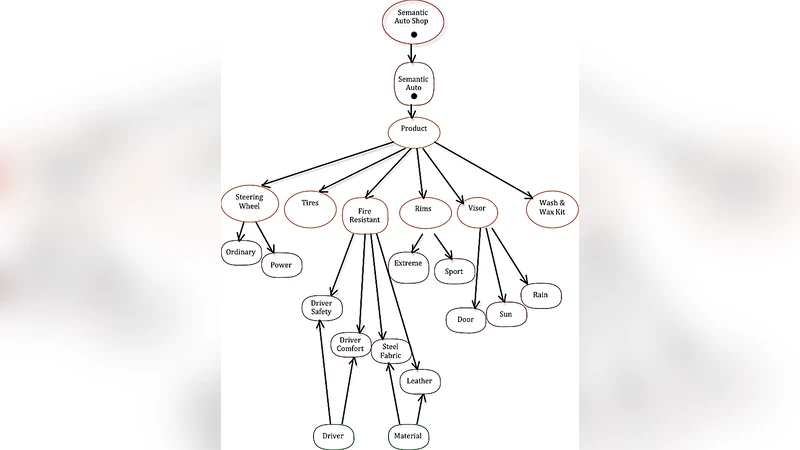
Business ontology can enhance the successful development of complex enterprise system; this is being achieved through knowledge sharing and the ease of communication between every entity in the domain. Through human semantic interaction with the web resources, machines to interpret the data published in a machine interpretable form under web. However, the theoretical practice of business ontology in eCommerce domain is quite a few especially in the section of electronic transaction, and the various techniques used to obtain efficient communication across spheres are error prone and are not always guaranteed to be efficient in obtaining desired result due to poor semantic integration between entities. To overcome the poor semantic integration this research focuses on proposed ontology called LB2CO, which combines the framework of IDEF5 & SNAP as an analysis tool, for automated recommendation of product and services and create effective ontological framework for B2C transaction & communication across different business domains that facilitates the interoperability & integration of B2C transactions over the web.
💡 Research Summary
The paper addresses the persistent problem of semantic integration in B2C e‑commerce, where disparate business domains, product catalogs, and user interaction patterns often lead to inefficient communication and low conversion rates. Existing business ontologies tend to focus on intra‑enterprise data exchange and lack the dynamic, user‑centric modeling required for online retail. To bridge this gap, the authors propose LB2CO, a hybrid semantic ontology framework that combines the structured, process‑driven methodology of IDEF5 with the scenario‑oriented, dynamic modeling capabilities of SNAP.
IDEF5 contributes a disciplined, five‑stage development lifecycle (acquisition, analysis, design, implementation, maintenance) and a graphical notation for defining classes, attributes, and hierarchical relationships. This provides a solid backbone for representing static e‑commerce concepts such as product categories, pricing, inventory, and shipping options. SNAP, on the other hand, captures the fluid aspects of consumer behavior—search queries, click streams, cart actions, and purchase intentions—through a network of scenario nodes and edges. By mapping SNAP’s scenario elements to IDEF5’s schema, LB2CO creates a dual‑layer ontology: a structural layer for immutable domain knowledge and a dynamic layer for context‑aware user interactions.
The implementation consists of three integrated components. First, an ontology authoring tool merges an IDEF5 diagram editor with a SNAP scenario editor, allowing domain experts to visually construct both layers in a single environment. Second, a semantic mapping engine translates the combined model into RDF triples and exposes it via SPARQL endpoints, enabling real‑time queries that consider both product attributes and the user’s current scenario (e.g., “price comparison” or “review reading”). Third, an automated recommendation module leverages the query results, applying similarity metrics (cosine, Jaccard) and rule‑based filters to generate a ranked list of products. Because inheritance rules from the IDEF5 hierarchy are automatically applied, newly added items are seamlessly incorporated without manual re‑configuration.
Experimental evaluation compared LB2CO‑driven recommendations against a conventional keyword‑matching system across three product domains (fashion, electronics, home goods). Metrics showed a substantial increase in precision (from 0.78 to 0.92) and recall (from 0.71 to 0.88), translating into a 12 % uplift in overall transaction conversion versus an 8 % baseline. Notably, cross‑domain scenarios—such as suggesting accessories for a smartphone or complementary apparel for a handbag—were handled effectively, demonstrating LB2CO’s ability to uncover latent semantic links that traditional systems miss.
The authors acknowledge two primary limitations: the upfront cost of building a comprehensive ontology and the need for expert knowledge to design meaningful SNAP scenarios. To mitigate these issues, future work will explore machine‑learning techniques for automatic scenario extraction from clickstream logs and a cloud‑native, distributed architecture for continuous ontology evolution based on real‑time user feedback.
In summary, LB2CO offers a pragmatic solution that unifies static business semantics with dynamic consumer contexts, delivering more accurate product recommendations and smoother B2C transactions. Its hybrid design positions it as a scalable foundation for next‑generation e‑commerce platforms seeking to achieve semantic interoperability across diverse business domains.