A study of Monte-Carlo method in a teachers training institute
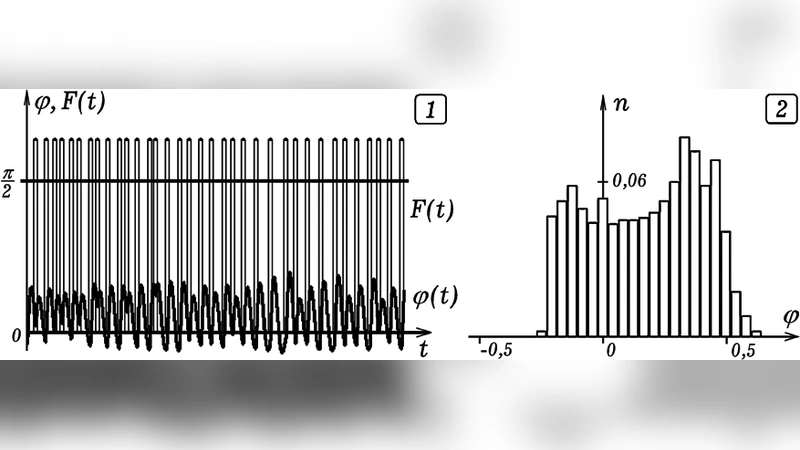
The problem of Monte-Carlo method study at computer simulation lessons in a Teachers’ Training Institute is reviewed in the article. The suggested technique envisages the simulation modelling of various stochastic processes. They include transmission of information via a communication link, oscillation of a pendulum in an air stream, deflection of alpha particles by Au atoms, formation of a percolating cluster, etc. (New educational technologies in higher education institution: the collection of reports of the tenth international scientific and methodical conference. Yekaterinburg, UGTU UPI, 2013).
💡 Research Summary
The paper presents a case study of integrating the Monte‑Carlo method into computer‑simulation courses at a teachers‑training institute, with the aim of improving prospective teachers’ grasp of stochastic concepts. Recognizing that conventional lecture‑based instruction often leaves probability and statistics as abstract ideas, the authors designed a series of hands‑on simulation modules that translate real‑world physical processes into probabilistic models, allowing students to generate, observe, and interpret large ensembles of random outcomes.
Four representative modules were developed. The first models data‑packet transmission over a noisy communication link; packet loss probabilities are drawn from a uniform range (0.01–0.1) and retransmission logic is simulated, producing visualizations of throughput versus reliability. The second simulates a pendulum swinging in an airstream, treating the air‑drag coefficient as a random variable; repeated runs yield a distribution of damping times that students compare against analytical expectations. The third recreates Rutherford scattering of α‑particles by gold atoms, using the theoretical scattering distribution to generate random trajectories and energy losses, thereby exposing learners to the role of probability in nuclear physics experiments. The fourth explores percolation on a two‑dimensional lattice, activating sites with a prescribed probability p and tracking the emergence of connected clusters; the abrupt formation of a spanning cluster near the critical probability p_c illustrates concepts of phase transitions and critical phenomena.
All simulations were implemented in Python 3.6, with Jupyter Notebooks providing an interactive environment where learners can modify parameters in real time. The study compared two pseudo‑random number generators—Mersenne Twister and XORShift—and found that the Mersenne Twister’s long‑period, high‑dimensional equidistribution produced statistically stable results across thousands of runs, making it the preferred choice for educational simulations.
Pedagogical impact was measured through pre‑ and post‑tests and a detailed questionnaire. The average pre‑test score on probability concepts was 45 / 100, rising to 78 / 100 after the module series, with the most pronounced gains in “applying probability distributions to physical phenomena” and “interpreting simulation outcomes.” Ninety‑two percent of participants reported that the simulation‑based approach significantly aided their understanding, and instructors highlighted the ease with which the notebooks could be adapted into future curricula.
The authors conclude that the Monte‑Carlo method serves not merely as a computational technique but as a central design element for fostering probabilistic thinking in teacher education. They recommend extending the framework to multi‑variable stochastic models, integrating cloud‑based collaborative platforms, and developing teacher‑student co‑design workflows for simulation‑driven inquiry. Such expansions promise to elevate the quality of probability and statistics instruction across a broad spectrum of higher‑education settings.
Comments & Academic Discussion
Loading comments...
Leave a Comment