Bangla Text Recognition from Video Sequence: A New Focus
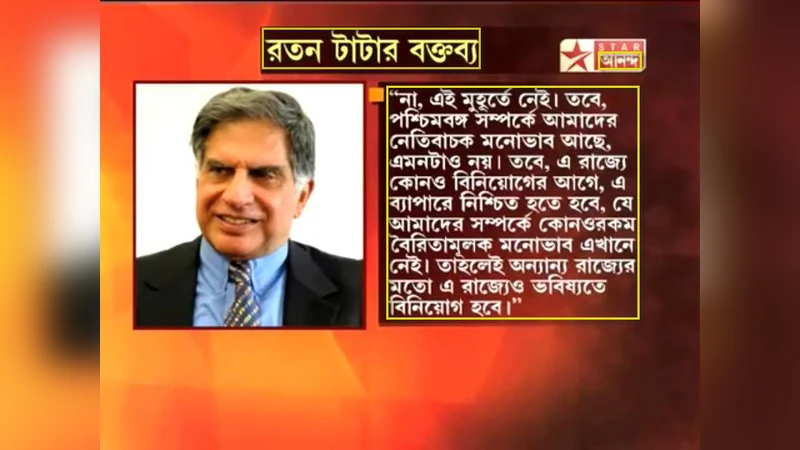
Extraction and recognition of Bangla text from video frame images is challenging due to complex color background, low-resolution etc. In this paper, we propose an algorithm for extraction and recognition of Bangla text form such video frames with complex background. Here, a two-step approach has been proposed. First, the text line is segmented into words using information based on line contours. First order gradient value of the text blocks are used to find the word gap. Next, a local binarization technique is applied on each word and text line is reconstructed using those words. Secondly, this binarized text block is sent to OCR for recognition purpose.
💡 Research Summary
The paper addresses the challenging problem of extracting and recognizing Bangla (Bengali) text from video frames, where complex color backgrounds, low resolution, and motion blur often degrade the quality of the textual content. To tackle these issues, the authors propose a two‑stage pipeline that first isolates individual words from a detected text line and then feeds a binarized version of the line into a conventional OCR engine for character recognition.
Stage 1 – Word segmentation using line contours and first‑order gradients
The method begins by detecting text lines in the video frame using standard edge detection and connectivity analysis. Once a line is identified, its contour (the outer boundary of the line region) is extracted. Within this contour the algorithm computes the horizontal first‑order gradient (the difference between adjacent pixel intensities) across the line. Sharp changes in the gradient indicate potential word boundaries, while regions where the gradient stays below a predefined threshold are interpreted as inter‑word gaps. By leveraging the contour information together with the gradient profile, the line is partitioned into a sequence of word blocks, even when the background is highly non‑uniform.
Stage 2 – Local binarization and line reconstruction
Each word block is processed independently with a local binarization technique (a variant of Sauvola or Niblack). The local method adapts the threshold based on the mean and standard deviation of pixel intensities within a sliding window, preserving thin strokes and small diacritic marks that are typical of Bangla script. After binarization, the word images are concatenated in their original order to reconstruct a full binary text line. This reconstructed line is then supplied to an off‑the‑shelf Bangla OCR system (the paper does not detail any modifications to the OCR engine).
Key contributions
- Hybrid use of line contours and gradient information – By combining geometric contour cues with intensity gradient analysis, the approach can locate word gaps in low‑resolution, noisy video frames where traditional projection‑based methods fail.
- Word‑level local binarization – Applying adaptive binarization at the word granularity reduces computational load compared with global binarization of the entire frame and improves robustness against uneven illumination and background clutter.
- Modular pipeline – The pre‑processing stages are decoupled from the OCR component, allowing the use of existing Bangla OCR engines without retraining.
Limitations and missing evaluation
The manuscript does not present quantitative experiments (e.g., precision, recall, F‑measure) or a benchmark dataset, making it difficult to assess the real‑world performance of the proposed pipeline. The gradient threshold is treated as a fixed parameter; adaptive thresholding or learning‑based boundary detection could improve generalization across diverse video conditions. Moreover, the OCR stage is treated as a black box, with no discussion of how Bangla’s complex conjunct characters (e.g., “য্”, “্”) are handled, nor any language‑model post‑processing to correct OCR errors.
Comparison with prior work
Most prior video text recognition research focuses on Latin‑based scripts, where characters are generally separated by relatively uniform inter‑character spacing. Bangla script, by contrast, features extensive ligatures and vertical stacking of modifiers, which confound simple projection methods. The authors’ contour‑gradient strategy directly addresses this script‑specific challenge, representing a novel contribution in the niche of South‑Asian video text processing.
Practical implications
If validated, the pipeline could be integrated into real‑time applications such as news broadcast caption extraction, social‑media video indexing, or traffic‑sign reading in Bangla‑speaking regions. The word‑level processing and local binarization are computationally lightweight, making them suitable for deployment on mobile or embedded devices that must operate under limited processing budgets.
Future directions
To strengthen the work, the authors should (i) construct or adopt a publicly available Bangla video text dataset, (ii) report standard metrics across multiple video qualities and background complexities, (iii) explore adaptive or learning‑based gradient thresholding, and (iv) consider end‑to‑end deep learning models that jointly learn segmentation, binarization, and recognition, possibly incorporating a Bangla language model to correct OCR output. Such extensions would not only quantify the current method’s advantages but also push the state‑of‑the‑art in Bangla video text recognition toward robust, production‑ready systems.