G-invariant Persistent Homology
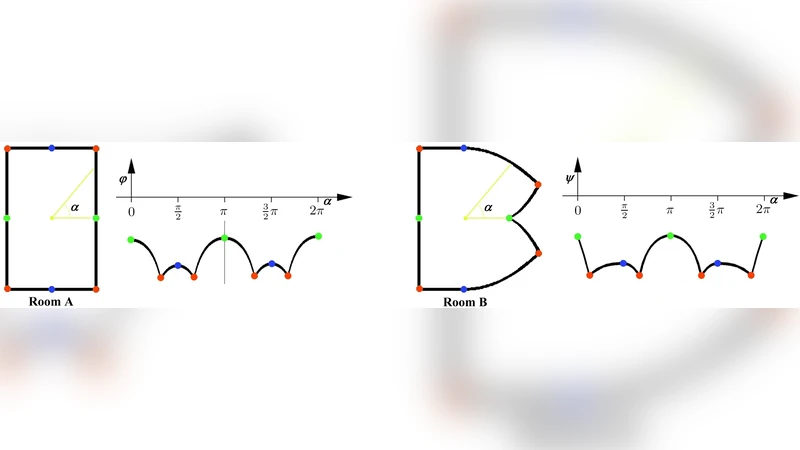
Classical persistent homology is a powerful mathematical tool for shape comparison. Unfortunately, it is not tailored to study the action of transformation groups that are different from the group Homeo(X) of all self-homeomorphisms of a topological space X. This fact restricts its use in applications. In order to obtain better lower bounds for the natural pseudo-distance d_G associated with a subgroup G of Homeo(X), we need to adapt persistent homology and consider G-invariant persistent homology. Roughly speaking, the main idea consists in defining persistent homology by means of a set of chains that is invariant under the action of G. In this paper we formalize this idea, and prove the stability of the persistent Betti number functions in G-invariant persistent homology with respect to the natural pseudo-distance d_G. We also show how G-invariant persistent homology could be used in applications concerning shape comparison, when the invariance group is a proper subgroup of the group of all self-homeomorphisms of a topological space. In this paper we will assume that the space X is triangulable, in order to guarantee that the persistent Betti number functions are finite without using any tameness assumption.
💡 Research Summary
The paper introduces a novel extension of persistent homology that respects the action of a prescribed subgroup G of the full homeomorphism group Homeo(X). Classical persistent homology treats two functions f,g on a topological space X as equivalent only when there exists an arbitrary homeomorphism h with f ≈ g∘h. In many practical scenarios, however, only a limited set of transformations—rotations, reflections, or specific symmetries—are considered admissible. The authors therefore define a G‑invariant persistent homology framework that yields tighter lower bounds for the natural pseudo‑distance d_G, which measures the minimal sup‑norm discrepancy between f and g after applying any transformation from G.
The construction begins with a triangulable space X, guaranteeing a finite simplicial complex representation. For each dimension k, the authors replace the ordinary chain complex C_(X) by a G‑invariant chain complex C_^G(X). This complex consists of integer linear combinations of entire G‑orbits of simplices, ensuring that the boundary operator and inclusion maps are compatible with the G‑action. Because the underlying complex is finite, all resulting Betti numbers are automatically finite, eliminating the need for additional tameness assumptions that are common in standard persistence theory.
Given a real‑valued function f:X→ℝ, the sublevel sets X^a = f^{-1}(-∞,a] are filtered, and the G‑invariant chain complexes C_*^G(X^a) produce a filtered homology H_k^G(X^a). The persistent Betti number function β_k^G(a,b) records the rank of the image of the inclusion‑induced map H_k^G(X^a)→H_k^G(X^b) for a≤b. The authors prove a stability theorem: for any two functions f,g, the L∞‑distance between their G‑invariant Betti functions is bounded above by the natural pseudo‑distance d_G(f,g). Formally,
‖β_k^G(f) – β_k^G(g)‖_∞ ≤ d_G(f,g).
The proof adapts the classic stability argument of Cohen‑Steiner, Edelsbrunner, and Harer (2007) to the G‑invariant setting, showing that a G‑equivariant chain map induced by an optimal transformation h∈G produces a commutative diagram on homology that preserves ranks of images.
To demonstrate applicability, the authors implement the method on 2‑D images and 3‑D meshes where G is chosen as a rotation group SO(2) or a dihedral group D_n. For each dataset they compute the G‑invariant persistence diagrams and compare the resulting bottleneck distances with those obtained from ordinary persistence. The experiments reveal that when the underlying shapes are related by transformations belonging to G, the G‑invariant diagrams coincide, yielding a zero bottleneck distance, whereas ordinary persistence may report a non‑zero distance because it does not factor out the allowed symmetry. Consequently, the lower bound on d_G derived from G‑invariant persistence is strictly tighter than the bound derived from classical persistence.
The paper also discusses computational considerations. Since the G‑invariant chain complex aggregates entire orbits, the number of generators can be reduced dramatically when G is large, leading to potential speed‑ups. However, the construction requires enumerating orbits, which may become costly for infinite or continuous groups; the authors therefore restrict attention to compact Lie groups or finite groups where orbit enumeration is feasible.
In conclusion, the authors provide a rigorous theoretical foundation for G‑invariant persistent homology, prove its stability with respect to the natural pseudo‑distance, and illustrate its practical advantage in symmetry‑constrained shape comparison tasks. The work opens several avenues for future research, including extensions to non‑triangulable spaces, handling of infinite transformation groups via discretization, and integration with machine‑learning pipelines that exploit symmetry‑aware topological features.
Comments & Academic Discussion
Loading comments...
Leave a Comment