Pattern Based Adaptive Architecture for Internet Banking
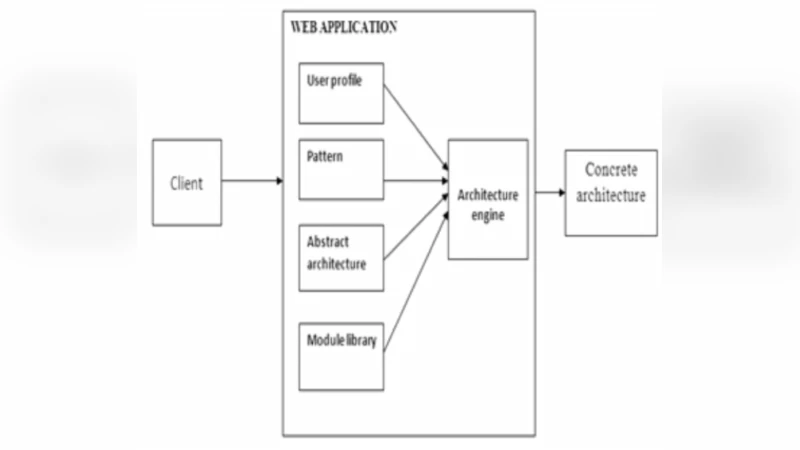
Pattern plays a vital role in software architecture and it is a general reusable solution to commonly occurring problem. Software architecture of a system is the set of structures needed to reason about the system, which comprise software elements, relations among them, and properties of both. Patterns can be implemented at run-time; they identify key resource constraints and best practices. Architecture Pattern expresses a fundamental structural organization or schema for software systems. Patterns in software architecture, offer the promise of helping the architect to identify combinations of Architecture or Solution Building Blocks that have been proven to deliver effective solutions. In Internet banking, we analyzed some attributes such as reliability, security, availability, load balancing and so on. The use of patterns, which is of a reusable component, is a good tool to help designers build load balancing systems. In this paper we are going to propose pattern based adaptive architecture for internet banking system and so the above attributes can be improved by the usage of patterns.
💡 Research Summary
**
The paper proposes a pattern‑based adaptive architecture for Internet banking systems, aiming to improve key quality attributes such as reliability, security, availability, and load‑balancing. It begins with a broad discussion of software architecture and the role of patterns, distinguishing three categories: architectural patterns (high‑level structural templates that define subsystems, responsibilities, and relationships), design patterns (mid‑level, implementation‑independent solutions for micro‑architectures), and idioms (low‑level language‑specific coding guidelines). The authors argue that while patterns are widely used in software engineering, most existing frameworks lack systematic support for runtime adaptation, which is essential for dynamic environments like online banking where traffic spikes, security threats, and regulatory changes occur frequently.
To address this gap, the paper introduces a “Pattern‑Based Adaptive Architecture” that integrates three core components: monitoring, decision‑making, and re‑configuration. The monitoring subsystem continuously gathers metrics on system performance, user load, and security events. The decision engine applies predefined policies and matches observed conditions against a repository of architectural patterns, selecting the most appropriate pattern to address the current situation. Finally, the re‑configuration module dynamically modifies the system’s structure—adding, removing, or re‑binding components—according to the chosen pattern, without requiring a full system restart.
The authors also discuss the design of a new framework that encapsulates these capabilities. They raise critical design questions such as which classes should be immutable to provide a stable core, how to expose extensible interfaces for pattern‑driven extensions, and which communication protocols should be used for safe initialization and graceful shutdown. The framework is claimed to be extensible, flexible, portable across operating systems, reliable, scalable, and cost‑effective.
In the context of Internet banking, the paper outlines the basic services (account inquiry, fund transfer, bill payment, transaction history) and highlights the benefits of online channels—convenience, 24/7 access, reduced operational costs, and improved customer satisfaction. It posits that applying the adaptive architecture can automatically balance load across servers, trigger failover mechanisms when components fail, and enforce security policies (e.g., multi‑factor authentication, anomaly detection) in real time.
However, the manuscript suffers from several shortcomings. It provides only a high‑level conceptual model and lacks concrete implementation details, such as specific architectural patterns selected for load‑balancing or security hardening. No prototype, benchmark, or empirical evaluation is presented to substantiate the claimed improvements. The discussion of security is superficial; there is no threat model, risk assessment, or analysis of how the adaptive mechanisms themselves might be attacked. Moreover, integration with legacy banking systems, compliance with financial regulations (e.g., PCI‑DSS, GDPR), and migration strategies are not addressed. The paper’s language is riddled with typographical errors and inconsistent terminology, which hampers readability and credibility.
In summary, the work introduces an interesting vision of combining pattern‑driven design with runtime adaptability for Internet banking platforms. While the conceptual framework is sound and aligns with modern DevOps and micro‑service practices, the contribution remains largely theoretical. Future research should focus on building a concrete prototype, conducting performance and security experiments, and providing a detailed migration path for existing banking infrastructures. Only through rigorous validation can the proposed adaptive architecture be deemed a viable solution for the demanding environment of online financial services.
Comments & Academic Discussion
Loading comments...
Leave a Comment