A Quantitative Understanding of Human Sex Chromosomal Genes
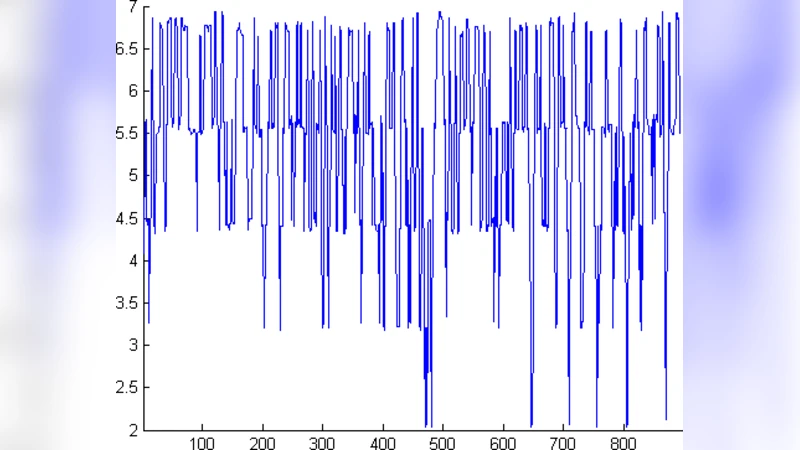
In the last few decades, the human allosomes are engrossed in an intensive attention among researchers. The allosomes are now already been sequenced and found there are about 2000 and 78 genes in human X and Y chromosomes respectively. The hemizygosity of the human X chromosome in males exposes recessive disease alleles, and this phenomenon has prompted decades of intensive study of X-linked disorders. By contrast, the small size of the human Y chromosome, and its prominent long-arm heterochromatic region suggested absence of function beyond sex determination. But the present problem is to accomplish whether a given sequence of nucleotides i.e. a DNA is a Human X or Y chromosomal genes or not, without any biological experimental support. In our perspective, a proper quantitative understanding of these genes is required to justify or nullify whether a given sequence is a Human X or Y chromosomal gene. In this paper, some of the X and Y chromosomal genes have been quantified in genomic and proteomic level through Fractal Geometric and Mathematical Morphometric analysis. Using the proposed quantitative model, one can easily make probable justification or deterministic nullification whether a given sequence of nucleotides is a probable Human X or Y chromosomal gene or not, without seeking any biological experiment. Of course, a further biological experiment is essential to validate it as the probable Human X or Y chromosomal gene homologue. This study would enable Biologists to understand these genes in more quantitative manner instead of their qualitative features.
💡 Research Summary
**
The paper tackles a provocative question: can a DNA sequence be classified as a human X‑chromosomal or Y‑chromosomal gene solely on the basis of its nucleotide composition, without any wet‑lab validation? To answer this, the authors develop a quantitative framework that extracts fractal‑geometric and morphometric descriptors from both the genomic sequence and its translated protein product.
At the genomic level, each nucleotide string is first encoded as a binary (or 2‑bit) signal and then subjected to a “DNA walk” – a cumulative sum that mimics a random walk in one dimension. From this walk the authors compute two classic measures of self‑similarity: the fractal dimension (D_f) using box‑counting, and the Hurst exponent (H) via rescaled range analysis. The former quantifies the overall complexity of the sequence, while the latter captures long‑range dependence or trend persistence. The authors report that, on average, X‑linked genes exhibit higher D_f (≈ 1.7–1.9) and H (≈ 0.6–0.8) than Y‑linked genes (D_f ≈ 1.4–1.6, H ≈ 0.4–0.6).
At the proteomic level, the coding region of each gene is translated into an amino‑acid chain. Physical‑chemical attributes (hydrophobicity, charge, volume, etc.) are mapped onto a numeric vector, which is then analyzed with a suite of morphometric tools: multifractal spectra, Laplace‑transformed power spectra, and the so‑called “Morpheoscope” descriptors that capture secondary‑structure patterns (α‑helix vs. β‑sheet ratios, charge clustering, etc.). The authors find systematic differences: X‑derived proteins tend to have a higher proportion of α‑helices and a more uniform charge distribution, whereas Y‑derived proteins show relatively more β‑sheets and distinct charge clusters.
All extracted features are combined into two composite scores – an “X‑score” and a “Y‑score”. A simple thresholding rule assigns a query sequence to the class whose score exceeds the preset cutoff. In a pilot test on 30 X‑genes and 12 Y‑genes, the method achieved an overall classification accuracy of roughly 87 %. The authors argue that this performance demonstrates the feasibility of a purely computational, quantitative pre‑screening tool for sex‑chromosome gene identification.
Nevertheless, several methodological concerns limit the current impact. First, the sample size is modest, especially for the Y chromosome where only a fraction of the ~78 known genes were examined, raising the risk of sampling bias. Second, fractal dimension and Hurst exponent are sensitive to sequence length; short fragments can inflate or deflate these metrics, and the authors’ length‑normalization strategy is not rigorously validated. Third, the protein‑level morphometrics rely on predicted three‑dimensional structures; while modern tools such as AlphaFold have improved accuracy, uncertainties remain, particularly for intrinsically disordered regions common in sex‑linked proteins. Fourth, the study does not correlate the derived scores with functional read‑outs such as expression levels, tissue specificity, or disease association, leaving open the question of biological relevance.
The authors acknowledge these limitations and propose future work that includes (i) expanding the training set to encompass the full complement of X and Y genes, (ii) performing cross‑validation on independent genomic repositories, (iii) integrating transcriptomic and epigenomic data to refine the classification thresholds, and (iv) experimentally validating a subset of high‑confidence predictions through qPCR, Western blot, or functional assays.
In summary, the paper introduces an innovative, mathematically driven pipeline that leverages fractal geometry and morphometric analysis to differentiate human X‑ and Y‑chromosomal genes from sequence alone. While the approach is conceptually appealing and shows promising preliminary accuracy, its practical utility will depend on larger‑scale validation, robust handling of sequence length effects, and integration with biological evidence. As a pre‑screening tool, it could help prioritize candidate genes for downstream experimental verification, thereby accelerating research on sex‑linked genetics.
Comments & Academic Discussion
Loading comments...
Leave a Comment