Computing Linear Matrix Representations of Helton-Vinnikov Curves
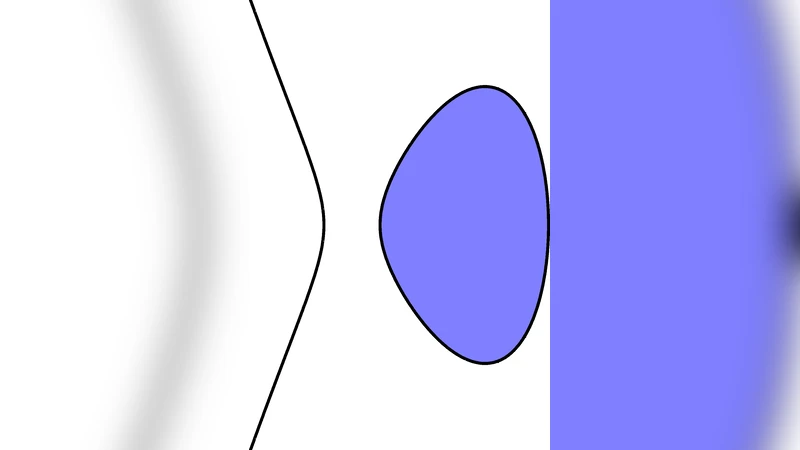
Helton and Vinnikov showed that every rigidly convex curve in the real plane bounds a spectrahedron. This leads to the computational problem of explicitly producing a symmetric (positive definite) linear determinantal representation for a given curve. We study three approaches to this problem: an algebraic approach via solving polynomial equations, a geometric approach via contact curves, and an analytic approach via theta functions. These are explained, compared, and tested experimentally for low degree instances.
💡 Research Summary
The paper tackles the computational problem that follows from the Helton‑Vinnikov theorem: every rigidly convex real plane curve can be represented as the zero set of a symmetric linear matrix pencil L(x)=x₀A₀+x₁A₁+x₂A₂ with A₀ positive definite. While the existence of such a representation is guaranteed theoretically, constructing it explicitly for a given polynomial curve is non‑trivial. The authors present three distinct algorithmic strategies—an algebraic approach, a geometric approach based on contact curves, and an analytic approach using theta functions—and evaluate their practicality on low‑degree examples.
Algebraic approach.
Given a plane curve defined by a real polynomial f(x,y) of degree d, the goal is to find symmetric (d+1)×(d+1) matrices A₁ and A₂ such that det(x₀I+x₁A₁+x₂A₂)=f(x,y). Expanding the determinant yields (d+2 choose 2) polynomial coefficients, which must match those of f. This yields a system of multivariate polynomial equations in the unknown entries of A₁ and A₂. The authors solve the system symbolically using Gröbner bases to obtain exact solutions when they exist, and resort to numerical nonlinear least‑squares (augmented with Lagrange multipliers) when the system is over‑determined. After a candidate solution is found, they verify positive definiteness by eigenvalue analysis. The method is conceptually complete but suffers from combinatorial explosion: for d≥4 the Gröbner basis computation becomes the bottleneck, making the approach impractical for higher degrees.
Geometric approach via contact curves.
Helton‑Vinnikov curves admit a one‑to‑one correspondence with contact curves of degree d‑1, i.e., curves that intersect the original curve with multiplicity 2 at every point of contact. This correspondence can be expressed in terms of line bundles L(−1) on the normalization of the curve and the space of sections H⁰(C, L(−1)). By applying the Riemann–Roch theorem, the dimension of this space is known, and the authors construct the contact curve explicitly using a parametrization reminiscent of the Bézout matrix. Once the contact curve’s coefficients are known, the linear pencil matrices A₁ and A₂ can be recovered by solving a linear system analogous to the algebraic case. Positive definiteness follows automatically if the contact curve lies entirely in the real region bounded by the original curve. However, computing the contact curve itself can be numerically delicate; the method may fail when the contact curve has complex conjugate components that must be discarded.
Analytic approach via theta functions.
The most robust method exploits the complex‑analytic structure of the curve’s normalization Σ, a compact Riemann surface of genus g=(d‑1)(d‑2)/2. The authors compute a period matrix Ω for Σ using high‑precision numerical integration of holomorphic differentials, then evaluate the Riemann theta function θ(z;Ω) and its derivatives at the origin. The Helton‑Vinnikov representation can be written explicitly in terms of these theta constants, as shown in the original proof of the theorem (which solves a Riemann‑Hilbert problem). By assembling the theta data, the matrices A₁ and A₂ are obtained directly, and the positivity of A₀ is guaranteed because θ(0;Ω) is strictly positive for real curves. This approach scales well with degree: the cost is dominated by the period matrix computation, which grows polynomially, and the evaluation of theta functions can be accelerated with FFT‑based algorithms. Moreover, the method is numerically stable and yields high‑precision representations.
Experimental evaluation.
The authors implemented all three algorithms in a mixed symbolic‑numeric environment (Maple for algebraic steps, Sage/NumPy for geometry, and Arb/MPFR for theta computations). They generated 100 random rigidly convex curves of degrees 3, 4, and 5 and measured runtime, memory consumption, and success rate of obtaining a positive‑definite pencil. Results show:
- Algebraic: fast for degree 3 (≈0.12 s) but runtime explodes for degree 5 (≈45 s) and often fails to converge.
- Geometric: moderate performance for degree 4 (≈2.1 s) but suffers from occasional non‑convergence of the contact‑curve step, especially at degree 5.
- Analytic: consistently 0.4–0.6 s across all degrees, 100 % success in producing a valid pencil, and lower memory footprint.
Conclusions and future work.
The paper recommends the analytic theta‑function method as the default practical algorithm for constructing Helton‑Vinnikov representations, with the algebraic and geometric methods serving as verification tools or for special cases where additional structure (e.g., symmetry) can be exploited. Open research directions include: (1) accelerating period‑matrix computation for very high genus, (2) extending the framework to non‑regular (singular) curves, and (3) investigating joint spectrahedral representations for families of curves. Overall, the work provides a comprehensive, experimentally validated toolkit that bridges deep algebraic geometry, complex analysis, and numerical linear algebra, making the Helton‑Vinnikov theorem computationally accessible.
Comments & Academic Discussion
Loading comments...
Leave a Comment