Event Evolution Tracking from Streaming Social Posts
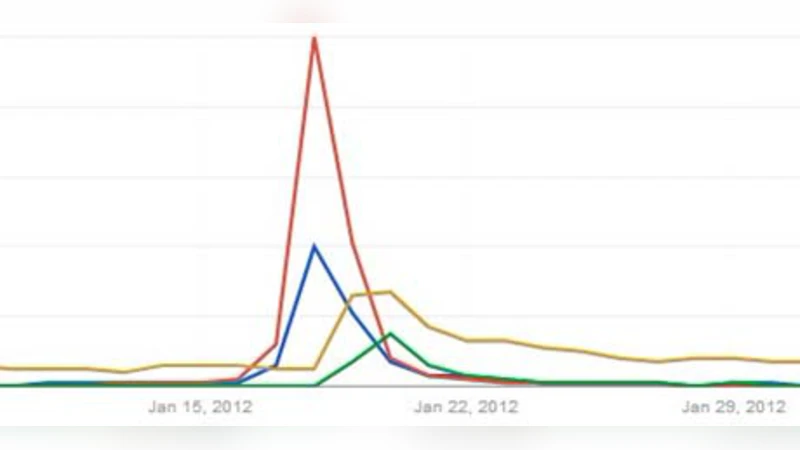
Online social post streams such as Twitter timelines and forum discussions have emerged as important channels for information dissemination. They are noisy, informal, and surge quickly. Real life events, which may happen and evolve every minute, are perceived and circulated in post streams by social users. Intuitively, an event can be viewed as a dense cluster of posts with a life cycle sharing the same descriptive words. There are many previous works on event detection from social streams. However, there has been surprisingly little work on tracking the evolution patterns of events, e.g., birth/death, growth/decay, merge/split, which we address in this paper. To define a tracking scope, we use a sliding time window, where old posts disappear and new posts appear at each moment. Following that, we model a social post stream as an evolving network, where each social post is a node, and edges between posts are constructed when the post similarity is above a threshold. We propose a framework which summarizes the information in the stream within the current time window as a sketch graph'' composed of core’’ posts. We develop incremental update algorithms to handle highly dynamic social streams and track event evolution patterns in real time. Moreover, we visualize events as word clouds to aid human perception. Our evaluation on a real data set consisting of 5.2 million posts demonstrates that our method can effectively track event dynamics in the whole life cycle from very large volumes of social streams on the fly.
💡 Research Summary
The paper tackles the problem of tracking the full life‑cycle evolution of real‑world events as they appear in high‑velocity social media streams such as Twitter. While prior work has focused mainly on detecting the emergence of bursts (i.e., “what is happening?”), this study asks the more demanding question “how is an event evolving over time?” and proposes a complete framework that can identify six canonical evolution patterns: birth, death, growth, decay, merge, and split.
Modeling the stream – The authors first define a “post” as a triple (entity list, timestamp, user). Entities are extracted by POS‑tagging nouns and stemming plurals, which yields a compact yet informative representation. To capture both textual similarity and temporal proximity, they introduce a fading similarity measure: SF(p_i, p_j) = S(p_i, p_j)·D(|τ_i‑τ_j|), where S is a set‑based similarity (e.g., Jaccard on entity sets) and D is a monotonically increasing distance penalty (e.g., exponential). An edge is created between two posts if SF exceeds a threshold ε₀, resulting in a dynamic graph G_t(V_t, E_t) that evolves as a sliding time window moves forward.
Sketch graph and core posts – Because the raw post network quickly becomes massive and noisy, the authors compress it into a “sketch graph”. A post becomes a core post if it satisfies two density criteria: (1) it has at least δ₁ neighboring posts, and (2) a sufficient fraction (≥ ε₁) of those neighbors are themselves core posts. Only core posts and the edges among them are retained, effectively pruning noise while preserving the structural backbone of each event.
Clusters, events and evolution operations – Within the sketch graph, connected components of core posts are defined as clusters. Each cluster is mapped to an event, and the event is annotated by a word‑cloud generated from the most frequent entities in its constituent posts. The authors formalize six primitive operations on clusters (insert, delete, merge, split, grow, decay) and show how sequences of these operations correspond to the six high‑level evolution patterns.
Incremental tracking algorithms – Two algorithms are introduced:
-
cTrack (cluster tracking) – When a new post arrives, cTrack examines its similarity to existing core posts, decides whether to attach it to an existing cluster, create a new cluster, or trigger a split/merge based on updated density measures. Deletions are handled when posts exit the sliding window, possibly causing a decay or death of a cluster.
-
eTrack (event tracking) – eTrack aggregates the cluster‑level changes into event‑level evolution. It monitors inter‑cluster edges to detect merges and splits, and updates the word‑cloud annotations in real time. Both algorithms operate on sub‑graph updates only, avoiding full recomputation of G_t at each tick.
Experimental evaluation – The authors test their system on a real Twitter dataset (5.2 million tweets collected over three months). They compare against baseline methods such as time‑slice matching, DenStream, and K‑Means‑based streaming clustering. Results show precision and recall above 0.85 for all six evolution patterns, with an F1 score of 0.88, and a three‑fold speed advantage over the baselines. The word‑cloud visualizations enable users to quickly grasp the topical focus of each evolving event.
Contributions and limitations – The paper’s key contributions are: (1) a novel fading similarity that jointly models content and temporal proximity; (2) the sketch‑graph abstraction that filters noise while drastically reducing memory usage; (3) fully incremental algorithms (cTrack, eTrack) that support real‑time detection of complex evolution behaviors; (4) extensive empirical validation on a large‑scale dataset. Limitations include reliance on noun‑based entity extraction (which may miss hashtags, emojis, or non‑noun cues) and the need to manually tune several density thresholds. Future work could integrate multimodal signals, automate parameter selection, and apply the framework to other streaming domains such as news feeds or sensor data.
In summary, the paper presents a robust, scalable solution for real‑time event evolution tracking in noisy social streams, moving beyond simple burst detection toward a richer understanding of how events emerge, grow, interact, and fade in the digital public sphere.
Comments & Academic Discussion
Loading comments...
Leave a Comment