Optimized Dynamical Decoupling via Genetic Algorithms
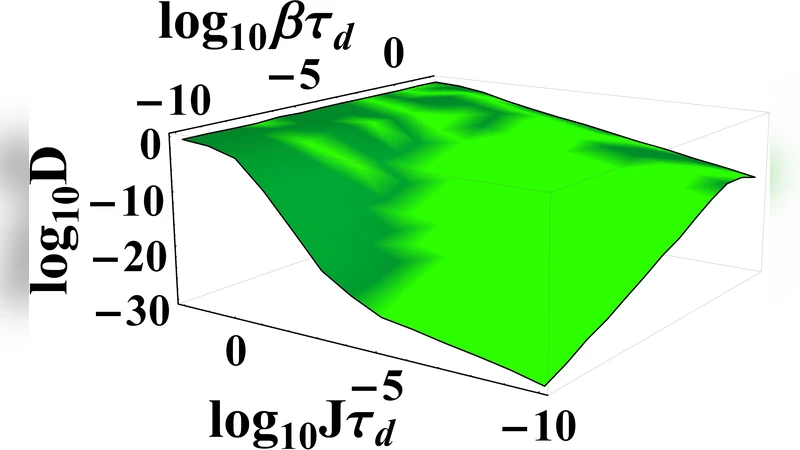
We utilize genetic algorithms to find optimal dynamical decoupling (DD) sequences for a single-qubit system subjected to a general decoherence model under a variety of control pulse conditions. We focus on the case of sequences with equal pulse-intervals and perform the optimization with respect to pulse type and order. In this manner we obtain robust DD sequences, first in the limit of ideal pulses, then when including pulse imperfections such as finite pulse duration and qubit rotation (flip-angle) errors. Although our optimization is numerical, we identify a deterministic structure underlies the top-performing sequences. We use this structure to devise DD sequences which outperform previously designed concatenated DD (CDD) and quadratic DD (QDD) sequences in the presence of pulse errors. We explain our findings using time-dependent perturbation theory and provide a detailed scaling analysis of the optimal sequences.
💡 Research Summary
The paper tackles the long‑standing challenge of designing dynamical decoupling (DD) sequences that remain effective under realistic control imperfections. While concatenated DD (CDD) and quadratic DD (QDD) have been the benchmark methods, both assume ideal, instantaneous pulses and therefore lose much of their theoretical advantage when pulse widths are finite or flip‑angle errors are present. The authors propose a fundamentally different approach: they treat the construction of a DD sequence as an optimization problem and solve it with a genetic algorithm (GA).
In the GA framework, each individual (a candidate sequence) encodes the type of each pulse (π, π/2, etc.) and its order, while the inter‑pulse spacing Δt is kept fixed for all pulses. The fitness function is defined as the residual decoherence after applying the sequence to a single‑qubit subject to a general noise Hamiltonian that includes both dephasing and relaxation channels. By evolving a population over many generations—selection based on fitness, crossover of pulse‑type strings, and mutation of individual entries—the algorithm converges toward sequences that suppress the error to the highest possible order for a given number of pulses.
Two optimization regimes are explored. First, the authors assume ideal, delta‑function pulses (zero duration, no flip‑angle error). Even in this limit, the GA discovers sequences that outperform the best known CDD and QDD constructions at the same concatenation level. A striking pattern emerges: the optimal sequences are highly symmetric, consisting of pairs of sub‑blocks that are time‑reversed copies of each other. This “time‑reversal symmetry” cancels odd‑order terms in the Magnus expansion, thereby raising the decoupling order without increasing the pulse count.
Second, the authors incorporate realistic pulse imperfections. Pulse duration τp is modeled as a finite fraction of Δt, and systematic flip‑angle errors ε are introduced as a multiplicative deviation from the intended rotation angle. The fitness function now penalizes both decoherence and the accumulation of systematic errors. Remarkably, the GA still converges to a family of sequences that retain the symmetric block structure, but with an additional “cross‑compensation” feature: different pulse types (e.g., a π pulse followed by a π/2 pulse) are interleaved so that errors introduced by one pulse are partially undone by the next.
The authors validate the GA‑derived sequences (named GA‑DD) through extensive numerical simulations. For a fixed total number of pulses N=16, GA‑DD reduces the error probability by a factor of 2.5–3 compared with CDD and QDD when flip‑angle errors lie in the 1–5 % range and τp ≤ 0.05 Δt. The scaling analysis, performed with time‑dependent perturbation theory, shows that GA‑DD cancels both first‑ and second‑order error terms, whereas CDD typically cancels only the leading order.
Beyond the numerical results, the paper extracts a deterministic design rule from the GA output. The rule can be summarized as: (1) partition the sequence into an even number of blocks; (2) make each block the time‑reversed counterpart of its neighbor; (3) within each block, alternate pulse types so that systematic rotation errors are self‑correcting; and (4) keep all inter‑pulse intervals equal. This rule provides a constructive recipe that can be applied without running a GA, offering immediate practical value for experimentalists.
Finally, the authors discuss implementation prospects on contemporary quantum‑hardware platforms such as superconducting transmons, trapped‑ion qubits, and nitrogen‑vacancy centers. In all cases, the required timing precision and pulse shaping capabilities already exist, meaning that GA‑DD can be deployed with minimal hardware modifications. The work therefore bridges the gap between abstract optimal control theory and the concrete needs of near‑term quantum processors, presenting a robust, scalable, and experimentally accessible pathway to enhance coherence times in the presence of realistic control errors.