Multiscale Community Mining in Networks Using Spectral Graph Wavelets
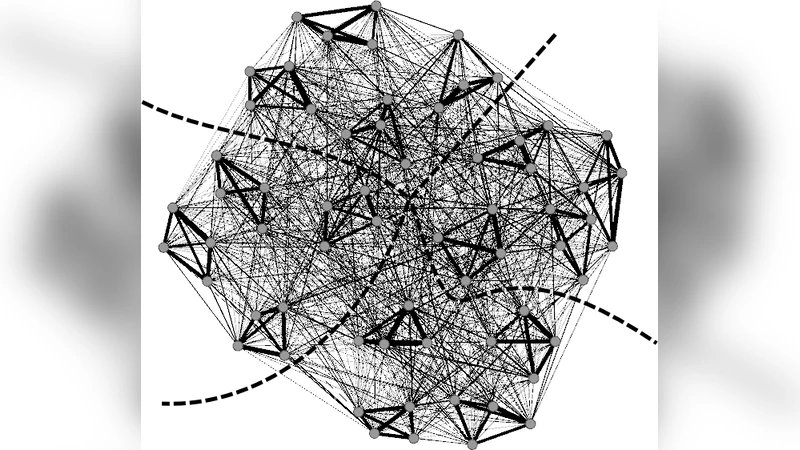
For data represented by networks, the community structure of the underlying graph is of great interest. A classical clustering problem is to uncover the overall ``best’’ partition of nodes in communities. Here, a more elaborate description is proposed in which community structures are identified at different scales. To this end, we take advantage of the local and scale-dependent information encoded in graph wavelets. After new developments for the practical use of graph wavelets, studying proper scale boundaries and parameters and introducing scaling functions, we propose a method to mine for communities in complex networks in a scale-dependent manner. It relies on classifying nodes according to their wavelets or scaling functions, using a scale-dependent modularity function. An example on a graph benchmark having hierarchical communities shows that we estimate successfully its multiscale structure.
💡 Research Summary
The paper introduces a novel framework for detecting community structure in networks at multiple scales by leveraging spectral graph wavelets and scaling functions. Traditional community detection methods typically aim at a single “best” partition, which limits their ability to uncover hierarchical or overlapping structures that naturally occur in many real‑world graphs. To address this limitation, the authors exploit the locality and scale‑dependence inherent in graph wavelets, which are constructed from the eigen‑decomposition of the graph Laplacian.
First, the authors formalize graph wavelets ψ_s(v) for a node v at scale s as ψ_s(v)=U g_s(Λ) Uᵀ δ_v, where U and Λ are the eigenvectors and eigenvalues of the Laplacian, g_s(·) is a band‑pass filter kernel, and δ_v is the Kronecker delta. They also introduce complementary scaling functions φ_s(v)=U h_s(Λ) Uᵀ δ_v that capture low‑frequency (global) information, which wavelets alone may miss. A key technical contribution is a systematic method for selecting the admissible scale interval
Comments & Academic Discussion
Loading comments...
Leave a Comment