Romantic Partnerships and the Dispersion of Social Ties: A Network Analysis of Relationship Status on Facebook
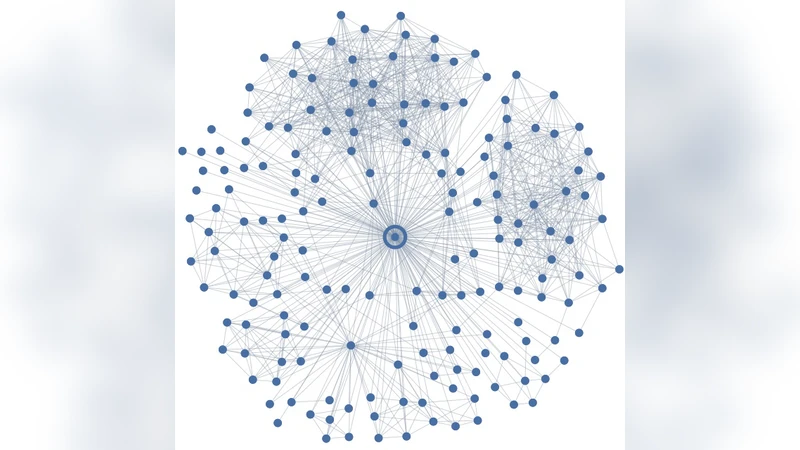
A crucial task in the analysis of on-line social-networking systems is to identify important people — those linked by strong social ties — within an individual’s network neighborhood. Here we investigate this question for a particular category of strong ties, those involving spouses or romantic partners. We organize our analysis around a basic question: given all the connections among a person’s friends, can you recognize his or her romantic partner from the network structure alone? Using data from a large sample of Facebook users, we find that this task can be accomplished with high accuracy, but doing so requires the development of a new measure of tie strength that we term `dispersion’ — the extent to which two people’s mutual friends are not themselves well-connected. The results offer methods for identifying types of structurally significant people in on-line applications, and suggest a potential expansion of existing theories of tie strength.
💡 Research Summary
The paper investigates whether a person’s romantic partner can be identified solely from the structure of their Facebook friendship network. Traditional approaches to measuring tie strength rely on embeddedness—the number of mutual friends shared by two users—under the assumption that stronger ties have more overlapping social circles. The authors argue that this metric is insufficient for romantic relationships, which often bridge multiple, otherwise disconnected social foci (e.g., family, work, school).
To capture this property they introduce a new network measure called dispersion. For a candidate pair (u, v), they first collect the set of common neighbors C_uv. They then consider the subgraph induced by u’s friends, remove u and v, and compute the sum of distances between all pairs of nodes in C_uv. The distance function is binary: it equals 1 if two nodes are not directly linked and have no other common neighbors (i.e., they are “disconnected” within the subgraph), and 0 otherwise. High dispersion therefore indicates that the mutual friends of u and v are themselves sparsely connected, suggesting that u and v act as the sole bridge between several otherwise separate clusters.
The authors evaluate dispersion on two large Facebook datasets. The primary set contains 73,000 users who publicly listed a spouse, fiancé, or romantic partner, each with 50–2,000 friends. An extended set of 1.3 million users provides additional scale. Using a simple baseline that selects the friend with maximum embeddedness, the partner is correctly identified in only 24.7 % of cases. By contrast, ranking friends by dispersion raises this figure to roughly 48 % overall, and to over 60 % for married users. Normalizing dispersion by embeddedness (disp(u,v)/emb(u,v)) yields similar performance, confirming that high embeddedness actually hurts partner prediction when dispersion is held constant.
The study also explores gender differences, finding that female users’ partners are slightly more identifiable via dispersion than male users’, and that higher dispersion scores correlate with longer‑lasting relationships. Moreover, a dispersion‑only predictor outperforms a sophisticated machine‑learning classifier that incorporates interaction signals such as messaging frequency, photo co‑appearance, and profile views. Combining dispersion with these interaction features further improves accuracy, demonstrating that structural and behavioral cues are complementary.
Key contributions include: (1) the definition of dispersion as a novel, theoretically motivated tie‑strength metric; (2) empirical evidence that dispersion more effectively captures the unique structural signature of romantic ties than embeddedness; (3) a demonstration that structural data alone can reliably infer intimate relationships, with implications for content prioritization, privacy management, and recommendation systems on social platforms.
Limitations are acknowledged: the method requires users to have publicly declared a relationship status, and computing dispersion can be computationally intensive on very large graphs. Future work is suggested on inferring undisclosed relationships, extending the approach to other social media platforms, and analyzing temporal dynamics of dispersion as relationships evolve.
In sum, the paper provides a compelling argument and robust empirical validation that the “dispersion” of mutual friends is a powerful indicator of romantic partnership, expanding our understanding of tie strength beyond simple overlap and opening new avenues for network‑based social analysis.
Comments & Academic Discussion
Loading comments...
Leave a Comment