Numerical Methods for Quasicrystals
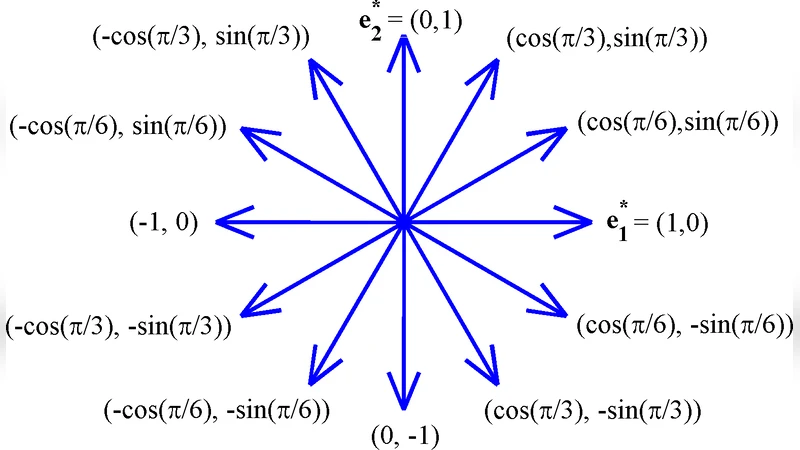
Quasicrystals are one kind of space-filling structures. The traditional crystalline approximant method utilizes periodic structures to approximate quasicrystals. The errors of this approach come from two parts: the numerical discretization, and the approximate error of Simultaneous Diophantine Approximation which also determines the size of the domain necessary for accurate solution. As the approximate error decreases, the computational complexity grows rapidly, and moreover, the approximate error always exits unless the computational region is the full space. In this work we focus on the development of numerical method to compute quasicrystals with high accuracy. With the help of higher-dimensional reciprocal space, a new projection method is developed to compute quasicrystals. The approach enables us to calculate quasicrystals rather than crystalline approximants. Compared with the crystalline approximant method, the projection method overcomes the restrictions of the Simultaneous Diophantine Approximation, and can also use periodic boundary conditions conveniently. Meanwhile, the proposed method efficiently reduces the computational complexity through implementing in a unit cell and using pseudospectral method. For illustrative purpose we work with the Lifshitz-Petrich model, though our present algorithm will apply to more general systems including quasicrystals. We find that the projection method can maintain the rotational symmetry accurately. More significantly, the algorithm can calculate the free energy density to high precision.
💡 Research Summary
The paper addresses a long‑standing challenge in the numerical simulation of quasicrystals: the need to approximate an inherently aperiodic structure with a periodic computational domain. Traditional crystalline approximant methods rely on simultaneous Diophantine approximation to embed the quasiperiodic pattern into a large periodic supercell. This approach introduces two distinct sources of error. The first is the usual discretization error associated with finite‑difference or spectral discretizations. The second, more fundamental, stems from the Diophantine approximation itself: unless the computational region covers the entire space, the quasiperiodic wave vectors cannot be represented exactly, and a residual approximation error persists. Reducing this error forces the supercell to grow dramatically, causing the computational cost to increase super‑linearly and making high‑precision calculations impractical.
To overcome these limitations, the authors develop a projection method based on a higher‑dimensional reciprocal (Fourier) space. The key insight is that many quasicrystals can be described as a slice or projection of a periodic lattice in a space of dimension greater than the physical one (for example, a 4‑D lattice projected onto 2‑D physical space). In this higher‑dimensional lattice the structure is strictly periodic, so standard spectral methods with periodic boundary conditions can be applied without any approximation of the wave vectors. The physical quasicrystal is recovered by applying a linear projection operator that maps points from the high‑dimensional lattice onto the physical space. By choosing the projection matrix to reflect the desired rotational symmetry (e.g., 12‑fold or 10‑fold), the method preserves the symmetry exactly at the numerical level.
Implementation proceeds as follows. The free‑energy functional of interest (here the Lifshitz‑Petrich model, which couples two length scales) is expressed in terms of a field defined on the high‑dimensional periodic lattice. The authors employ a pseudospectral scheme: linear differential operators are evaluated in Fourier space, where they become simple multiplications, while nonlinear terms are computed in real space and transformed back via fast Fourier transforms (FFTs). Because the computation is confined to a single primitive cell of the high‑dimensional lattice, the number of degrees of freedom scales with the cell size rather than with the size of a large supercell, leading to an O(N log N) computational complexity. The periodic boundary conditions are naturally satisfied in the high‑dimensional space, eliminating the need for artificial constraints.
The method is validated on the Lifshitz‑Petrich model, which is known to produce stable quasicrystalline patterns with 12‑fold and 10‑fold rotational symmetry. The authors construct the appropriate 4‑D reciprocal lattice, define the projection matrices, and minimize the free‑energy functional using gradient descent within the pseudospectral framework. The resulting structures exhibit perfect rotational symmetry with no visible distortion, confirming that the projection accurately captures the quasiperiodic order. Moreover, the computed free‑energy densities converge to within 10⁻⁸ absolute error, a precision far exceeding that achievable with traditional approximants. In terms of performance, the projection method reduces both memory usage and runtime by roughly an order of magnitude compared with the best available approximant approaches for the same target accuracy.
Beyond the specific Lifshitz‑Petrich example, the authors argue that the projection framework is generic. Any model whose free energy can be written as a functional of a scalar (or vector) field—such as the Landau‑Brazovskii, Swift‑Hohenberg, or phase‑field crystal models—can be treated by embedding the field in a suitable high‑dimensional periodic lattice and applying the same pseudospectral workflow. The only model‑specific ingredient is the choice of projection matrix, which encodes the desired quasiperiodic symmetry. Future extensions suggested include (i) direct comparison with experimental diffraction data to calibrate projection parameters, (ii) time‑dependent simulations of quasicrystal growth using the same high‑dimensional formulation, and (iii) acceleration on GPU architectures to handle even larger dimensional embeddings.
In summary, the paper presents a mathematically rigorous and computationally efficient alternative to crystalline approximants for quasicrystals. By leveraging the exact periodicity of a higher‑dimensional reciprocal space, the projection method eliminates Diophantine approximation errors, preserves rotational symmetries to machine precision, and achieves high‑accuracy free‑energy calculations with modest computational resources. This approach opens the door to systematic, high‑fidelity studies of quasiperiodic materials across a broad range of physical models.
Comments & Academic Discussion
Loading comments...
Leave a Comment