Searching for High Energy Neutrino counterpart signals; The case of the Fermi Bubbles signal and of Dark Matter annihilation in the inner Galaxy
The recent uncovering of the \textit{Fermi} Bubbles/haze in the \textit{Fermi} gamma-ray data has generated theoretical work to explain such a signal of hard $\gamma$-rays in combination with the \textit{WMAP} haze signal. Many of these theoretical models can have distinctively different implications with regards to the production of high energy neutrinos. We discuss the neutrino signals from different models proposed for the explanation of the \textit{Fermi} Bubbles/haze, more explicitly, from Dark Matter annihilation in the galactic halo with conditions of preferential CR diffusion, from recent AGN jet activity, from periodic diffusive shock acceleration, from stochastic 2nd order Fermi acceleration and from long time-scale star formation in the galactic center in combination with strong galactic winds. We find that some of these models will be probed by the IceCube DeepCore detector. Moreover, with a km$^3$ telescope located at the north hemisphere, we will be able to discriminate between the hadronic, leptonic and the DM models. Additionally using the reconstructed neutrino spectra we will probe annihilation of TeV scale dark matter towards the galactic center.
💡 Research Summary
The paper investigates the high‑energy neutrino signatures that would accompany the various theoretical explanations proposed for the Fermi Bubbles and the associated WMAP haze. Five broad classes of models are examined: (1) Dark‑matter (DM) annihilation in the Galactic halo with anisotropic cosmic‑ray diffusion, (2) past active‑galactic‑nucleus (AGN) jet activity, (3) periodic diffusive shock acceleration (DSA) within the bubbles, (4) stochastic second‑order Fermi acceleration in turbulent magnetic fields, and (5) long‑term star formation in the Galactic Center combined with strong galactic winds. For each scenario the authors calculate the expected muon‑ and electron‑neutrino fluxes using PYTHIA‑based particle‑physics simulations together with propagation models that account for the spatial distribution of targets (gas, radiation fields) and the geometry of the bubbles.
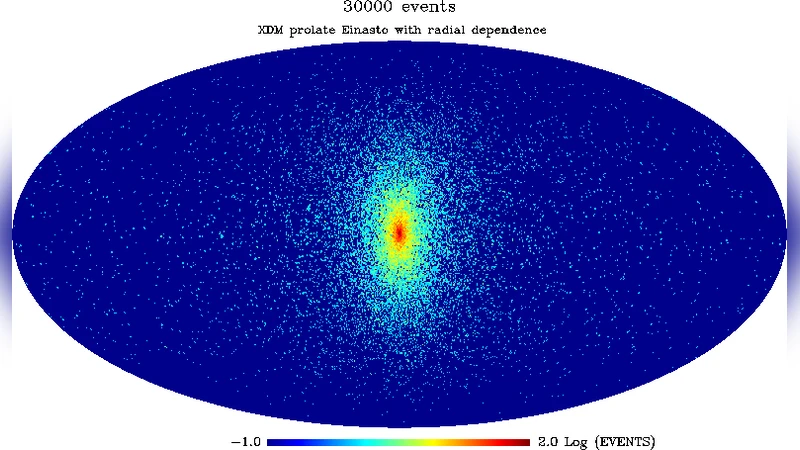
In the DM case, the authors adopt both NFW and Einasto halo profiles and assume that diffusion perpendicular to the Galactic plane is faster than in the plane, concentrating annihilation products within the bubble volume. They consider three annihilation channels – $b\bar b$, $W^+W^-$ and $\tau^+\tau^-$ – with particle masses in the 1–10 TeV range. The resulting neutrino spectra are hard, especially for the $\tau^+\tau^-$ channel, and approach the sensitivity of IceCube’s DeepCore sub‑array (10 GeV–1 TeV).
The AGN‑jet model assumes a past jet power of $\sim10^{44}$ erg s⁻¹ lasting $\sim10^6$ yr, with a target gas density of $10^{-2}$ cm⁻³ inside the bubbles. Hadronic interactions of jet‑accelerated protons generate charged pions, which decay into high‑energy neutrinos extending above 100 TeV. The authors find that a km³‑scale detector in the Northern Hemisphere (e.g., KM3NeT/ARCA or Baikal‑GVD) would achieve a $5\sigma$ detection of this flux, whereas DeepCore would be marginal.
For the periodic DSA scenario, shock speeds of $\sim300$ km s⁻¹ and compression ratios of 4 produce a $E^{-2.1}$ proton spectrum. The ensuing $pp$ collisions yield a neutrino flux that is lower than the AGN case but still detectable by both DeepCore (over several years) and a Northern km³ detector.
The stochastic second‑order Fermi model treats particle acceleration as a diffusion in momentum space driven by turbulence on scales of $\sim100$ pc with an efficiency $\eta\sim10^{-3}$. The resulting neutrino spectrum is softer, peaking in the 10–100 GeV band, and lies close to DeepCore’s current limits.
Finally, the star‑formation plus wind model assumes a sustained star‑formation rate of $\sim0.1,M_\odot$ yr⁻¹ and a wind speed of $\sim500$ km s⁻¹. Supernova‑driven cosmic rays are advected into the bubbles, where they interact with the outflowing gas. The predicted neutrino flux is the weakest among the five scenarios but could become statistically significant with long‑term exposure.
A key result of the study is that the angular distribution (concentration toward the bubble axis) and the flavor composition of the neutrino flux provide discriminants among the models. Hadronic scenarios (AGN jet, DSA, wind) predict a $\nu_\mu:\nu_e$ ratio close to 2:1 and a hard spectrum, whereas leptonic (stochastic acceleration) models yield a larger $\nu_e$ fraction and a softer spectrum. DM annihilation can be distinguished by an enhanced $\nu_\tau$ component and a characteristic cutoff at the DM mass.
Sensitivity estimates show that DeepCore can probe DM annihilation cross sections down to $\langle\sigma v\rangle\sim10^{-24}$ cm³ s⁻¹ for TeV‑scale masses, while a Northern km³ detector would be able to test the AGN‑jet and DSA models at the $5\sigma$ level. The authors conclude that forthcoming neutrino observatories—IceCube‑Gen2, KM3NeT, Baikal‑GVD—will not only test the origin of the Fermi Bubbles but also provide a novel avenue to search for TeV‑scale dark matter through its neutrino signature.