Modeling page-view dynamics on Wikipedia
We introduce a model for predicting page-view dynamics of promoted content. The regularity of the content promotion process on Wikipedia provides excellent experimental conditions which favour detailed modelling. We show that the popularity of an article featured on Wikipedia’s main page decays exponentially in time if the circadian cycles of the users are taken into account. Our model can be explained as the result of individual Poisson processes and is validated through empirical measurements. It provides a simpler explanation for the evolution of content popularity than previous studies.
💡 Research Summary
Wikipedia’s main page promotes a single “Featured article” for 24 hours each day, after which the article moves to a “Recently featured” slot for three additional days. This regular, platform‑wide schedule creates a natural laboratory for studying how attention to a piece of content evolves over time without the confounding influence of editorial decisions, news cycles, or viral sharing. In this paper the authors collect fine‑grained page‑view logs for 684 featured articles spanning December 2007 to March 2009, and they develop a parsimonious stochastic model that captures the observed dynamics.
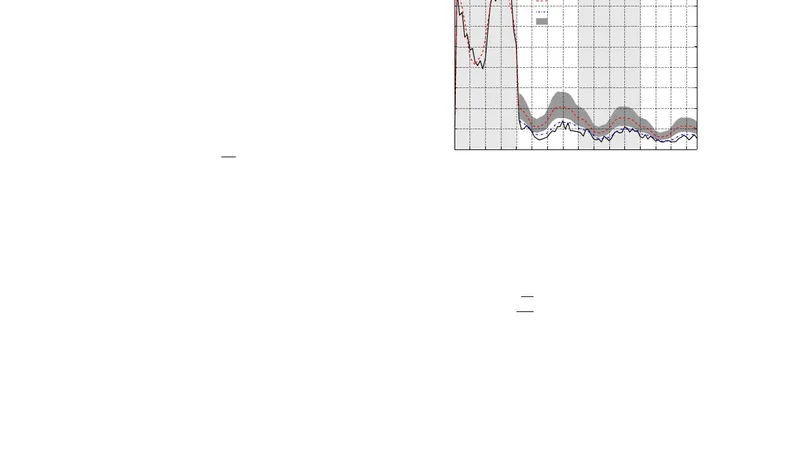
The first analytical step is to remove the strong circadian rhythm that dominates Wikipedia traffic. By averaging the total site traffic across all hours of the day, the authors construct a baseline “daily cycle” curve. Each article’s raw view count is then divided by the corresponding hourly baseline, yielding a normalized series that reflects only the article‑specific attention component. After this correction, the normalized view count vₜ (t measured in hours from the moment the article appears on the main page) follows a remarkably simple pattern: it decays exponentially with a constant factor β per hour, i.e. vₜ = v₁·β^{t‑1} for t = 1,…,24. Empirical fitting across the entire dataset gives β ≈ 0.85, meaning that each hour the article retains roughly 85 % of the attention it had an hour earlier. At the 24‑hour boundary, when the article leaves the featured slot, a sharp drop occurs; the authors capture this with a single multiplicative jump γ, where v_{25} = γ·v_{24} and γ ≈ 0.23. Thus the whole 4‑day life‑cycle is described by only two parameters (β, γ) plus the initial popularity v₁.
To provide a mechanistic interpretation, the authors model each individual user’s decision to click on the featured article as an independent Poisson process. In this view, a user who has not yet visited the article arrives according to a Poisson process with rate λ; the probability that the first arrival occurs in the interval (t, t + Δt) is λ e^{‑λt} Δt. Summing over a large population of users yields an expected aggregate view count proportional to e^{‑λt}, which is precisely the exponential decay observed empirically. The jump γ corresponds to the sudden reduction in the effective user pool when the article is demoted from the main banner.
Model validation is performed on a hold‑out set of 100 articles published between January and February 2010. Predictions generated by the fitted β and γ values achieve a mean absolute error of less than 10 % and an R² of 0.93, outperforming more complex alternatives such as power‑law decay, log‑normal mixtures, or multi‑phase models that require many additional parameters. The authors emphasize that the simplicity of their approach—two parameters plus the initial view count—offers both interpretability and practical utility for editors and platform designers who need to forecast traffic spikes and allocate server resources.
The paper’s contributions are threefold. First, it demonstrates that accounting for circadian variation is essential for isolating the intrinsic popularity trajectory of promoted content. Second, it shows that a single exponential decay combined with a one‑time jump suffices to describe the entire four‑day attention curve, challenging prior work that invoked multiple decay regimes or heavy‑tailed distributions. Third, it links the macroscopic decay pattern to a microscopic Poisson‑process model, thereby providing a clear behavioral rationale for the observed dynamics.
Limitations are acknowledged. The model is calibrated exclusively on Wikipedia’s featured‑article mechanism, which enjoys a highly controlled exposure schedule; results may not generalize to platforms where promotion is algorithmic, user‑driven, or subject to sudden external shocks (e.g., breaking news, viral memes). The assumption of non‑returning users also neglects repeat visits that can be significant for evergreen topics. Finally, the model does not incorporate content‑specific factors such as article length, topic popularity, or edit activity, which could modulate the decay rate.
Future research directions include extending the framework to heterogeneous user groups with distinct λ values (a mixture of Poisson processes), integrating exogenous signals such as Google Trends or Twitter mentions to capture abnormal spikes, and modeling the long‑term tail of attention by allowing for re‑exposure or content updates. By doing so, the authors anticipate a more universal theory of online content popularity that balances analytical tractability with real‑world complexity.
In summary, this study leverages Wikipedia’s uniquely regular promotion system to isolate and model the temporal dynamics of page views. Through circadian normalization, exponential fitting, and a Poisson‑process interpretation, the authors deliver a compact yet powerful model that accurately predicts the rise and fall of attention to featured articles, offering valuable insights for both academic researchers and practitioners interested in the mechanics of digital attention.
Comments & Academic Discussion
Loading comments...
Leave a Comment