Rotational Symmetry and the Transformation of Innovation Systems in a Triple Helix of University-Industry-Government Relations
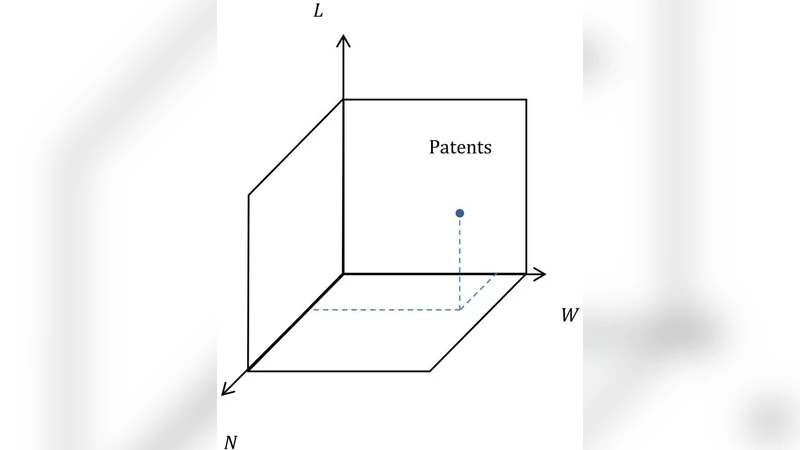
Using a mathematical model, we show that a Triple Helix (TH) system contains self-interaction, and therefore self-organization of innovations can be expected in waves, whereas a Double Helix (DH) remains determined by its linear constituents. (The mathematical model is fully elaborated in the Appendices.) The ensuing innovation systems can be expected to have a fractal structure: innovation systems at different scales can be considered as spanned in a Cartesian space with the dimensions of (S)cience, (B)usiness, and (G)overnment. A national system, for example, contains sectorial and regional systems, and is a constituent part in technological and supra-national systems of innovation. The mathematical modeling enables us to clarify the mechanisms, and provides new possibilities for the prediction. Emerging technologies can be expected to be more diversified and their life cycles will become shorter than before. In terms of policy implications, the model suggests a shift from the production of material objects to the production of innovative technologies.
💡 Research Summary
The paper develops a rigorous mathematical representation of the Triple Helix (TH) – the triadic interaction among universities, industry, and government – and contrasts it with a Double Helix (DH) consisting of only two actors. The authors embed the three institutional spheres in a three‑dimensional Cartesian space defined by Science (S), Business (B) and Government (G). Each dimension is associated with a complex‑valued state variable (ψₛ, ψᵦ, ψ𝓰). Interactions among the three variables are captured by a 3 × 3 complex matrix H, which is constructed as a representation of the rotation group SO(3). Because H contains off‑diagonal elements, it generates self‑interaction terms that give rise to complex conjugate eigenvalues λ₁, λ₂, λ₃. The time evolution of the system follows e^{iλt}, producing oscillatory components (the imaginary parts) superimposed on exponential growth or decay (the real parts). Consequently, innovation activity emerges as a series of waves – “innovation waves” – in which periods of rapid idea generation and diffusion are followed by phases of consolidation or decline.
In the DH case the model is reduced to two dimensions and H is forced to be diagonalizable, yielding purely real eigenvalues. The dynamics become linear, lacking the self‑organizing wave behavior that characterizes the TH. Thus, a DH system is constrained to deterministic growth or decay driven solely by external inputs, whereas a TH system can internally generate non‑linear, self‑reinforcing cycles.
A key insight is that the TH’s mathematical structure is invariant under scale transformations. Whether the system is viewed at the national, regional, sectoral, or technological level, the same SO(3) symmetry and self‑interaction mechanism persist. This scale invariance implies a fractal organization: each sub‑system mirrors the dynamics of the whole, allowing information, resources, and innovation impulses to propagate through multiple, overlapping pathways across scales.
Policy implications follow directly from the model. First, the emphasis should shift from the production of tangible goods to the production of knowledge and innovative technologies, because the latter fuels the self‑interaction that drives wave formation. Governments are advised to strengthen R&D funding, adapt intellectual‑property regimes, and facilitate fluid personnel and knowledge exchange among universities, firms, and public agencies. Second, because innovation waves become shorter and more frequent, traditional long‑term technology‑life‑cycle planning becomes less effective. Policymakers need early‑warning mechanisms, rapid market‑entry procedures, and flexible exit or re‑allocation strategies to capture the benefits of the rising phase and mitigate the downturns.
Overall, the paper introduces a novel analytical framework that blends complex linear algebra, group theory, and fractal concepts to describe innovation systems as dynamic, self‑organizing networks. By moving beyond static, linear models, it offers a quantitative basis for forecasting emerging technologies, understanding multi‑scale interactions, and designing more responsive innovation policies.
Comments & Academic Discussion
Loading comments...
Leave a Comment