Mahotas: Open source software for scriptable computer vision
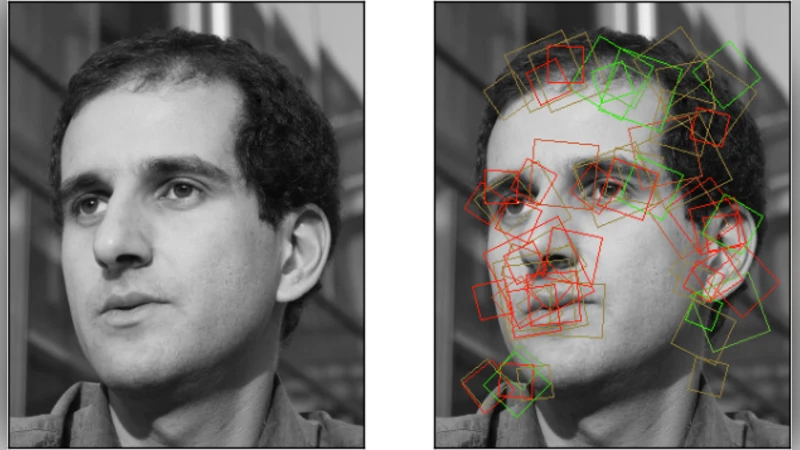
Mahotas is a computer vision library for Python. It contains traditional image processing functionality such as filtering and morphological operations as well as more modern computer vision functions for feature computation, including interest point detection and local descriptors. The interface is in Python, a dynamic programming language, which is very appropriate for fast development, but the algorithms are implemented in C++ and are tuned for speed. The library is designed to fit in with the scientific software ecosystem in this language and can leverage the existing infrastructure developed in that language. Mahotas is released under a liberal open source license (MIT License) and is available from (http://github.com/luispedro/mahotas) and from the Python Package Index (http://pypi.python.org/pypi/mahotas).
💡 Research Summary
Mahotas is presented as a Python‑centric computer‑vision library that reconciles rapid development with high‑performance execution. The paper begins by outlining the limitations of pure‑Python image processing—namely, the interpreter’s overhead and lack of low‑level optimizations—while emphasizing Python’s dominance in scientific computing due to its expressive syntax, extensive ecosystem (NumPy, SciPy, matplotlib, scikit‑learn), and ease of prototyping. Mahotas addresses this gap by providing a thin, Pythonic API that internally delegates computationally intensive tasks to C++ implementations. These C++ kernels operate directly on NumPy’s memory buffers, eliminating unnecessary data copies and enabling SIMD vectorization, cache‑friendly loop ordering, and optional multithreading. As a result, Mahotas can process multi‑megapixel images at rates comparable to dedicated C/C++ libraries while retaining the flexibility of a scripting language.
The functionality of Mahotas is divided into two major categories. The first covers classic image‑processing operations such as convolution, Gaussian smoothing, Laplacian, Sobel, Canny edge detection, and a full suite of morphological primitives (erosion, dilation, opening, closing). These are implemented with parameterizable kernels and support both 2‑D and 3‑D data, making the library suitable for medical‑imaging or volumetric analysis. The second category comprises modern computer‑vision algorithms for feature extraction. Mahotas implements interest‑point detectors (Harris corner, FAST, Difference‑of‑Gaussians scale‑space), and a variety of local descriptors including Local Binary Patterns (LBP), Haralick texture features, Zernike moments, Histogram of Oriented Gradients (HOG), and binary shape descriptors. All descriptors accept and return NumPy arrays, facilitating seamless integration with downstream machine‑learning pipelines built on scikit‑learn or deep‑learning frameworks.
The paper also details the software engineering practices that underpin Mahotas’ reliability. The source code is hosted on GitHub and released under the permissive MIT license, allowing unrestricted commercial and academic use. Continuous integration runs a comprehensive test suite across Python 3.x on Windows, macOS, and Linux, ensuring binary wheels on PyPI are ready for immediate installation without compilation. Documentation is generated automatically and includes example notebooks that illustrate typical workflows—from preprocessing to feature extraction and classification. Community contributions are managed via pull‑request review, and the project maintains a test coverage above 80 %, reflecting a commitment to code quality.
In conclusion, Mahotas is positioned as a pragmatic bridge between the exploratory nature of Python and the performance demands of real‑world computer‑vision tasks. By exposing a clean, NumPy‑compatible API while leveraging optimized C++ kernels, it enables researchers and developers to prototype quickly, scale to large datasets, and integrate with the broader scientific Python stack. Future directions outlined in the paper include GPU acceleration, tighter coupling with deep‑learning libraries, and the addition of more advanced descriptors such as SIFT and SURF. Overall, Mahotas exemplifies how open‑source, community‑driven development can produce a versatile, high‑performance vision toolkit that serves both academic research and industrial applications.
Comments & Academic Discussion
Loading comments...
Leave a Comment