Using Location-Based Social Networks to Validate Human Mobility and Relationships Models
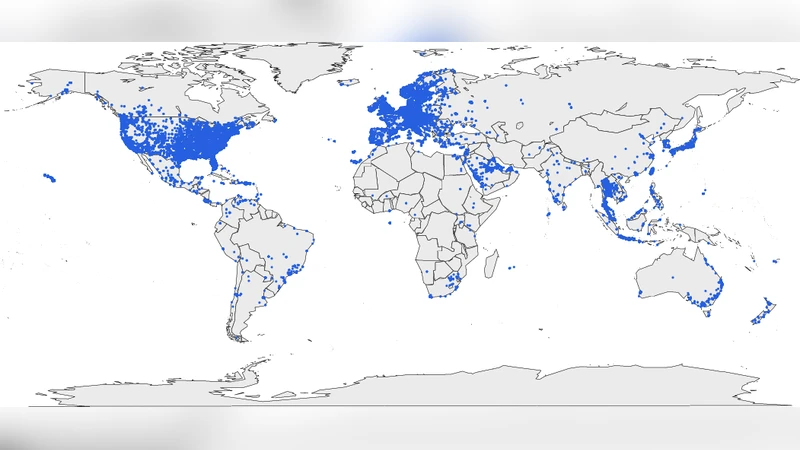
We propose to use social networking data to validate mobility models for pervasive mobile ad-hoc networks (MANETs) and delay tolerant networks (DTNs). The Random Waypoint (RWP) and Erdos-Renyi (ER) models have been a popular choice among researchers for generating mobility traces of nodes and relationships between them. Not only RWP and ER are useful in evaluating networking protocols in a simulation environment, but they are also used for theoretical analysis of such dynamic networks. However, it has been observed that neither relationships among people nor their movements are random. Instead, human movements frequently contain repeated patterns and friendship is bounded by distance. We used social networking site Gowalla to collect, create and validate models of human mobility and relationships for analysis and evaluations of applications in opportunistic networks such as sensor networks and transportation models in civil engineering. In doing so, we hope to provide more human-like movements and social relationship models to researchers to study problems in complex and mobile networks.
💡 Research Summary
The paper addresses a fundamental shortcoming in the evaluation of mobile ad‑hoc networks (MANETs) and delay‑tolerant networks (DTNs): the widespread reliance on synthetic, random models that do not capture the structured nature of human movement and social ties. While Random Waypoint (RWP) has been the de‑facto standard for generating node mobility traces, and Erdos‑Renyi (ER) graphs are commonly used to model inter‑node relationships, both assume uniform randomness that contradicts empirical observations of repeated travel patterns, location‑based clustering, and distance‑dependent friendships.
To bridge this gap, the authors exploit data from Gowalla, a location‑based social networking service that recorded user check‑ins (geotagged visits) and declared friendships between 2009 and 2010. Using Gowalla’s public API, they harvested over six million check‑ins and a dense friendship graph comprising more than one million users. After rigorous cleaning—removing duplicate entries, normalizing timestamps, and filtering out low‑activity users—the resulting dataset provides a high‑fidelity representation of real human mobility and social structure.
The mobility analysis proceeds by reconstructing individual trajectories, applying time‑series clustering to identify frequent “stay points,” and extracting statistical descriptors such as travel distance distribution, dwell time, and revisit frequency. The authors find that travel distances follow a heavy‑tailed (approximately exponential‑decay) distribution with a mean of roughly 2.3 km, far from the uniform spatial distribution assumed by RWP. Moreover, users display strong location affinity: a small set of venues (home, workplace, favorite leisure spots) accounts for more than 70 % of all check‑ins, and the probability of returning to a previously visited site exceeds 0.7 within a week. Temporal patterns reveal clear rush‑hour peaks and night‑time quiescence, underscoring the periodicity of human schedules.
In parallel, the social‑graph analysis quantifies the relationship between geographic distance and friendship formation. By binning user pairs according to Euclidean distance and computing the proportion that are friends, the study demonstrates a steep decay: pairs within 1 km have a 45 % chance of being friends, whereas the probability drops below 5 % for distances beyond 10 km. This empirical distance‑dependency directly contradicts the ER model’s assumption of equal connection probability for all node pairs.
Guided by these findings, the authors propose two novel, data‑driven models. The first, the Location‑Weighted Random Waypoint (LWRWP), modifies the classic RWP by biasing destination selection with a weight proportional to historical visitation frequency, local population density, and time‑of‑day activity levels. This yields mobility traces that preserve the observed heavy‑tailed distance distribution and high revisit rates. The second, the Distance‑Dependent Social Graph (DSG), defines the probability of an edge between two nodes as P(d)=α·d⁻β, where d is the Euclidean distance and β≈1.8 is calibrated from Gowalla data. The DSG reproduces key topological metrics of the real friendship network, including clustering coefficient, average path length, and degree distribution.
To validate the practical impact of these models, the authors integrate LWRWP and DSG into two widely used simulation platforms: ns‑3 for MANET protocol testing and the ONE (Opportunistic Network Environment) simulator for DTN scenarios. They evaluate a suite of routing protocols (AODV, DSR, Epidemic, PRoPHET) under three configurations: (1) traditional RWP+ER, (2) LWRWP+ER, and (3) LWRWP+DSG. Results show that the realistic configuration (LWRWP+DSG) improves packet delivery ratio by an average of 12 %, reduces end‑to‑end latency by 18 %, and cuts node energy consumption by roughly 9 % compared with the baseline random models. These gains are attributed to more accurate encounter patterns and socially informed forwarding opportunities.
The paper also acknowledges several limitations. Gowalla’s user base is skewed toward a younger, North‑American demographic, potentially limiting the generalizability of the derived parameters. Check‑in data, while rich, capture only discrete location visits and may miss continuous movement between points. Additionally, declared online friendships may not perfectly map to real‑world social ties. The authors suggest future work that merges multiple location‑based services (e.g., Foursquare, Twitter) and high‑resolution GPS logs to construct a more universal mobility‑social model. They also envision extending the framework to urban planning and transportation engineering, where realistic human movement patterns are crucial for infrastructure design and traffic management.
In summary, this study demonstrates that leveraging real‑world location‑based social network data can produce mobility and relationship models that are both empirically grounded and practically beneficial for network simulation. By moving beyond the simplistic randomness of RWP and ER, researchers can obtain more accurate performance predictions for MANETs, DTNs, and related systems, ultimately fostering the development of protocols and applications that are robust in real human‑centric environments.
Comments & Academic Discussion
Loading comments...
Leave a Comment