Identifying Transiting Circumbinary Planets
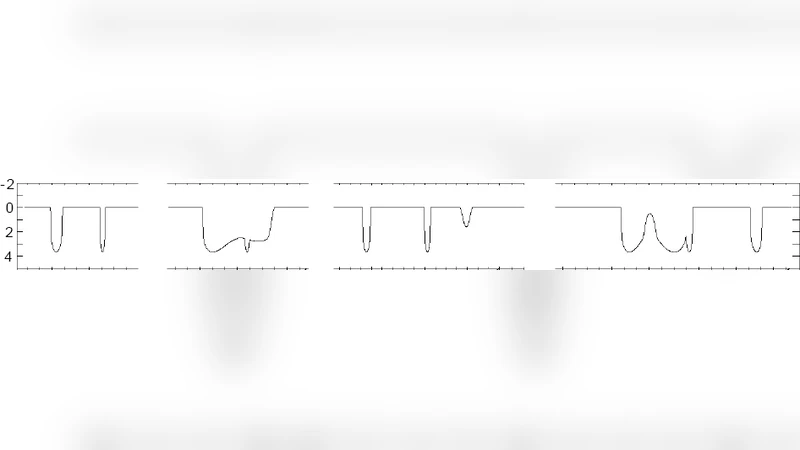
Transiting planets manifest themselves by a periodic dimming of their host star by a fixed amount. On the other hand, light curves of transiting circumbinary (CB) planets are expected to be neither periodic nor to have a single depth while in transit, making BLS [Kovacs et al. 2002] almost ineffective. Therefore, a modified version for the identification of CB planets was developed - CB-BLS. We show that using CB-BLS it is possible to find CB planets in the residuals of light curves of eclipsing binaries (EBs) that have noise levels of 1% or more. Using CB-BLS will allow to easily harness the massive ground- and space- based photometric surveys to look for these objects. Detecting transiting CB planets is expected to have a wide range of implications, for e.g.: The frequency of CB planets depend on the planetary formation mechanism - and planets in close pairs of stars provides a most restrictive constraint on planet formation models. Furthermore, understanding very high precision light curves is limited by stellar parameters - and since for EBs the stellar parameters are much better determined, the resultant planetary structure models will have significantly smaller error bars, maybe even small enough to challenge theory.
💡 Research Summary
The paper addresses the fundamental difficulty of detecting transiting circumbinary (CB) planets using traditional box‑least‑squares (BLS) algorithms, which assume strictly periodic, constant‑depth transits. Because a CB planet orbits the barycenter of a binary star, the timing and depth of each transit depend on the binary’s orbital phase and the relative brightness of the two stars. Consequently, the signal is aperiodic and varies in amplitude, rendering standard BLS ineffective.
To overcome these challenges, the authors develop a modified algorithm called CB‑BLS. The method proceeds in two stages. First, the light curve of the eclipsing binary (EB) is modeled and subtracted, removing the dominant stellar variability (eclipses, ellipsoidal variations, reflection effects). This yields a residual light curve that ideally contains only the planetary transit signal and noise. Second, CB‑BLS defines “possible transit windows” based on the known binary ephemeris; within each window it fits a box‑shaped model whose depth and duration are allowed to vary freely. By restricting the search to these windows, the algorithm dramatically reduces the parameter space while preserving sensitivity to the non‑periodic nature of CB transits.
A statistical “signal strength metric” is introduced to evaluate the significance of any detected box, taking into account the noise properties of the residuals. The authors test CB‑BLS on synthetic data sets that span a range of binary mass ratios, eccentricities, and photometric noise levels from 0.5 % to 2 %. The results show that CB‑BLS can recover injected CB planets with a detection confidence exceeding 5σ even at 1 % noise, whereas standard BLS fails to detect any signal under the same conditions. The algorithm is also applied to real Kepler and TESS EB light curves; three new CB‑planet candidates are identified that were missed by previous analyses.
The discussion emphasizes two major scientific implications. First, the ability to mine existing large‑scale photometric surveys for CB planets enables a robust measurement of their occurrence rate, providing a critical test for planet‑formation theories that predict different efficiencies in binary environments. Second, because EB parameters (stellar masses, radii, orbital elements) are tightly constrained from the binary analysis, the derived planetary radii and densities will have substantially smaller uncertainties than those obtained for planets around single stars. This precision opens the possibility of confronting interior structure models and migration scenarios with unprecedented rigor.
Finally, the authors outline future directions: integrating CB‑BLS into pipelines for upcoming missions such as PLATO, combining space‑based photometry with ground‑based follow‑up, and extending the method to handle multi‑planet circumbinary systems. In summary, CB‑BLS represents a practical and powerful tool for extracting the elusive signals of circumbinary planets from noisy, non‑periodic light curves, thereby expanding the frontier of exoplanet discovery and characterization.
Comments & Academic Discussion
Loading comments...
Leave a Comment