Growing multiplex networks
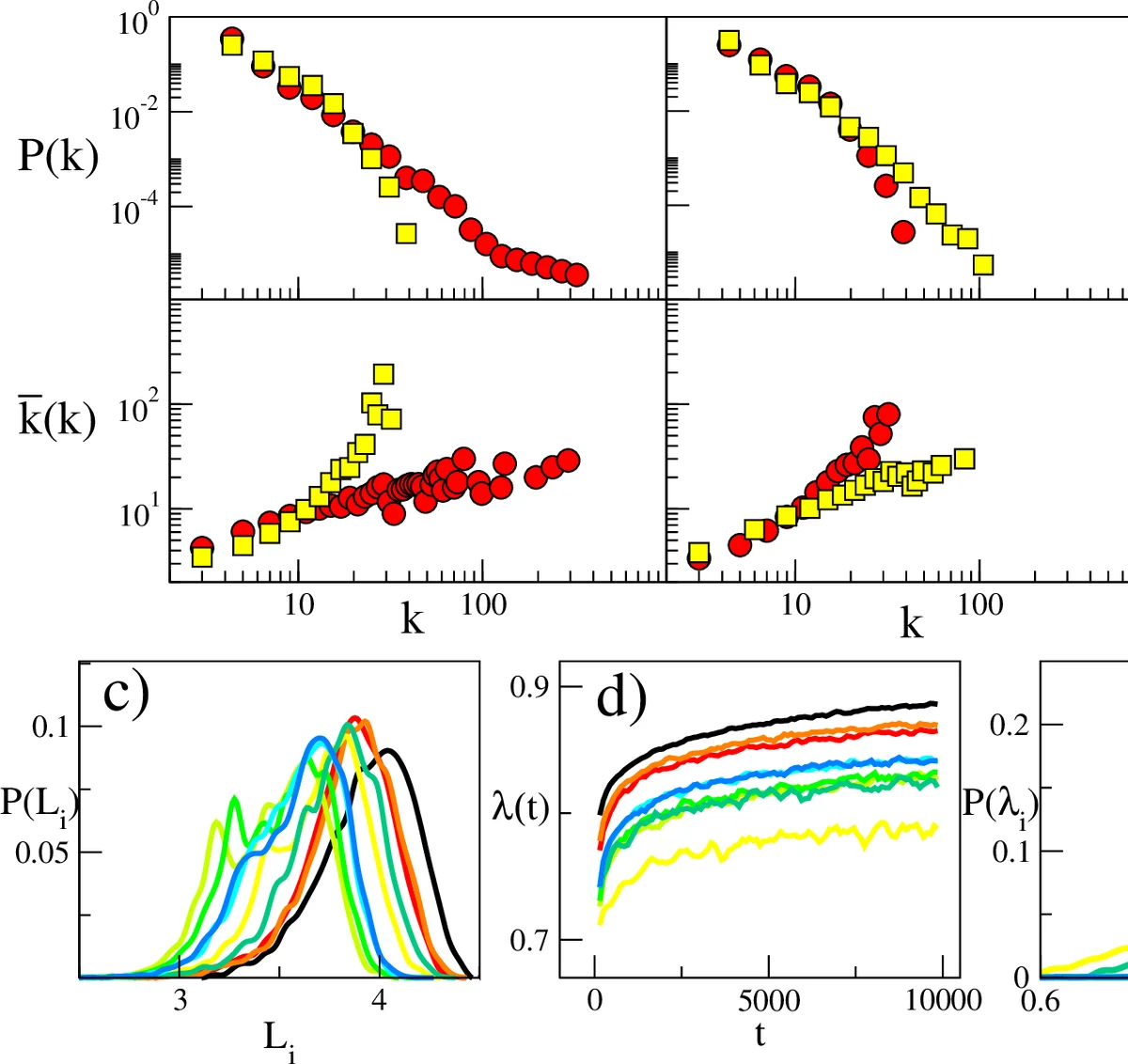
We propose a modeling framework for growing multiplexes where a node can belong to different networks. We define new measures for multiplexes and we identify a number of relevant ingredients for modeling their evolution such as the coupling between the different layers and the arrival time distribution of nodes. The topology of the multiplex changes significantly in the different cases under consideration, with effects of the arrival time of nodes on the degree distribution, average shortest paths and interdependence.
💡 Research Summary
The paper introduces a comprehensive framework for modeling the growth of multiplex networks—systems in which the same set of nodes participates simultaneously in several distinct layers (e.g., transportation, communication, or functional brain networks). While single‑layer network growth models such as the Barabási‑Albert preferential‑attachment scheme are well‑established, extending these ideas to multiplexes requires addressing two new ingredients: (i) the timing of node arrivals on each layer, and (ii) the way a node’s degree on one layer influences its attractiveness on another layer.
Model definition
A multiplex consists of N nodes and M layers; each node i has a replica in every layer α with degree k_i^{
Comments & Academic Discussion
Loading comments...
Leave a Comment