PIERNIK mhd code - a multi-fluid, non-ideal extension of the relaxing-TVD scheme (IV)
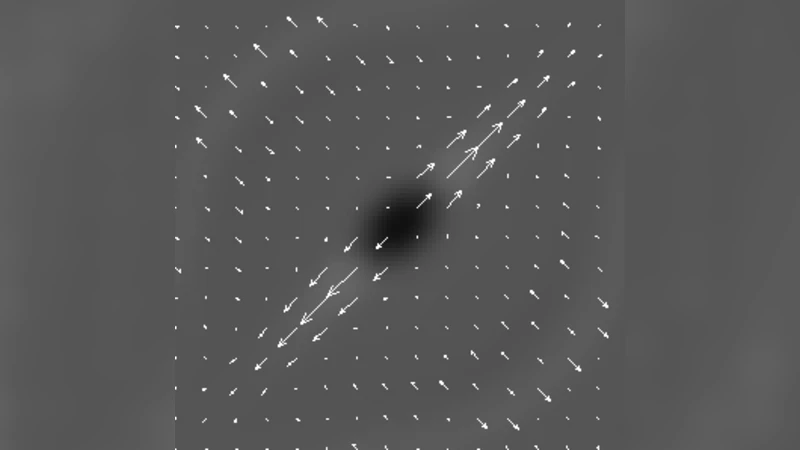
We present a new multi-fluid, grid MHD code PIERNIK, which is based on the Relaxing TVD scheme (Jin & Xin, 1995). The original scheme (see Trac & Pen (2003) and Pen et al. (2003)) has been extended by an addition of dynamically independent, but interacting fluids: dust and a diffusive cosmic ray gas, described within the fluid approximation, with an option to add other fluids in an easy way. The code has been equipped with shearing-box boundary conditions, and a selfgravity module, Ohmic resistivity module, as well as other facilities which are useful in astrophysical fluid-dynamical simulations. The code is parallelized by means of the MPI library. In this paper we present an extension of PIERNIK, which is designed for simulations of diffusive propagation of the Cosmic-Ray (CR) component in the magnetized ISM.
💡 Research Summary
The paper presents the latest extension of the PIERNIK magnetohydrodynamics (MHD) code, a multi‑fluid, grid‑based solver built on the Relaxing Total Variation Diminishing (RTVD) scheme originally introduced by Jin & Xin (1995). The authors first recap the RTVD method, noting its high‑order accuracy and robust shock‑capturing capabilities, and its prior implementation in astrophysical contexts by Trac & Pen (2003) and Pen et al. (2003). PIERNIK augments this foundation by introducing dynamically independent but interacting fluid components: a pressure‑carrying dust fluid and a diffusive cosmic‑ray (CR) gas treated within the fluid approximation. Each fluid obeys its own set of continuity, momentum, and energy equations, while coupling to the magnetic field, self‑gravity, and to each other through drag, pressure exchange, and source terms.
A central innovation described in the paper is the non‑ideal, anisotropic diffusion module for the CR component. The authors formulate a diffusion tensor that aligns with the local magnetic field direction, allowing rapid transport parallel to field lines and strongly suppressed transport perpendicular to them. To maintain numerical stability in the presence of potentially stiff diffusion terms, they adopt a semi‑implicit/explicit (IMEX) time‑integration strategy: the hyperbolic MHD part is advanced explicitly, while the diffusive CR term is treated implicitly. This approach permits large time steps without sacrificing accuracy.
The code architecture is modular, enabling users to add new fluid species by defining a small set of interface routines and initialisation procedures. This flexibility is highlighted as a major advantage for studies of star‑forming regions, protostellar disks, and galactic interstellar media where additional components (e.g., ionised gas, radiative transfer) may be required. PIERNIK also incorporates shearing‑box boundary conditions, essential for local simulations of differentially rotating disks. The shearing‑box implementation combines periodic boundaries with a linear shear profile, preserving the Coriolis and tidal forces that drive realistic disk dynamics.
Self‑gravity is handled via a fast Fourier transform (FFT) based Poisson solver, which computes the global gravitational potential on a periodic domain and applies it to all fluid components. An Ohmic resistivity module adds non‑ideal magnetic diffusion, allowing the study of reconnection and magnetic field dissipation in partially ionised media. Both modules are tightly coupled to the RTVD core, ensuring consistent updates of magnetic and velocity fields.
Parallelisation is achieved with the Message Passing Interface (MPI). The computational domain is decomposed into sub‑domains assigned to individual MPI ranks; ghost‑cell exchanges synchronize boundary data, while the global gravity solve requires an all‑to‑all communication pattern for the FFT. Benchmark tests on three‑dimensional grids up to 512³ cells demonstrate scaling efficiencies above 80 % on modern multi‑core clusters, confirming the code’s suitability for large‑scale astrophysical simulations.
The paper validates the new CR diffusion capabilities through a series of test problems, including anisotropic diffusion of a Gaussian CR pulse in a uniform magnetic field, and the interaction of CR pressure with magnetised turbulence in a shearing‑box setup. Results show that the code reproduces analytic solutions for diffusion rates and captures the expected suppression of perpendicular transport. Moreover, the coupling between CR pressure gradients and gas dynamics leads to realistic buoyancy‑driven outflows, illustrating the physical relevance of the implementation.
In summary, the authors deliver a comprehensive, extensible MHD platform that integrates multi‑fluid dynamics, anisotropic CR diffusion, self‑gravity, and non‑ideal magnetic effects within a high‑performance parallel framework. The PIERNIK code thus provides the community with a powerful tool for investigating the intertwined roles of dust, cosmic rays, magnetic fields, and gravity in shaping the interstellar medium and star‑forming environments. Future work is suggested to incorporate additional non‑ideal processes such as ambipolar diffusion, Hall effect, and detailed chemical networks, further expanding the code’s applicability to a broad range of astrophysical problems.
Comments & Academic Discussion
Loading comments...
Leave a Comment