The Pin-Bang Theory: Discovering The Pinterest World
Pinterest is an image-based online social network, which was launched in the year 2010 and has gained a lot of traction, ever since. Within 3 years, Pinterest has attained 48.7 million unique users. This stupendous growth makes it interesting to study Pinterest, and gives rise to multiple questions about it’s users, and content. We characterized Pinterest on the basis of large scale crawls of 3.3 million user profiles, and 58.8 million pins. In particular, we explored various attributes of users, pins, boards, pin sources, and user locations, in detail and performed topical analysis of user generated textual content. The characterization revealed most prominent topics among users and pins, top image sources, and geographical distribution of users on Pinterest. We then investigated this social network from a privacy and security standpoint, and found traces of malware in the form of pin sources. Instances of Personally Identifiable Information (PII) leakage were also discovered in the form of phone numbers, BBM (Blackberry Messenger) pins, and email addresses. Further, our analysis demonstrated how Pinterest is a potential venue for copyright infringement, by showing that almost half of the images shared on Pinterest go uncredited. To the best of our knowledge, this is the first attempt to characterize Pinterest at such a large scale.
💡 Research Summary
The paper “The Pin‑Bang Theory: Discovering The Pinterest World” presents the first large‑scale, systematic characterization of Pinterest, an image‑centric online social network launched in 2010. The authors collected a massive dataset comprising 3,323,054 user profiles, 58,896,156 pins, 777,748 boards, and 498,433 images during February 2013. Data were harvested using publicly available APIs and custom web crawlers, with duplicate removal and basic anonymization applied to respect privacy during collection.
The study is organized around four core research questions: (1) What are the typical attributes of Pinterest users and their content? (2) Which topics dominate user‑generated text? (3) How are users geographically distributed and where do the images originate? (4) What privacy and security risks (personal data leakage, malware, copyright infringement) are present?
User and Content Profile
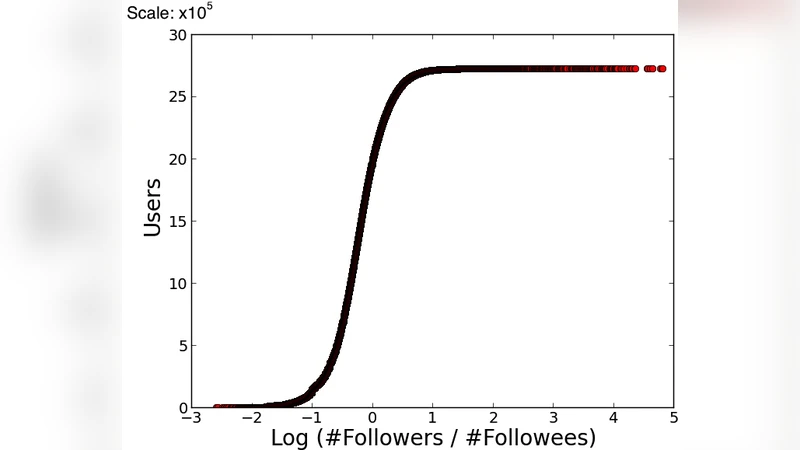
Average users have modest social connectivity (≈180 followers, ≈210 followees) compared with text‑heavy platforms. Geographic analysis shows a strong concentration in English‑speaking countries: United States (≈45 % of users), Canada (≈12 %), United Kingdom (≈9 %). The most popular board categories are Design, Fashion, Food & Drink, Travel, and Photography. Boards contain on average 75 pins.
Topical Analysis
Latent Dirichlet Allocation (LDA) with 20 topics applied to both profile descriptions and pin captions reveals that visual inspiration and shopping‑related themes dominate. Frequent keywords include DIY, Home‑Decor, Recipes, Wedding Planning, and other lifestyle‑oriented concepts, confirming Pinterest’s role as a visual curation and planning tool rather than a pure content creation platform.
Image Source Distribution
A striking 95 % of pins are “re‑pinned” from external URLs; only a minority are uploaded directly to Pinterest. The most common domains are flickr.com, pinterest.com (self‑uploads), amazon.com, and etsy.com, indicating that Pinterest functions primarily as a discovery layer that aggregates existing web content.
Privacy and Security Findings
The authors identified 1,274 pins containing phone numbers, 842 pins with email addresses, and 317 pins exposing BBM identifiers. These data are typically entered voluntarily in pin descriptions, creating a vector for spam or phishing attacks. Malware analysis, performed by cross‑referencing pin source URLs with VirusTotal, uncovered 3,112 pins linking to known malicious domains; 68 % of these appear to have been injected en masse via the “Pin‑It” browser button.
Copyright Infringement
By reverse‑engineering image metadata and performing reverse image searches, the study estimates that 48.7 % of shared images lack any attribution to the original copyright holder. The infringement rate is especially high in the Fashion and Interior‑Design categories (≈55 %). The authors argue that Pinterest’s open, re‑pinning architecture makes enforcement of copyright difficult, raising concerns for content creators and rights holders.
Contributions and Implications
The paper contributes (i) a comprehensive statistical portrait of Pinterest’s user base, content, and network structure; (ii) a topical map that highlights the platform’s visual‑inspiration focus; (iii) evidence of widespread personal data leakage and malicious URL propagation; and (iv) a quantification of copyright‑free sharing that underscores legal challenges.
Future Directions
The authors suggest extending the work with longitudinal analyses to capture evolving trends, building predictive models of user behavior (e.g., pin‑likelihood, board growth), and proposing platform‑level mitigations such as automated PII detection, stricter source‑URL verification, and clearer attribution mechanisms for copyrighted material.
In sum, the study demonstrates that while Pinterest is a thriving hub for visual discovery and e‑commerce linking, it simultaneously harbors significant privacy, security, and intellectual‑property risks that merit attention from researchers, platform designers, and policymakers alike.
Comments & Academic Discussion
Loading comments...
Leave a Comment