An Absence of Neutrinos Associated with Cosmic Ray Acceleration in Gamma-Ray Bursts
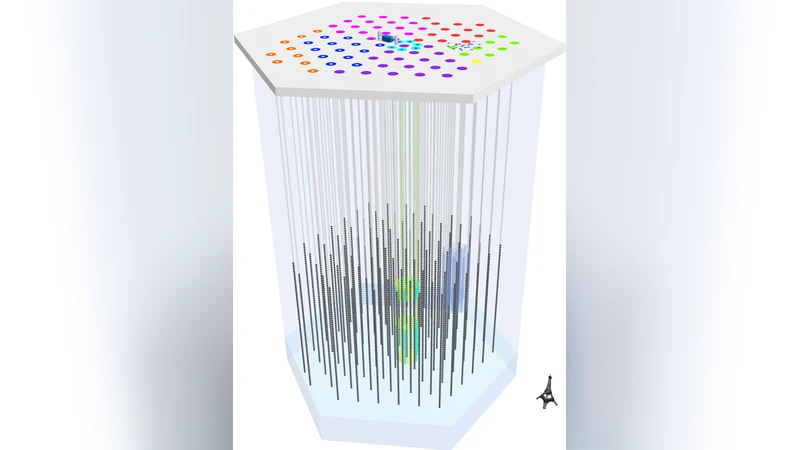
Gamma-Ray Bursts (GRBs) have been proposed as a leading candidate for acceleration of ultra high-energy cosmic rays, which would be accompanied by emission of TeV neutrinos produced in proton-photon interactions during acceleration in the GRB fireball. Two analyses using data from two years of the IceCube detector produced no evidence for this neutrino emission, placing strong constraints on models of neutrino and cosmic-ray production in these sources.
💡 Research Summary
The paper presents a rigorous test of the long‑standing hypothesis that gamma‑ray bursts (GRBs) are the dominant accelerators of ultra‑high‑energy cosmic rays (UHECRs) and, consequently, sources of TeV–PeV neutrinos produced via proton‑photon (pγ) interactions in the fireball. Using two years of data from the IceCube Neutrino Observatory (May 2010–May 2012), the authors performed two complementary searches.
The first, a time‑coincident analysis, examined each of 215 GRBs individually, looking for neutrino events within a ±500 s window around the gamma‑ray trigger and consistent with the reported sky location. No event passed the significance threshold, and the derived 90 % confidence upper limits on the per‑burst neutrino fluence are on average a factor of 3.5 lower than the predictions of the canonical Waxman‑Bahcall model and similar internal‑shock scenarios.
The second, a stacked analysis, combined all GRBs into a single “source” to increase statistical power. By weighting each burst with its measured gamma‑ray fluence and spectral parameters (Band function fits), the authors constructed an expected cumulative neutrino spectrum and performed a maximum‑likelihood fit to the IceCube data. Again, no excess was observed. The resulting 90 % confidence upper limit on the total stacked flux is only 22 % of the Waxman‑Bahcall prediction, effectively ruling out the simplest version of the model.
These non‑detections translate directly into constraints on the baryonic loading factor η, the ratio of energy in accelerated protons to that in gamma‑rays. While many GRB models assume η≈10–100, the IceCube limits require η≲5, implying that the proton component in the fireball is far smaller than previously thought. The paper discusses several physical reasons for this discrepancy: (1) a softer photon spectrum than the idealized Band function reduces the pγ interaction rate; (2) accelerated protons may escape the emission region before interacting; (3) the dominant acceleration site could be the external shock rather than the internal shock, where target photon densities are lower; and (4) magnetic field configurations might limit the confinement time of protons.
Because the neutrino flux scales directly with the product of proton energy density and photon density, any reduction in either quantity sharply lowers the expected neutrino signal. Consequently, the authors argue that GRBs can contribute at most ~10 % of the observed UHECR flux, leaving room for other astrophysical accelerators such as active galactic nuclei, starburst galaxies, or tidal disruption events.
The study also highlights the importance of next‑generation neutrino detectors. IceCube‑Gen2, with an order‑of‑magnitude larger instrumented volume, and dedicated low‑energy extensions (e.g., PINGU) would improve sensitivity to the sub‑PeV regime where many alternative GRB models predict a peak. Such upgrades could either finally detect the faint neutrino component from GRBs or push the limits low enough to rule out even more exotic scenarios.
In summary, the comprehensive IceCube analysis finds no evidence for GRB‑associated neutrinos over two years of observation, imposing stringent limits on the neutrino‑cosmic‑ray connection in these explosive events. The results compel a reassessment of GRBs as the primary source of UHECRs and motivate both theoretical refinements of fireball physics and the development of more sensitive neutrino observatories.