Sipping Science in a Cafe
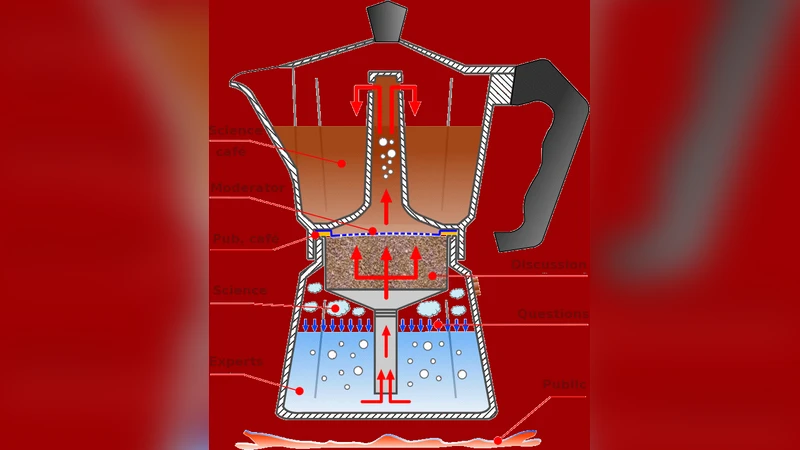
We present here the European project SciCaf'e - networking of science caf'es in Europe and neighboring countries, and the contributions of the CSDC-Caff`e Scienza partner in Florence, Itay.
💡 Research Summary
The paper reports on the European project SciCafé, a network of “science cafés” that aims to bring scientific discussion out of formal conference halls and into everyday social venues such as cafés and pubs. The authors, Franco Bagnoli and Giovanna Pacini, describe the activities of their partner organization, CSDC‑Caffè Scienza in Florence, Italy, and place these activities within the broader context of the EU‑funded SciCafé initiative launched in January 2010.
Traditional science cafés in Florence have been running since 2005, attracting about 60 participants per session, mostly middle‑aged, highly educated citizens. The format is deliberately informal: a short expert introduction is followed by an open‑mic session where the audience drives the conversation. Building on this model, the authors have experimented with several innovations designed to broaden reach, increase interactivity, and test new communication skills.
-
Cafference (Hybrid Café‑Conference) – Recognising that some topics are too technical for a pure café format, the team created a hybrid event that retains the informal atmosphere but adds a structured panel and pre‑selected themes. These “cafference” sessions have been held in a quiet library setting and have proven popular.
-
Moka Newsletter and RadioMoka – “Moka” (the Italian coffee‑maker) became the brand for a regular e‑mail newsletter that disseminates short science stories and event announcements, fostering continuous engagement. RadioMoka is a live‑broadcast radio program that required the team to acquire audio‑production skills beyond their academic training.
-
Audio‑Video Streaming – Collaborations with RadioSpin (University of Florence), DBC‑tv, and third‑party services such as Livestream enable real‑time streaming of talks. Notably, DBC‑tv allows participation from the virtual world Second Life, and a small but steady international audience (Spain, Switzerland, USA) now follows the events online.
-
Science Café Web‑Book – In partnership with Duncan Dallas (the “inventor” of UK science cafés), the consortium built a simple website that collects short statements from participants worldwide about why they engage in science cafés. The submissions illustrate the concept’s adaptability: from HIV‑prevention discussions in Uganda to gender‑difference debates in Iran, and a specialised nuclear‑science café in Oregon.
-
Audience Survey – An online questionnaire was sent to the Florence mailing list in November 2009, with follow‑up distribution to all European partners in February 2011. The survey gathered demographic data, assessed satisfaction, and solicited ideas for new formats. Results confirmed the predominance of middle‑aged, well‑educated attendees and highlighted strong interest in hybrid formats and digital media.
The authors argue that these experiments demonstrate how science communication can shift from a one‑way “delivery” model to a participatory dialogue that demystifies science and embeds it in everyday life. They stress the importance of a feedback loop: public suggestions drive the design of new formats, and the outcomes are documented as “best practices” for dissemination across the network, especially to eastern European and African regions where new cafés are being seeded.
While the project is still in the data‑collection phase, early indications suggest that the combination of hybrid event structures, regular digital content (newsletter, radio), and multi‑platform streaming significantly expands audience reach and deepens engagement. The ultimate goal of SciCafé is to create a sustainable, continent‑wide infrastructure that empowers citizens to participate in scientific discourse, thereby informing public decision‑making on technology and policy issues.
Comments & Academic Discussion
Loading comments...
Leave a Comment