Efficient analysis and representation of geophysical processes using localized spherical basis functions
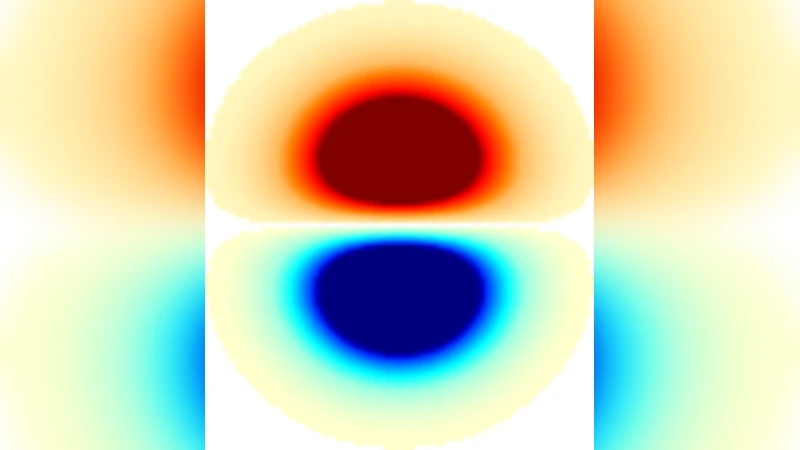
While many geological and geophysical processes such as the melting of icecaps, the magnetic expression of bodies emplaced in the Earth’s crust, or the surface displacement remaining after large earthquakes are spatially localized, many of these naturally admit spectral representations, or they may need to be extracted from data collected globally, e.g. by satellites that circumnavigate the Earth. Wavelets are often used to study such nonstationary processes. On the sphere, however, many of the known constructions are somewhat limited. And in particular, the notion of dilation' is hard to reconcile with the concept of a geological region with fixed boundaries being responsible for generating the signals to be analyzed. Here, we build on our previous work on localized spherical analysis using an approach that is firmly rooted in spherical harmonics. We construct, by quadratic optimization, a set of bandlimited functions that have the majority of their energy concentrated in an arbitrary subdomain of the unit sphere. The spherical Slepian basis’ that results provides a convenient way for the analysis and representation of geophysical signals, as we show by example. We highlight the connections to sparsity by showing that many geophysical processes are sparse in the Slepian basis.
💡 Research Summary
The paper addresses a fundamental challenge in geophysics: many processes are spatially localized (e.g., ice‑cap melt, crustal magnetization, post‑seismic deformation) yet the observations that capture them are global, typically obtained from satellite platforms that orbit the Earth. Traditional spherical wavelet constructions, while useful for non‑stationary signals, suffer from two major drawbacks on the sphere. First, the notion of dilation is difficult to reconcile with a fixed geological region that generates the signal. Second, wavelet bases often introduce boundary artifacts and spectral leakage when the region of interest has an irregular shape.
To overcome these limitations, the authors build on the theory of spherical Slepian functions, which are band‑limited functions that maximize energy concentration within an arbitrary sub‑domain Ω of the unit sphere. Starting from the spherical harmonic basis Yℓm(θ,φ) with degree ℓ ≤ L, they formulate a quadratic optimization problem that seeks a linear combination f(θ,φ)=∑cℓmYℓm that maximizes the ratio
λ = ∫Ω |f|² dΩ / ∫S² |f|² dS .
Introducing a Lagrange multiplier leads to a generalized eigenvalue problem D c = λ c, where D is the (L+1)² × (L+1)² “localization matrix” whose entries are inner products of spherical harmonics over Ω. The eigenvalues λ lie in
Comments & Academic Discussion
Loading comments...
Leave a Comment