Leaking Chaotic Systems
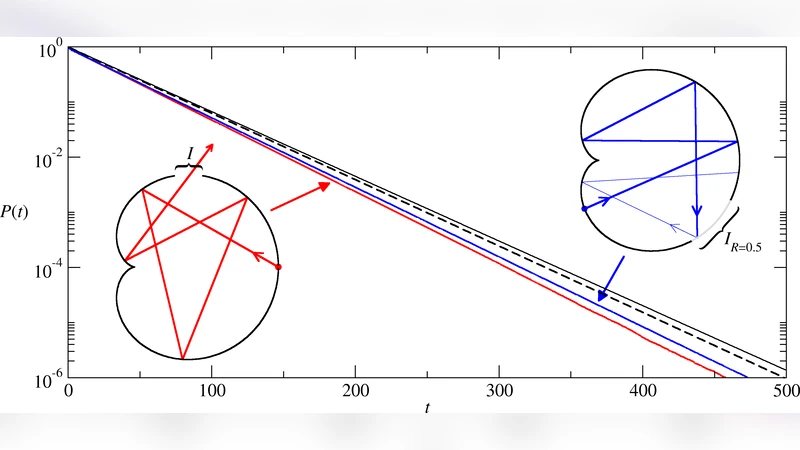
There are numerous physical situations in which a hole or leak is introduced in an otherwise closed chaotic system. The leak can have a natural origin, it can mimic measurement devices, and it can also be used to reveal dynamical properties of the closed system. In this paper we provide an unified treatment of leaking systems and we review applications to different physical problems, both in the classical and quantum pictures. Our treatment is based on the transient chaos theory of open systems, which is essential because real leaks have finite size and therefore estimations based on the closed system differ essentially from observations. The field of applications reviewed is very broad, ranging from planetary astronomy and hydrodynamical flows, to plasma physics and quantum fidelity. The theory is expanded and adapted to the case of partial leaks (partial absorption/transmission) with applications to room acoustics and optical microcavities in mind. Simulations in the lima .con family of billiards illustrate the main text. Regarding billiard dynamics, we emphasize that a correct discrete time representation can only be given in terms of the so- called true-time maps, while traditional Poincar 'e maps lead to erroneous results. We generalize Perron-Frobenius-type operators so that they describe true-time maps with partial leaks.
💡 Research Summary
The paper “Leaking Chaotic Systems” presents a unified theoretical framework for describing chaotic dynamics when a finite‑size hole (or “leak”) is introduced into an otherwise closed system. The authors argue that real leaks cannot be treated as infinitesimal perturbations; instead, their finite geometry and possible partial absorption or transmission fundamentally alter the system’s statistical properties. To capture these effects, the study builds on transient‑chaos theory, emphasizing that the system remains chaotic for a finite time before trajectories escape through the leak.
A central contribution is the introduction of true‑time maps, which retain the actual physical time elapsed between successive collisions or Poincaré sections. Traditional Poincaré maps discretize the dynamics and ignore these inter‑collision intervals, leading to erroneous estimates of escape rates, fractal dimensions, and Lyapunov exponents when leaks are present. By preserving the continuous time variable, true‑time maps accurately describe the interaction between trajectories and the leak, especially in non‑integrable billiards such as the lima‑con family.
The authors further generalize the Perron‑Frobenius operator to accommodate both full and partial leaks. In the extended operator, a loss term models the removal of probability density within the leak, while a transmission term accounts for partial passage of trajectories (e.g., partial absorption in acoustics or partial transmission in optical microcavities). The resulting spectrum of complex eigenvalues directly yields the average escape rate (real part) and characteristic oscillatory structures (imaginary part). This spectral perspective links the macroscopic decay of ensembles to the microscopic geometry of the leak.
A broad spectrum of applications is surveyed. In planetary astronomy, the leak represents a region of phase space where small bodies can be captured or ejected by a planet’s gravity, providing a natural explanation for chaotic transport near resonances. In fluid dynamics, leaks model small apertures in mixers or micro‑fluidic devices, influencing material and heat transport. Plasma physics benefits from the framework by treating particle losses at the edge of confinement zones as leaks, allowing precise quantification of confinement times. In the quantum realm, leaks mimic measurement devices, leading to decoherence and fidelity decay; the theory predicts how the quantum survival probability scales with leak size. Optical microcavities and room‑acoustics are highlighted as paradigmatic partial‑leak systems, where the balance between reflection and transmission determines the quality factor and reverberation characteristics.
Numerical simulations on the lima‑con billiard illustrate the superiority of the true‑time map approach. When the traditional Poincaré map is used, escape rates are systematically underestimated and fractal dimensions are distorted. In contrast, simulations employing true‑time maps together with the generalized Perron‑Frobenius operator reproduce experimental measurements of escape statistics, confirming the theoretical predictions.
The paper concludes that finite and partial leaks are ubiquitous in real physical systems and that their proper treatment requires both true‑time dynamics and an extended operator formalism. The authors suggest future work on multiple interacting leaks, non‑linear transmission mechanisms, and experimental validation in more complex settings, positioning the framework as a versatile tool for the analysis of open chaotic systems across disciplines.
Comments & Academic Discussion
Loading comments...
Leave a Comment