Searching for optimal variables in real multivariate stochastic data
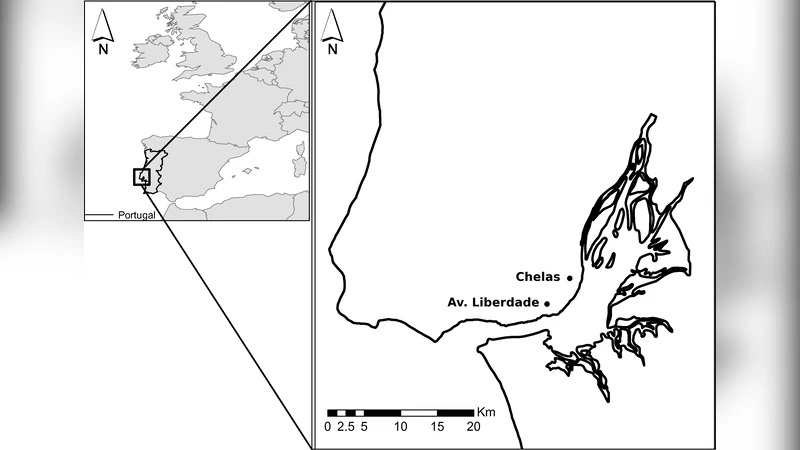
By implementing a recent technique for the determination of stochastic eigendirections of two coupled stochastic variables, we investigate the evolution of fluctuations of NO2 concentrations at two monitoring stations in the city of Lisbon, Portugal. We analyze the stochastic part of the measurements recorded at the monitoring stations by means of a method where the two concentrations are considered as stochastic variables evolving according to a system of coupled stochastic differential equations. Analysis of their structure allows for transforming the set of measured variables to a set of derived variables, one of them with reduced stochasticity. For the specific case of NO2 concentration measures, the set of derived variables are well approximated by a global rotation of the original set of measured variables. We conclude that the stochastic sources at each station are independent from each other and typically have amplitudes of the order of the deterministic contributions. Such findings show significant limitations when predicting such quantities. Still, we briefly discuss how predictive power can be increased in general in the light of our methods.
💡 Research Summary
This paper applies a recent stochastic eigendirection technique to real multivariate environmental data, specifically hourly NO₂ concentration measurements from two monitoring stations in Lisbon (Chelas and Avenida da Liberdade) spanning 1995–2006. After discarding erroneous records, each series contains roughly 10⁵ points. Because NO₂ exhibits strong daily, weekly, monthly and yearly cycles, the authors first remove deterministic periodicities using a two‑step detrending: a 52‑week moving average followed by a 1‑day moving average. The resulting detrended series (x₁, x₂) are assumed to represent pure stochastic fluctuations.
The authors model the joint dynamics of (x₁, x₂) with a two‑dimensional Langevin equation
dX/dt = h(X) + g(X)·Γ(t),
where h is the drift vector (deterministic forces) and g·gᵀ = D^{(2)} is the diffusion matrix describing stochastic forcing. Using the Kramers‑Moyal expansion, they estimate the conditional first and second moments M^{(1)}(X,τ) and M^{(2)}(X,τ) directly from the data. By taking the limit τ→0 (practically τ = 1 hour due to sampling constraints), they obtain the drift coefficients D^{(1)} and diffusion coefficients D^{(2)} as functions of the state (x₁, x₂).
Before proceeding, they verify the Markov property: the conditional moments scale linearly with τ and do not diverge as τ→0, confirming that the process can be described by a Markovian Langevin framework.
The core of the analysis is the eigen‑decomposition of the diffusion matrix D^{(2)}. Because D^{(2)} is symmetric and positive semi‑definite, its eigenvalues λ₁, λ₂ are real and non‑negative, and the associated eigenvectors define stochastic eigendirections. The authors find that λ₁≈λ₂, indicating that the two stations are driven by independent stochastic sources of comparable strength. Moreover, the eigenvectors are essentially a 45° rotation of the original coordinate axes, i.e., they correspond to the linear combinations u₁ = (x₁ + x₂)/√2 and u₂ = (x₁ − x₂)/√2.
In the transformed space, u₁ exhibits a relatively strong deterministic drift and a weaker stochastic diffusion, suggesting higher predictability along this direction. Conversely, u₂ retains a larger stochastic component, reflecting the residual differences between the two stations (e.g., local traffic patterns). The authors argue that the transformation isolates a direction where stochastic fluctuations are minimized, effectively reducing the dimensionality of the stochastic component when λ₁ ≪ λ₂; however, in this dataset the eigenvalues are similar, so the reduction is modest.
The paper then compares this stochastic eigendirection approach with conventional dimensionality‑reduction techniques such as Principal Component Analysis (PCA) and ARIMA modeling. While PCA identifies directions of maximal variance based on the covariance matrix, it does not explicitly account for the stochastic (diffusion) structure. The eigendirection method, by focusing on D^{(2)}, directly targets the noise structure, offering a more principled way to separate deterministic dynamics from stochastic noise. Nonetheless, because the diffusion eigenvalues are of comparable magnitude, the practical gain over PCA is limited in this case.
The authors conclude that (i) the stochastic contributions at the two Lisbon stations are essentially independent, (ii) deterministic and stochastic forces are of similar magnitude, which imposes fundamental limits on long‑term predictability of NO₂ concentrations, and (iii) the stochastic eigendirection framework provides a useful diagnostic for identifying optimal variable combinations that minimize stochasticity. They suggest that incorporating additional meteorological variables (temperature, wind speed, etc.) and extending the method to more stations and other pollutants could further enhance predictive performance. Future work may also explore non‑linear drift and diffusion terms, leading to more accurate non‑Gaussian Langevin models for air‑quality forecasting.
Comments & Academic Discussion
Loading comments...
Leave a Comment