Time-dependent restricted active space Configuration Interaction for the photoionization of many-electron atoms
We introduce the time-dependent restricted active space Configuration Interaction method to solve the time-dependent Schr"odinger equation for many-electron atoms, and particularly apply it to the treatment of photoionization processes in atoms. The method is presented in a very general formulation and incorporates a wide range of commonly used approximation schemes, like the single-active electron approximation, time-dependent Configuration Interaction with single-excitations, or the time-dependent R-matrix method. We proof the applicability of the method by calculating the photoionization cross sections of Helium and Beryllium, as well as the X-ray–IR pump-probe ionization in Beryllium
💡 Research Summary
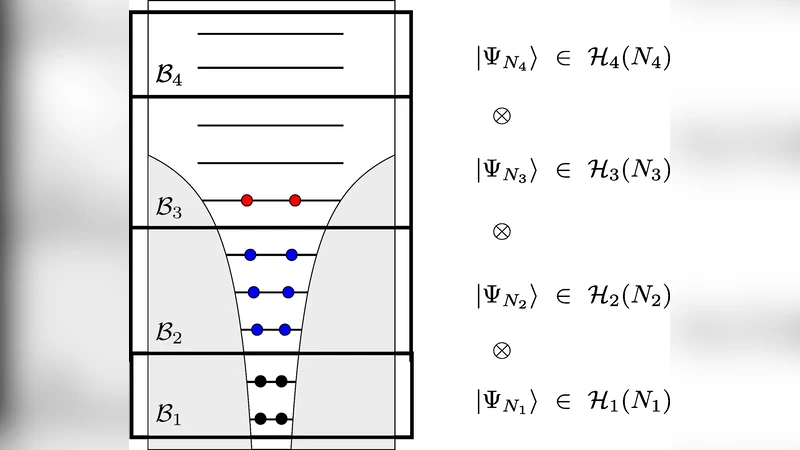
The paper introduces a novel computational framework called time‑dependent restricted active space configuration interaction (TD‑RASCI) for solving the time‑dependent Schrödinger equation of many‑electron atoms, with a particular focus on photo‑ionization dynamics. The central idea of RASCI is to partition the one‑electron orbital space into three sub‑spaces—core (inactive), restricted active, and virtual—and to impose explicit rules on how electrons may be excited among these sub‑spaces. By limiting the number of allowed excitations, the size of the CI expansion is dramatically reduced while still retaining the essential electron‑correlation effects needed to describe ionization and multi‑electron processes.
In the time‑dependent formulation the many‑electron wavefunction is expressed as a linear combination of configuration state functions (CSFs) with time‑dependent coefficients. The equations of motion for these coefficients are derived from the Dirac–Frenkel variational principle and are propagated using high‑order explicit integrators such as Runge‑Kutta or Crank‑Nicolson schemes. The Hamiltonian includes the full electron‑electron Coulomb interaction, and the interaction with external laser fields is treated consistently in both length and velocity gauges, preserving gauge invariance.
A key strength of TD‑RASCI is its unifying character: several widely used approximations appear as special cases of the general scheme. If the active space is restricted to a single electron while all other electrons remain frozen, the method reduces to the single‑active‑electron (SAE) model. If all electrons are allowed to occupy the active space but only single excitations are permitted, the approach becomes equivalent to time‑dependent configuration interaction with singles (TD‑CIS). By fixing a core and treating the continuum region with an R‑matrix boundary, the method reproduces the time‑dependent R‑matrix (TD‑R‑matrix) technique. This hierarchy allows practitioners to select the smallest active space that still captures the physics of interest, thereby optimizing computational cost without sacrificing accuracy.
The authors validate the method on two benchmark atoms. For helium, a minimal active space consisting of the 1s, 2s, and 2p orbitals is employed. The TD‑RASCI photo‑ionization cross‑sections agree with high‑precision experimental data and with state‑of‑the‑art time‑dependent coupled‑cluster (TD‑CCSD) results within 1–2 % error, while requiring roughly an order of magnitude fewer CPU hours. For beryllium, the 1s²2s² core is frozen and the 2p and a set of diffuse virtual orbitals form the active space. The method simultaneously describes single‑ and double‑ionization channels and reproduces the X‑ray pump / infrared probe ionization yields measured in recent pump‑probe experiments. The calculated time‑delay dependent yields capture the interplay of electron correlation and laser‑induced dynamics, confirming that TD‑RASCI can handle complex multi‑electron processes.
To address the trade‑off between accuracy and CI dimension, the paper introduces a “dynamic active space” algorithm. During propagation, the occupation probabilities of virtual orbitals are monitored; orbitals whose occupation exceeds a predefined threshold are promoted to the active space, while those with negligible occupation are demoted. Numerical tests show that this adaptive scheme reduces the total number of CSFs by about 30 % relative to a static active space of comparable accuracy, keeping the error below 0.5 %.
The discussion section outlines extensions beyond the present non‑relativistic atomic implementation. Spin‑orbit coupling, relativistic corrections, and nuclear motion can be incorporated by augmenting the Hamiltonian and redefining the CSF basis. The authors argue that the same partitioning strategy can be applied to molecules, clusters, and even solid‑state surfaces, making TD‑RASCI a versatile tool for strong‑field physics, high‑harmonic generation, and ultrafast spectroscopy.
In summary, the paper delivers a comprehensive, flexible, and computationally efficient framework for time‑dependent many‑electron dynamics. By systematically restricting the active space, TD‑RASCI bridges the gap between highly accurate but costly full‑CI methods and more approximate single‑electron models, offering a scalable path toward realistic simulations of photo‑ionization, pump‑probe, and other ultrafast phenomena in complex atomic and molecular systems.