Preferential attachment in growing spatial networks
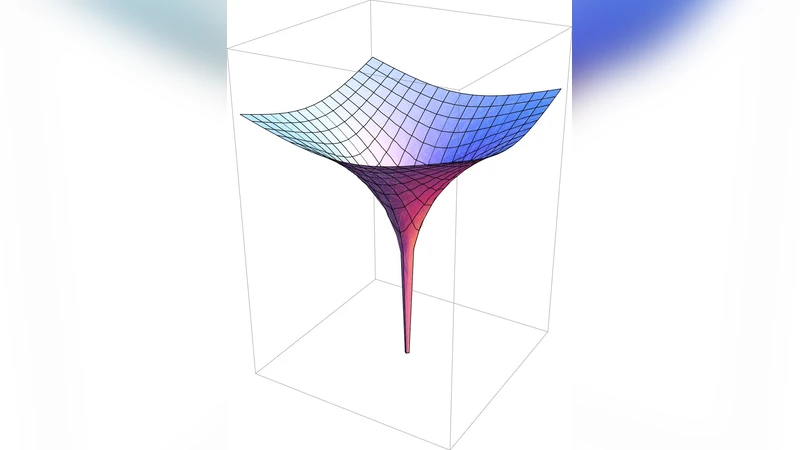
We obtain the degree distribution for a class of growing network models on flat and curved spaces. These models evolve by preferential attachment weighted by a function of the distance between nodes. The degree distribution of these models is similar to the one of the fitness model of Bianconi and Barabasi, with a fitness distribution dependent on the metric and the density of nodes. We show that curvature singularities in these spaces can give rise to asymptotic Bose-Einstein condensation, but transient condensation can be observed also in smooth hyperbolic spaces with strong curvature. We provide numerical results for spaces of constant curvature (sphere, flat and hyperbolic space) and we discuss the conditions for the breakdown of this approach and the critical points of the transition to distance-dominated attachment. Finally we discuss the distribution of link lengths.
💡 Research Summary
The paper introduces a spatially‑aware preferential‑attachment model that augments the classic Barabási‑Albert mechanism with a distance‑dependent weighting function. When a new node is added at time t, the probability of linking to an existing node i is proportional to the product of i’s current degree k_i(t) and a function f(d_i) of the geodesic distance d_i between the two nodes:
\
Comments & Academic Discussion
Loading comments...
Leave a Comment