A model for the orientational ordering of the plant microtubule cortical array
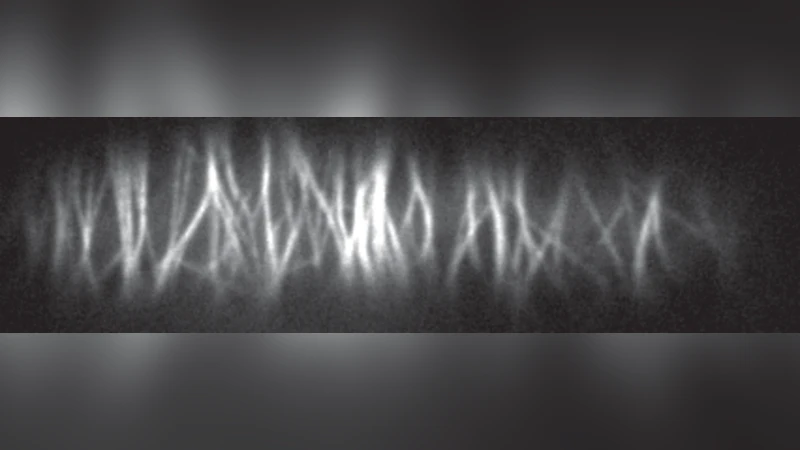
The plant microtubule cortical array is a striking feature of all growing plant cells. It consists of a more or less homogeneously distributed array of highly aligned microtubules connected to the inner side of the plasma membrane and oriented transversely to the cell growth axis. Here we formulate a continuum model to describe the origin of orientational order in such confined arrays of dynamical microtubules. The model is based on recent experimental observations that show that a growing cortical microtubule can interact through angle dependent collisions with pre-existing microtubules that can lead either to co-alignment of the growth, retraction through catastrophe induction or crossing over the encountered microtubule. We identify a single control parameter, which is fully determined by the nucleation rate and intrinsic dynamics of individual microtubules. We solve the model analytically in the stationary isotropic phase, discuss the limits of stability of this isotropic phase, and explicitly solve for the ordered stationary states in a simplified version of the model.
💡 Research Summary
The paper presents a theoretical framework that explains how the highly ordered cortical microtubule (MT) array in growing plant cells emerges from the stochastic dynamics of individual MTs confined to the inner surface of the plasma membrane. Building on recent live‑cell observations, the authors incorporate three angle‑dependent outcomes of a collision between a growing MT and a pre‑existing one: (i) co‑alignment, where the newcomer reorients to follow the existing filament; (ii) catastrophe induction, where the growing tip switches to rapid shrinkage; and (iii) cross‑over, where the two filaments pass without interaction. These outcomes are encoded in probability functions that depend on the encounter angle.
The core of the model is a continuum kinetic equation for the angular distribution P(θ,t) of MTs. Growth, shrinkage, nucleation, and collision‑induced reorientation are represented by drift, loss, source, and integral terms, respectively. By non‑dimensionalising the equation the authors identify a single control parameter ζ = ν_n/(v_g ρ), where ν_n is the nucleation rate, v_g the polymerisation speed, and ρ the total MT density. ζ quantifies the relative strength of random nucleation versus collision‑mediated alignment.
First, the authors solve for the isotropic stationary state P(θ)=1/(2π) and perform a linear stability analysis. They derive a critical value ζ_c that separates a stable disordered phase (ζ>ζ_c) from an unstable regime (ζ<ζ_c). In the unstable regime any infinitesimal angular bias is amplified, leading to spontaneous symmetry breaking analogous to the nematic transition in liquid crystals.
To obtain explicit ordered solutions the authors simplify the angular dependence of the collision outcomes into two angular windows: a “co‑alignment” sector for small angles and a “catastrophe” sector for larger angles, while cross‑over is treated as a neutral background. Within this reduced model the steady‑state angular distribution can be written in closed form as a Gaussian‑like peak centred on a preferred direction θ_0, with a width σ that shrinks as ζ decreases. Thus, low nucleation rates or high growth speeds (small ζ) produce a sharply aligned array, whereas high nucleation rates broaden the distribution and eventually destroy order.
The biological implications are significant. Because ζ is directly determined by measurable quantities (nucleation frequency, polymerisation speed, and MT density), the model predicts that plants can regulate cortical array orientation simply by modulating nucleation or growth dynamics, for example through hormonal signals or mechanical feedback from the cell wall. Moreover, the model provides a quantitative explanation for why the array is typically oriented transverse to the growth axis: the transverse direction maximises the probability of co‑alignment collisions given the geometry of the cell wall.
The authors discuss several limitations. The model assumes a two‑dimensional, flat geometry and neglects curvature effects present in real cells. It also treats the collision probabilities as fixed functions of angle, whereas in vivo they may depend on additional factors such as MAP (microtubule‑associated protein) concentrations, temperature, or local tension. Nucleation is assumed to be spatially uniform, while experimental data suggest preferential nucleation sites (e.g., near the cell cortex or at pre‑existing MTs). Despite these simplifications, the framework is readily extensible: incorporating length‑dependent catastrophe rates, spatially heterogeneous nucleation, or explicit MAP dynamics would allow the model to capture a broader range of observed behaviours.
In conclusion, the paper delivers a concise yet powerful continuum description of cortical MT ordering, identifies a single dimensionless control parameter that governs the transition between disordered and ordered phases, and provides analytical expressions for both isotropic and aligned steady states. The results align with experimental observations of plant cell MT dynamics and offer testable predictions about how changes in nucleation or growth rates should affect array orientation. This work thus bridges the gap between single‑filament biophysics and the emergent cellular architecture of plant tissues.
Comments & Academic Discussion
Loading comments...
Leave a Comment