Transition to superdiffusive behavior in intracellular actin-based transport mediated by molecular motors
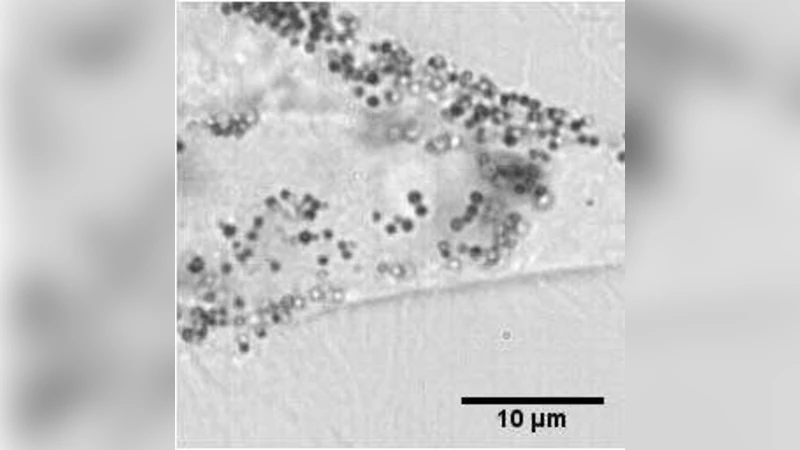
Intracellular transport of large cargoes, such as organelles, vesicles or large proteins, is a complex dynamical process that involves the interplay of ATP-consuming molecular motors, cytoskeleton filaments and the viscoelastic cytoplasm. The displacements of particles or probes in the cell cytoplasm as a function of time are characterized by different (anomalous) diffusion regimes. We investigate here the motion of pigment organelles (melanosomes) driven by myosin-V motors in \emph{Xenopus laevis} melanocytes using a high spatio-temporal resolution tracking technique. By analyzing the mean square displacement (MSD) of the obtained trajectories as a function of the time lag, we show that the melanosomes display a transition between subdiffusive to superdiffusive behavior. A stochastic theoretical model is introduced to generalize the interpretation of our data. Starting from a generalized Langevin equation that explicitly considers the collective action of the molecular motors we derive an analytical expression for the MSD as a function of the time lag, which also takes into account the experimental noise. By fitting our model to the experimental data we were able to discriminate the exponents that characterize the passive and active contributions to melanosome dynamics. The model also estimates the “global” motor forces correctly. In this sense, our model gives a quantitative description of active transport in living cells with a reduced number of parameters.
💡 Research Summary
This study investigates the dynamics of large intracellular cargoes, focusing on pigment organelles (melanosomes) that are transported by myosin‑V motors along actin filaments in Xenopus laevis melanocytes. Using a high‑resolution, high‑speed tracking system, the authors recorded two‑dimensional trajectories of individual melanosomes with millisecond temporal resolution and nanometer spatial precision. By computing the mean‑square displacement (MSD) as a function of the time lag τ, they observed a clear crossover: at short τ (≈10–200 ms) the MSD scales sublinearly (⟨Δr²⟩ ∝ τ^α with α ≈ 0.6), indicating subdiffusive behavior, whereas at longer τ (≈0.5–10 s) the scaling becomes superlinear (⟨Δr²⟩ ∝ τ^β with β ≈ 1.4), characteristic of superdiffusion. This transition cannot be explained by simple Brownian diffusion or by a pure ballistic model of motor‑driven transport.
To rationalize the observations, the authors develop a stochastic theoretical framework based on a generalized Langevin equation (GLE). The GLE incorporates (i) a memory kernel γ(t) ∝ t^{‑λ} (0 < λ < 1) that captures the viscoelastic, power‑law rheology of the cytoplasm, (ii) thermal noise ξ(t) satisfying the fluctuation‑dissipation theorem, and (iii) a collective active force F_m(t) representing the ensemble action of many myosin‑V motors. The active force is modeled as a zero‑mean Gaussian process with a finite correlation time τ_c, reflecting the stochastic yet temporally correlated stepping of the motors. Solving the GLE yields an analytical expression for the MSD:
⟨Δr²(τ)⟩ = A τ^{α} + B τ^{β} + σ²,
where α = 1 ‑ λ describes the passive subdiffusive contribution, β = 2 ‑ λ + δ (δ accounts for the temporal correlations of the motor force) describes the active superdiffusive contribution, A and B are amplitudes set by the viscoelastic modulus and motor activity, respectively, and σ² represents experimental tracking noise.
Fitting this expression to the experimental MSD curves yields α ≈ 0.6 (implying λ ≈ 0.4) and β ≈ 1.4. The amplitude B together with the estimated correlation time τ_c allows the authors to infer an average motor force of ~1–2 pN per melanosome, consistent with single‑molecule measurements of myosin‑V. The noise term σ is on the order of 30 nm, matching the known precision of the tracking system. Importantly, the model reproduces the entire MSD curve with only five parameters, demonstrating that a minimal description can capture the complex interplay between passive viscoelastic resistance and active motor driving.
The paper makes several notable contributions. First, it provides direct experimental evidence of a sub‑to‑superdiffusive crossover in a biologically relevant transport system, highlighting that intracellular motion cannot be classified simply as “passive” or “active.” Second, it extends the GLE formalism to include a collective motor force, offering a unified framework that can be applied to other cargo‑motor systems and to different cytoskeletal architectures. Third, by explicitly incorporating measurement noise into the theoretical MSD, the authors set a methodological precedent for rigorous quantitative analysis of high‑precision single‑particle tracking data.
In conclusion, the work demonstrates that the anomalous diffusion of melanosomes arises from the competition between the cytoplasm’s power‑law viscoelasticity and the sustained stochastic forces generated by myosin‑V ensembles. The analytical model not only quantifies the passive and active exponents but also provides realistic estimates of motor forces, thereby delivering a compact yet powerful description of active intracellular transport. This approach opens avenues for studying transport alterations in disease states, for designing synthetic cargo delivery platforms, and for probing the mechanical properties of the intracellular environment across a wide range of biological contexts.
Comments & Academic Discussion
Loading comments...
Leave a Comment