Pinwheel stabilization by ocular dominance segregation
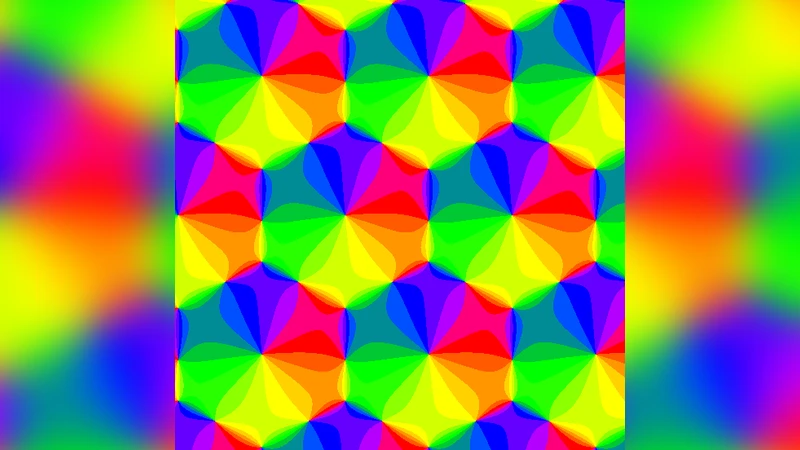
We present an analytical approach for studying the coupled development of ocular dominance and orientation preference columns. Using this approach we demonstrate that ocular dominance segregation can induce the stabilization and even the production of pinwheels by their crystallization in two types of periodic lattices. Pinwheel crystallization depends on the overall dominance of one eye over the other, a condition that is fulfilled during early cortical development. Increasing the strength of inter-map coupling induces a transition from pinwheel-free stripe solutions to intermediate and high pinwheel density states.
💡 Research Summary
This paper presents a comprehensive analytical framework for investigating the coupled development of ocular dominance (OD) and orientation preference (OP) columns in primary visual cortex. By representing the OP map as a complex field z(x) (with magnitude indicating selectivity and phase encoding preferred orientation) and the OD map as a real field o(x) (signifying ipsi‑ versus contralateral eye dominance), the authors formulate a set of Swift‑Hohenberg‑type partial differential equations that incorporate a coupling energy T. The coupling term is motivated by experimental observations that iso‑orientation lines tend to intersect OD borders perpendicularly; mathematically this yields a contribution proportional to |∇o·∇θ|², which penalizes large gradients of OD at pinwheel cores unless the OD gradient is small (i.e., near extrema or saddle points of o).
The model includes two key parameters: a bias γ that favours the contralateral eye (reflecting the early developmental dominance of one eye) and a coupling strength ε that controls the interaction between the two maps. Analytic treatment proceeds via weakly nonlinear analysis near the pattern‑forming instability, leading to amplitude equations for the three critical Fourier modes of the OP field (A₁, A₂, A₃) and the corresponding OD modes (B₁, B₂, B₃). The OD dynamics, in the absence of coupling, admits three stationary solutions: a homogeneous state, stripe patterns, and hexagonal “patch” arrays. Increasing γ drives a transition from stripes to hexagonal patches, and eventually to a homogeneous dominance of the contralateral eye.
When the inter‑map coupling is turned on, the amplitude equations reveal two distinct families of pinwheel‑rich solutions. The first, termed hexagonal pinwheel crystals (hPWCs), contains six pinwheels per unit cell arranged on a regular hexagonal lattice; three of these share the same topological charge and sit at OD extrema, while the other three lie near OD borders. The second family, rhombic pinwheel crystals (rPWCs), contains four pinwheels per unit cell in a rhombic arrangement, with one pinwheel at an OD extremum and the remaining three at OD saddle points. The corresponding pinwheel densities are ρ≈5.2 Λ⁻² for hPWCs and ρ≈3.5 Λ⁻² for rPWCs (Λ being the intrinsic wavelength of the pattern).
Linear stability analysis of the amplitude equations yields a phase diagram in the (γ, ε) plane. For γ above a critical value γ* and ε·B⁴ exceeding ≈0.042, hPWCs become the global energy minimum. For intermediate coupling (0.033 ≲ ε·B⁴ ≲ 0.12) rPWCs are locally stable, leading to a bistable region where both hPWCs and rPWCs can coexist. Below ε·B⁴ ≈ 0.033 the system reverts to pinwheel‑free stripe solutions. These analytical predictions are corroborated by large‑scale numerical simulations (128 × 128 grid, implicit Krylov‑subspace integration). Simulations show that, starting from random initial conditions, increasing ε drives the system from a decay of pinwheels (stripe attractor) toward the emergence and persistence of the crystalline pinwheel states, with the hPWC dominating at strong coupling.
The authors conclude that OD segregation, particularly when one eye dominates and OD forms patchy domains rather than simple stripes, can capture and stabilize orientation pinwheels that are intrinsically unstable in isolation. This provides a mechanistic explanation for experimental observations that removal of OD columns leads to smoother OP maps but does not completely abolish pinwheels, suggesting that additional columnar systems (e.g., spatial frequency or direction maps) may play a similar stabilizing role. The work establishes a rigorous analytical basis for studying multi‑map interactions during cortical development and points toward future extensions that incorporate more than two coupled feature maps to explain the non‑crystalline spatial organization observed in adult visual cortex.
Comments & Academic Discussion
Loading comments...
Leave a Comment