Community Detecting By Signaling on Complex Networks
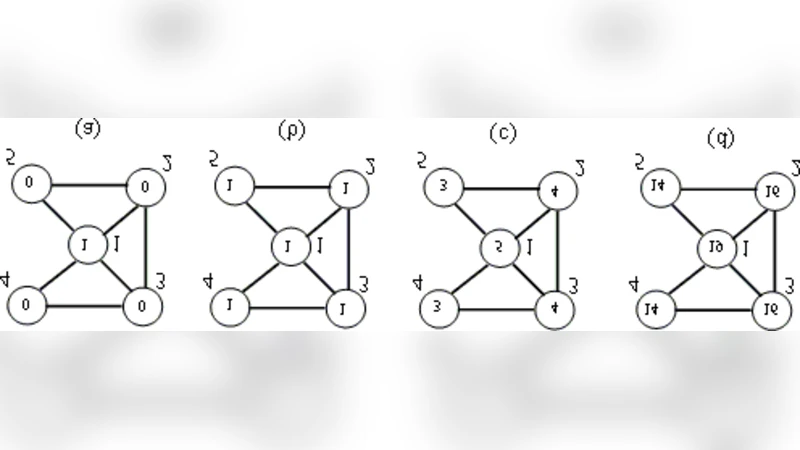
Based on signaling process on complex networks, a method for identification community structure is proposed. For a network with $n$ nodes, every node is assumed to be a system which can send, receive, and record signals. Each node is taken as the initial signal source once to inspire the whole network by exciting its neighbors and then the source node is endowed a $n$d vector which recording the effects of signaling process. So by this process, the topological relationship of nodes on networks could be transferred into the geometrical structure of vectors in $n$d Euclidian space. Then the best partition of groups is determined by $F$-statistic and the final community structure is given by Fuzzy $C$-means clustering method (FCM). This method can detect community structure both in unweighted and weighted networks without any extra parameters. It has been applied to ad hoc networks and some real networks including Zachary Karate Club network and football team network. The results are compared with that of other approaches and the evidence indicates that the algorithm based on signaling process is effective.
💡 Research Summary
The paper introduces a novel community‑detection algorithm that leverages a signaling process on complex networks to transform topological relationships into geometric ones in a high‑dimensional Euclidean space. For a graph with n nodes, each node is treated as an autonomous system capable of emitting, receiving, and recording signals. The algorithm proceeds in three major phases: (1) Signal propagation, where each node i is sequentially selected as the sole source of a unit signal. At discrete time steps the signal vector is updated by multiplying with the adjacency (or weighted) matrix A, i.e., s(t) = A·s(t‑1). After a sufficient number of iterations the signal has diffused throughout the network, and the final amount received by every node j constitutes the j‑th component of an n‑dimensional vector x_i associated with source i. Repeating this for all n sources yields a set of vectors X = {x₁,…,x_n} that encode the global influence patterns of each node. (2) Determination of the number of communities, which is performed without any a‑priori parameter. For each candidate number of clusters k, the vectors are partitioned (initially by a simple method such as k‑means) and the between‑cluster to within‑cluster variance ratio is computed using the classical F‑statistic:
\
Comments & Academic Discussion
Loading comments...
Leave a Comment