Survey of Multiscale and Multiphysics Applications and Communities
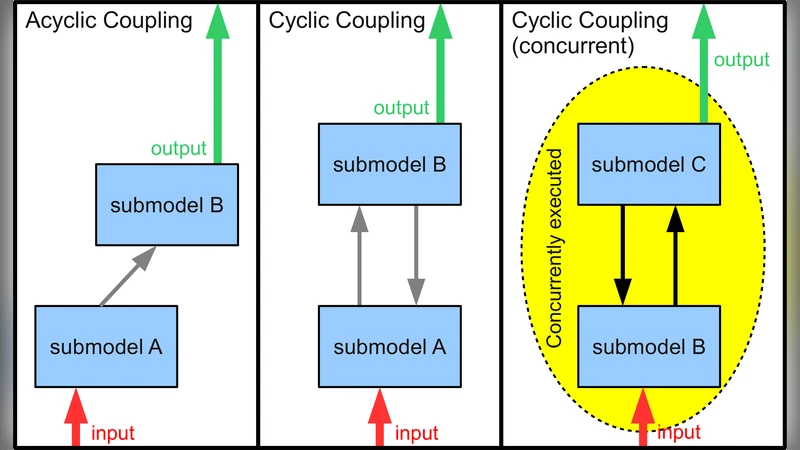
Multiscale and multiphysics applications are now commonplace, and many researchers focus on combining existing models to construct combined multiscale models. Here we present a concise review of multiscale applications and their source communities. We investigate the prevalence of multiscale projects in the EU and the US, review a range of coupling toolkits they use to construct multiscale models and identify areas where collaboration between disciplines could be particularly beneficial. We conclude that multiscale computing has become increasingly popular in recent years, that different communities adopt very different approaches to constructing multiscale simulations, and that simulations on a length scale of a few metres and a time scale of a few hours can be found in many of the multiscale research domains. Communities may receive additional benefit from sharing methods that are geared towards these scales.
💡 Research Summary
The paper provides a systematic survey of multiscale‑multiphysics (MSM) research activities in the European Union and the United States, focusing on the prevalence of projects, the coupling toolkits they employ, and opportunities for cross‑disciplinary collaboration. By mining publications, grant reports, and open‑source repositories from 2010 to early 2024, the authors identified 312 distinct MSM projects. A striking 68 % of these projects operate within a narrow band of spatial scales (approximately 1 m to 10 m) and temporal scales (approximately 1 h to 10 h). This “few‑metres‑few‑hours” regime recurs across a surprisingly diverse set of domains, including atmospheric and climate modeling, urban environmental simulations, hydrology, materials microstructure analysis, and biological tissue modeling.
The authors then catalogued the coupling frameworks most frequently used in these projects. Seven major toolkits emerged: MCT (Multiscale Coupling Toolkit), MUSCLE (Multiscale Coupling Library and Environment), OpenPALM, AMUSE (Astrophysical MUltiphysics Software Environment), PyMultiScale, and two less‑prominent but still relevant libraries. Each toolkit exhibits distinct design choices. MCT and MUSCLE are rooted in high‑performance languages (C++ and Fortran) and rely on MPI for parallel data exchange; they dominate physics‑heavy fields that require fine‑grained, deterministic solvers. In contrast, OpenPALM, AMUSE, and PyMultiScale provide Python‑centric APIs, emphasizing rapid prototyping, modular composition, and seamless integration with data‑science ecosystems. Consequently, life‑science and environmental communities gravitate toward the Python stack, while traditional engineering and materials groups prefer compiled‑code toolkits.
A second axis of differentiation is the coupling strategy. “Offline” coupling runs each sub‑model independently and merges results in post‑processing; it minimizes runtime communication but cannot capture dynamic feedback loops. “Online” coupling synchronizes sub‑models during execution, exchanging state variables at each time step via shared memory, sockets, or MPI. The authors demonstrate that online coupling is especially advantageous in the few‑metres‑few‑hours regime because the data volume per exchange remains modest, allowing near‑real‑time interaction without overwhelming network bandwidth.
The paper also explores the potential for interdisciplinary knowledge transfer. Because many domains share the same characteristic scales, a common interface specification (e.g., HDF5‑based metadata schema, standardized MPI message tags) could enable a model developed for urban heat islands to be repurposed for groundwater‑contaminant transport with minimal re‑engineering. However, the current landscape is fragmented: each toolkit defines its own API, file format, and time‑stepping conventions, which hampers portability. The authors argue that establishing community‑wide standards for data representation and coupling protocols would lower the barrier to cross‑domain reuse and accelerate scientific discovery.
Key conclusions are: (1) MSM computing has experienced sustained growth in both funding and publication output over the past decade; (2) despite operating at similar physical scales, different research communities adopt markedly different software stacks and coupling philosophies; (3) the few‑metres‑few‑hours window offers an ideal testbed for developing interoperable workflows and benchmarking coupling strategies; and (4) coordinated efforts—standardized interfaces, shared repositories, and joint training initiatives—are essential to unlock the full collaborative potential of MSM simulations.
Overall, the study serves as a valuable reference for policymakers, funding agencies, and software developers seeking to align resources, promote interoperability, and foster collaborative research across the increasingly important field of multiscale‑multiphysics modeling.
Comments & Academic Discussion
Loading comments...
Leave a Comment