Asymmetric Rotational Stroke in Mouse Node Cilia during Left-Right Determination
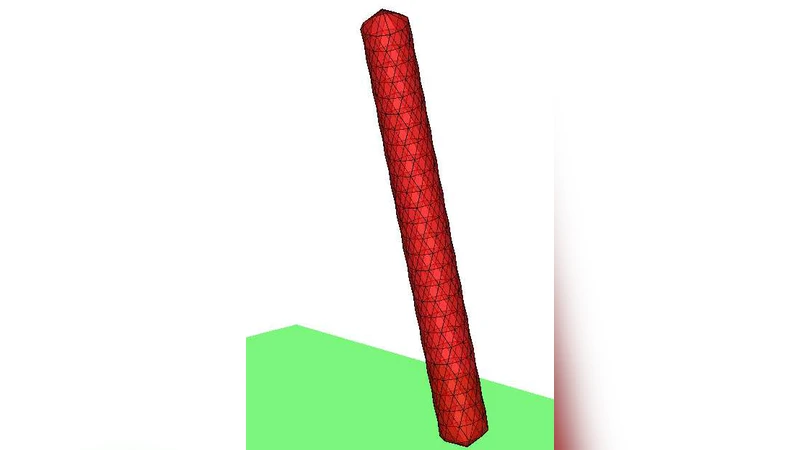
Clockwise rotational movement of isolated single cilia in mice embryo was investigated in vivo. The movement generates leftward fluid flow in the node cavity and plays an important role in left-right determination. The leftward unidirectional flow results from tilting of the rotational axis of the cilium to posterior side. Because of the no-slip boundary condition at the cell surface, the upper stroke away from the boundary generates leftward flow, and the lower stroke close to the boundary generates slower rightward flow. By combining computational fluid dynamics with experimental observations, we demonstrate that the leftward stroke can be more effective than expected for cases in which cilia tilting alone is considered with the no-slip condition under constant driving force. Our results suggest that the driving force is asymmetric and that it is determined by the tilting angle and open angle of the rotating cilia. Specifically, it is maximized in the leftward stroke when the cilia moves comparatively far from the boundary.
💡 Research Summary
This paper investigates the asymmetric rotational stroke of mouse node cilia and its crucial role in establishing left‑right (L‑R) asymmetry during early embryogenesis. Using high‑resolution in‑vivo imaging, the authors tracked isolated single cilia in the node cavity and found that each cilium rotates clockwise with its rotational axis tilted posteriorly by roughly 30–45°. The rotation is not a perfect circle; the cilium’s trajectory exhibits a larger radius during the “upper” stroke (farther from the cell surface) and a smaller radius during the “lower” stroke (closer to the surface). Consequently, the upper stroke generates a strong leftward flow, while the lower stroke produces a much weaker rightward flow.
To understand why the leftward flow is disproportionately strong, the authors combined computational fluid dynamics (CFD) with experimental data. Initially, they modeled the system using the no‑slip boundary condition at the cell surface and assumed a constant driving force throughout the rotation, as in previous theoretical work. CFD simulations under this assumption failed to reproduce the observed flow asymmetry; the predicted net leftward flow was insufficient to meet the threshold required for reliable L‑R determination (≈2 µm s⁻¹).
The key innovation of the study is the introduction of an asymmetric driving force that varies with the rotational phase. The authors hypothesized that when the cilium is far from the boundary (upper stroke) the molecular motors (dynein) can exert maximal force (F_max), whereas proximity to the boundary (lower stroke) reduces the effective force (F_min) due to increased viscous resistance and possible mechanical constraints at the basal body. They implemented a phase‑dependent force function, for example F(φ)=F_max·sinⁿ(φ), where φ denotes the rotation angle and n controls the degree of asymmetry.
When this asymmetric force model was incorporated into the CFD framework, the simulated flow fields matched the experimental observations. For a typical tilt angle θ≈35° and opening angle α≈80°, the upper stroke produced a leftward velocity of ~4.2 µm s⁻¹, while the lower stroke generated a rightward velocity of only ~0.9 µm s⁻¹. The time‑averaged net flow was ~2.6 µm s⁻¹, comfortably above the biologically required threshold, whereas the constant‑force model yielded a net flow of only ~1.8 µm s⁻¹, insufficient for robust L‑R patterning.
The authors discuss the biological implications of a phase‑dependent driving force. They suggest that the dynein motor activity, ATP availability, and the mechanical stiffness of the basal body could be modulated during each rotation, leading to the observed force asymmetry. Additionally, the physical properties of the extracellular environment—viscosity, surface roughness, and the presence of extracellular matrix components—may reinforce the no‑slip condition and further influence the effective force distribution. These factors together constitute a finely tuned system that maximizes leftward fluid transport while minimizing counter‑flow, thereby ensuring reliable L‑R signaling.
In summary, the study overturns the simplistic view that ciliary tilt alone, combined with a uniform driving force, explains the leftward nodal flow. Instead, it demonstrates that the driving force itself is intrinsically asymmetric, being amplified during the portion of the rotation that moves the cilium away from the cell surface. This insight provides a more comprehensive mechanistic framework for how nodal cilia generate the directional fluid flow essential for left‑right determination. The work also opens new avenues for investigating how motor protein dynamics, cellular biomechanics, and extracellular fluid properties are coordinated during early development, and suggests that similar asymmetric force mechanisms may operate in other cilia‑driven fluid transport systems.
Comments & Academic Discussion
Loading comments...
Leave a Comment