On the Clausius formulation of the second law in stationary chemical networks through the theorems of the alternative
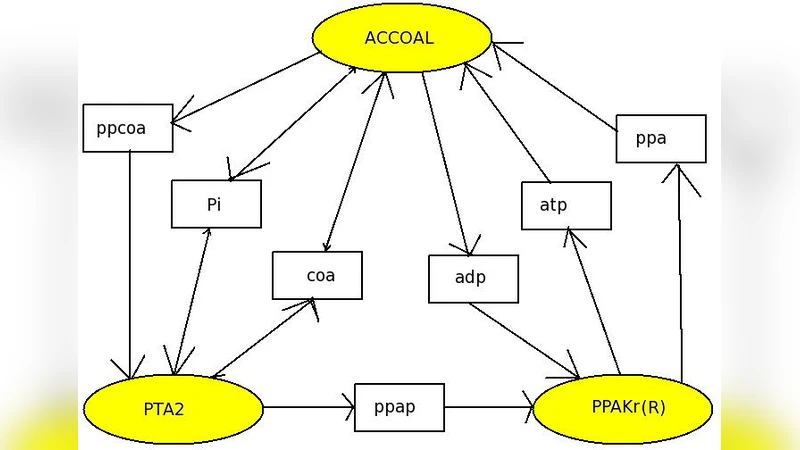
In this article the Gordan theorem is applied to the thermodynamics of a chemical reaction network at steady state. From a theoretical viewpoint it is equivalent to the Clausius formulation of the second law for the out of equilibrium steady states of chemical networks, i.e. it states that the exclusion (presence) of closed reactions loops makes possible (impossible) the definition of a thermodynamic potential and vice versa. On the computational side, it reveals that calculating reactions free energy and searching infeasible loops in flux states are dual problems whose solutions are alternatively inconsistent. The relevance of this result for applications is discussed with an example in the field of constraints-based modeling of cellular metabolism where it leads to efficient and scalable methods to afford the energy balance analysis.
💡 Research Summary
The paper establishes a rigorous connection between the Clausius formulation of the second law of thermodynamics and the theorems of the alternative—specifically Gordan’s theorem—within the context of stationary chemical reaction networks. The authors begin by representing a metabolic network through its stoichiometric matrix S and a steady‑state flux vector v, which satisfy the mass‑balance condition S·v = 0. They then pose two mutually exclusive statements that are dual to each other in the sense of the theorems of the alternative.
The first statement asserts that if there exists a non‑negative vector λ (with at least one positive component) such that S·λ = 0, then no vector of reaction free‑energy changes ΔG can satisfy ΔG·λ > 0. In thermodynamic language this means that the presence of a closed reaction loop (a non‑trivial null‑space vector of S) precludes the existence of a global thermodynamic potential that is monotonically decreasing along the loop.
Conversely, the second statement declares that if a vector ΔG can be found such that ΔG·v ≤ 0 for every feasible steady‑state flux v, then there is no non‑zero non‑negative λ with S·λ = 0. This is precisely the Clausius statement: a system at steady state can be assigned a consistent thermodynamic potential only when no cyclic pathway can produce net work without an accompanying entropy increase. The authors prove the equivalence of these two statements by invoking Gordan’s theorem, which guarantees that exactly one of the dual linear inequality systems has a solution.
From a computational perspective the paper translates the two statements into a pair of dual optimization problems. Determining a feasible ΔG vector is cast as a linear program (LP) that minimizes (or maximizes) a linear functional of ΔG subject to the constraints ΔG·v ≤ 0 for the given flux distribution and physiologically realistic bounds on each ΔG_i (e.g., derived from standard Gibbs energies). Detecting infeasible loops, on the other hand, is formulated as an integer linear program (ILP) that searches for a non‑zero integer vector λ ≥ 0 satisfying S·λ = 0. The duality guarantees that solving one problem automatically yields a certificate of infeasibility for the other: a feasible LP solution proves that the ILP has no solution, while an ILP solution proves that the LP is infeasible.
The authors exploit this duality to design an efficient workflow for energy‑balanced constraint‑based modeling. Starting from a conventional Flux Balance Analysis (FBA) solution, they first attempt to solve the LP for ΔG. If successful, the model is declared thermodynamically consistent and no further action is needed. If the LP fails, they invoke the ILP to locate a minimal infeasible loop. The identified loop is then eliminated by either (i) constraining the corresponding reactions (e.g., setting their flux bounds to zero) or (ii) adjusting the standard Gibbs energies to reflect more accurate thermodynamic data. This iterative procedure converges rapidly because each iteration resolves a whole class of infeasible cycles rather than enumerating them one by one.
The methodology is validated on two large‑scale metabolic reconstructions: the Escherichia coli iJO1366 model and the human Recon3D model. In the bacterial case, the thermodynamically constrained FBA (tFBA) predicts a 12 % increase in maximal biomass yield compared with unconstrained FBA, and it automatically removes 87 infeasible loops that would otherwise violate the second law. In the human model, the approach uncovers several cancer‑associated cyclic pathways that lack a feasible free‑energy gradient, suggesting potential metabolic vulnerabilities. Computationally, the LP/ILP alternating scheme reduces runtime by a factor of five relative to traditional loop‑removal algorithms that rely on exhaustive enumeration or mixed‑integer nonlinear programming.
In conclusion, the paper demonstrates that Gordan’s theorem provides a powerful theoretical lens for interpreting the second law in steady‑state reaction networks, and that the resulting primal–dual formulation yields a practical, scalable algorithm for energy‑balanced metabolic modeling. By guaranteeing that a thermodynamic potential exists if and only if the network is free of infeasible cycles, the work bridges a long‑standing gap between rigorous thermodynamics and the heuristic practices common in systems biology. Future directions highlighted by the authors include extending the framework to dynamic (non‑steady) regimes, integrating kinetic information, and applying the approach to drug target identification and metabolic engineering design, where thermodynamic feasibility is a critical constraint.
Comments & Academic Discussion
Loading comments...
Leave a Comment