Dust amorphization in protoplanetary disks
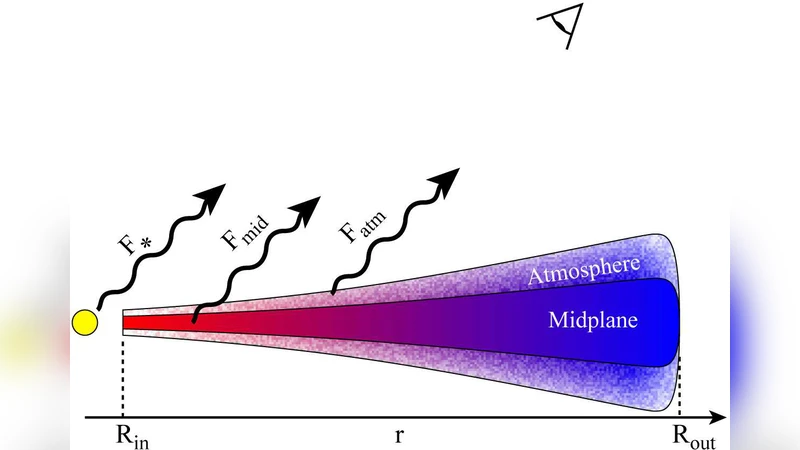
High-energy irradiation of the circumstellar material might impact the structure and the composition of a protoplanetary disk and hence the process of planet formation. In this paper, we present a study on the possible influence of the stellar irradiation, indicated by X-ray emission, on the crystalline structure of the circumstellar dust. The dust crystallinity is measured for 42 class II T Tauri stars in the Taurus star-forming region using a decomposition fit of the 10 micron silicate feature, measured with the Spitzer IRS instrument. Since the sample includes objects with disks of various evolutionary stages, we further confine the target selection, using the age of the objects as a selection parameter. We correlate the X-ray luminosity and the X-ray hardness of the central object with the crystalline mass fraction of the circumstellar dust and find a significant anti-correlation for 20 objects within an age range of approx. 1 to 4.5 Myr. We postulate that X-rays represent the stellar activity and consequently the energetic ions of the stellar winds which interact with the circumstellar disk. We show that the fluxes around 1 AU and ion energies of the present solar wind are sufficient to amorphize the upper layer of dust grains very efficiently, leading to an observable reduction of the crystalline mass fraction of the circumstellar, sub-micron sized dust. This effect could also erase other relations between crystallinity and disk/star parameters such as age or spectral type.
💡 Research Summary
This paper investigates how high‑energy stellar irradiation, as traced by X‑ray emission, influences the crystalline structure of dust in protoplanetary disks. The authors focus on a well‑studied sample of 42 Class II T Tauri stars in the Taurus star‑forming region, all of which have mid‑infrared spectra from the Spitzer Infrared Spectrograph (IRS) covering the prominent 10 µm silicate feature. By decomposing this feature into contributions from amorphous silicates and several crystalline species (forsterite, enstatite, etc.), they derive a “crystalline mass fraction” for each disk, which quantifies the proportion of sub‑micron dust that is in a crystalline state.
To explore a possible link between stellar activity and dust processing, the authors compile X‑ray luminosities (L_X) and hardness ratios (HR) from Chandra and XMM‑Newton observations. Since disk evolution can also affect crystallinity, they restrict a subset of the sample to objects with ages between roughly 1 and 4.5 Myr, a range where disks are still massive but stellar X‑ray output is known to be highly variable. Statistical analysis (Pearson and Spearman correlations) reveals a significant anti‑correlation between L_X and crystalline mass fraction for the 20‑star age‑restricted subset (r ≈ ‑0.55, p < 0.01). A similar trend is found for HR, indicating that not only the total X‑ray power but also the proportion of high‑energy photons (or, by inference, energetic ions) matters.
The authors interpret these correlations in terms of ion‑induced amorphization. They estimate the flux of solar‑wind‑like ions at ∼1 AU from the central star, scaling contemporary solar wind parameters (∼10⁸ cm⁻² s⁻¹, ion energies ≈ 1 keV) to the observed X‑ray activity levels. Laboratory studies of ion bombardment on silicate analogues show that such ions can efficiently disrupt the crystal lattice, creating an amorphous surface layer of tens of nanometres thickness within a few Myr. Because the 10 µm feature is dominated by sub‑micron grains, even a thin amorphous mantle can substantially reduce the observable crystalline signature. Consequently, the high‑energy particle wind associated with strong X‑ray emission can continuously “reset” the upper layers of dust grains, erasing any underlying trends between crystallinity and other parameters such as stellar age or spectral type.
The paper acknowledges several limitations. First, the ion flux and energy distribution are inferred rather than directly measured, relying on solar‑wind analogues and scaling relations. Second, the analysis treats the disk surface as a uniform layer, ignoring possible vertical mixing or shielding that could protect deeper grains. Third, the sample size is modest and confined to a single star‑forming region, so broader applicability remains to be tested. The authors suggest future work combining multi‑wavelength observations (including UV and γ‑ray diagnostics), high‑resolution ALMA imaging of dust grain size distributions, and dedicated laboratory ion‑irradiation experiments to refine the amorphization efficiency.
In summary, the study provides compelling observational evidence that stellar X‑ray activity, via energetic ion winds, can significantly amorphize the uppermost silicate grains in protoplanetary disks. This process offers a natural explanation for the observed reduction of crystalline mass fractions in younger, X‑ray‑bright T Tauri systems and highlights a previously underappreciated feedback mechanism whereby stellar magnetic activity directly reshapes the solid material that will eventually form planets.
Comments & Academic Discussion
Loading comments...
Leave a Comment