Synchrony with Shunting Inhibition
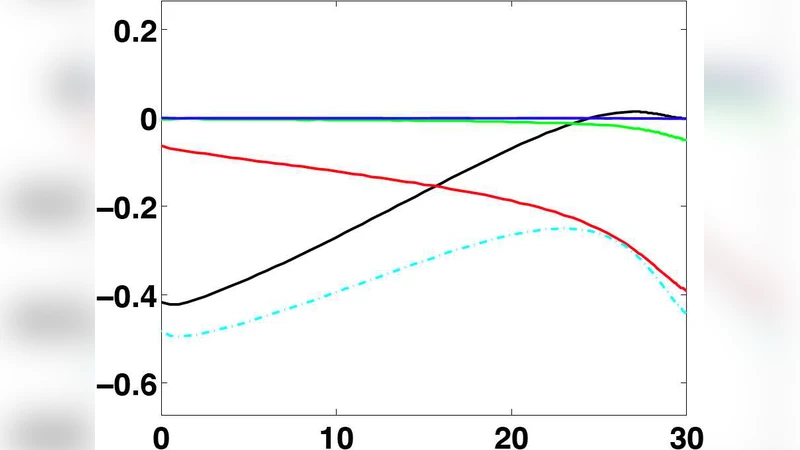
Spike time response curves (STRC’s) are used to study the influence of synaptic stimuli on the firing times of a neuron oscillator without the assumption of weak coupling. They allow us to approximate the dynamics of synchronous state in networks of neurons through a discrete map. Linearization about the fixed point of the discrete map can then be used to predict the stability of patterns of synchrony in the network. General theory for taking into account the contribution from higher order STRC terms, in the approximation of the discrete map for coupled neuronal oscillators in synchrony is still lacking. Here we present a general framework to account for higher order STRC corrections in the approximation of discrete map to determine the domain of 1:1 phase locking state in the network of two interacting neurons. We begin by demonstrating that the effect of synaptic stimuli through a shunting synapse to a neuron firing in the gamma frequency band (20-80 Hz) last for three consecutive firing cycles. We then show that the discrete map derived by taking into account the higher order STRC contributions is successfully able predict the domain of synchronous 1:1 phase locked state in a network of two heterogeneous interneurons coupled through a shunting synapse.
💡 Research Summary
The paper addresses a long‑standing gap in the theoretical treatment of neuronal synchrony: the lack of a systematic way to incorporate higher‑order terms of the Spike Time Response Curve (STRC) when modeling the effect of synaptic inputs on oscillatory neurons. Traditional STRC analyses usually retain only the first‑order (linear) term, which limits their applicability to weakly coupled systems and to effects that disappear after a single firing cycle. Here, the authors focus on shunting inhibition—a voltage‑dependent, conductance‑based inhibitory synapse—applied to interneurons that fire in the gamma band (20–80 Hz). By delivering a single inhibitory pulse and measuring the resulting shift in spike timing over successive cycles, they demonstrate that the perturbation persists for three consecutive cycles. Consequently, a third‑order STRC expansion is required to capture the full temporal profile of the synaptic effect.
Building on this empirical observation, the authors derive a discrete‑time map that explicitly includes the three STRC coefficients (α₁, α₂, α₃) for each neuron. The map takes the form
ϕ_{n+1}=ϕ_n+T+∑_{k=1}^{3}α_k·S(ϕ_n−τ_k),
where ϕ_n is the phase difference at the n‑th cycle, T is the intrinsic period, S denotes the synaptic activation function, and τ_k represents the effective delay for the k‑th order contribution. When two heterogeneous interneurons are coupled reciprocally through shunting synapses, a two‑dimensional version of this map is obtained. The fixed point ϕ* = 0 corresponds to a 1:1 phase‑locked (synchronous) state. Linearizing the map around this point yields a Jacobian whose eigenvalues determine stability. Inclusion of the higher‑order STRC terms dramatically reduces the magnitude of the eigenvalues, expanding the region of parameter space (synaptic conductance, delay, intrinsic frequency mismatch) where |λ| < 1 and the synchronous state is stable. In contrast, a map truncated at first order predicts a much smaller stability region, underestimating the ability of shunting inhibition to promote synchrony.
The theoretical predictions are validated through extensive numerical simulations of conductance‑based Hodgkin‑Huxley‑type interneurons. By sweeping synaptic conductance and delay values, the authors map out the empirical synchrony domain and show close agreement with the analytically derived domain from the higher‑order map. The simulations also confirm that the three‑cycle effect of a shunting pulse is robust across a range of gamma frequencies and persists even when the two neurons have appreciable heterogeneity in their intrinsic periods.
In summary, the study makes three key contributions: (1) it experimentally establishes that shunting inhibition exerts a multi‑cycle influence on gamma‑range firing, lasting three cycles; (2) it provides a general framework for constructing discrete maps that incorporate arbitrary‑order STRC corrections, enabling accurate prediction of phase‑locked states in strongly coupled neuronal pairs; and (3) it demonstrates that this framework successfully predicts the existence and stability of 1:1 synchrony in heterogeneous interneuron networks coupled by shunting synapses. The methodology opens the door to extending the analysis to larger networks, to other synaptic types (e.g., excitatory or electrical coupling), and to exploring how higher‑order STRC effects shape rhythmic activity in more realistic cortical circuits.
Comments & Academic Discussion
Loading comments...
Leave a Comment