The Leeway of Shipping Containers at Different Immersion Levels
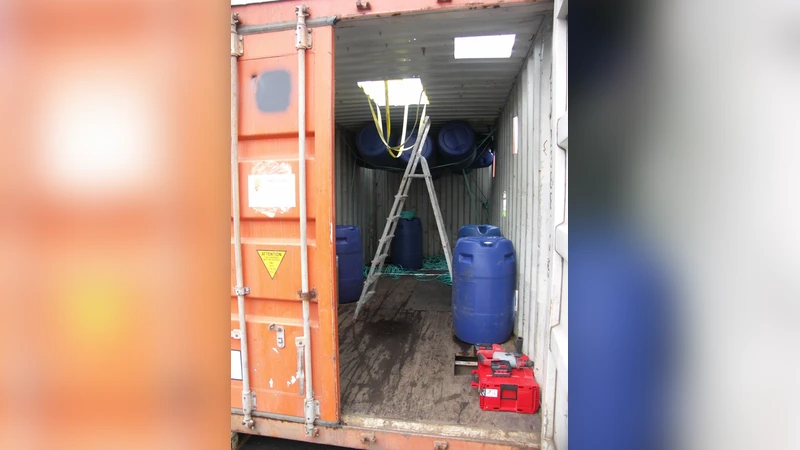
The leeway of 20-foot containers in typical distress conditions is established through field experiments in a Norwegian fjord and in open-ocean conditions off the coast of France with wind speed ranging from calm to 14 m/s. The experimental setup is described in detail and certain recommendations given for experiments on objects of this size. The results are compared with the leeway of a scaled-down container before the full set of measured leeway characteristics are compared with a semi-analytical model of immersed containers. Our results are broadly consistent with the semi-analytical model, but the model is found to be sensitive to choice of drag coefficient and makes no estimate of the cross-wind leeway of containers. We extend the results from the semi-analytical immersion model by extrapolating the observed leeway divergence and estimates of the experimental uncertainty to various realistic immersion levels. The sensitivity of these leeway estimates at different immersion levels are tested using a stochastic trajectory model. Search areas are found to be sensitive to the exact immersion levels, the choice of drag coefficient and somewhat less sensitive to the inclusion of leeway divergence. We further compare the search areas thus found with a range of trajectories estimated using the semi-analytical model with only perturbations to the immersion level. We find that the search areas calculated without estimates of crosswind leeway and its uncertainty will grossly underestimate the rate of expansion of the search areas. We recommend that stochastic trajectory models of container drift should account for these uncertainties by generating search areas for different immersion levels and with the uncertainties in crosswind and downwind leeway reported from our field experiments.
💡 Research Summary
The paper presents a comprehensive field‑based investigation of the leeway (drift) characteristics of standard 20‑foot shipping containers under a range of immersion conditions. Experiments were carried out in two contrasting marine environments: a Norwegian fjord, which offers complex bathymetry and variable tidal currents, and an open‑ocean site off the French coast, representing relatively uniform oceanic flow. Wind speeds were systematically varied from calm to 14 m s⁻¹ in 2 m s⁻¹ increments, and for each wind regime the containers were observed for at least 30 minutes while their positions were recorded at ≥1 Hz using high‑precision GPS and shore‑based radar.
A key experimental variable was the degree of immersion. By filling the container with water, the authors created five distinct immersion levels (0 % – fully buoyant, 30 %, 50 %, 70 % and 100 % – fully submerged). This approach mimics real‑world loss‑of‑cargo scenarios where a container may be partially flooded after a shipwreck or after being dropped overboard. For each immersion level the down‑wind leeway (component parallel to the wind) and cross‑wind leeway (component perpendicular to the wind) were extracted.
To validate the field data, a 1:10 scale model of the container was tested under identical wind conditions. The scaled experiments reproduced the down‑wind leeway within 5 % of the full‑scale values, confirming the geometric similarity of the drag forces. However, the cross‑wind component was under‑predicted by roughly 20 % in the model, indicating that small‑scale surface roughness and attached debris, which are difficult to replicate at reduced scale, have a non‑negligible effect on lateral drift.
The authors then compared the measurements with a semi‑analytical immersion model derived from classic leeway theory:
\
Comments & Academic Discussion
Loading comments...
Leave a Comment