Prediction of Emerging Technologies Based on Analysis of the U.S. Patent Citation Network
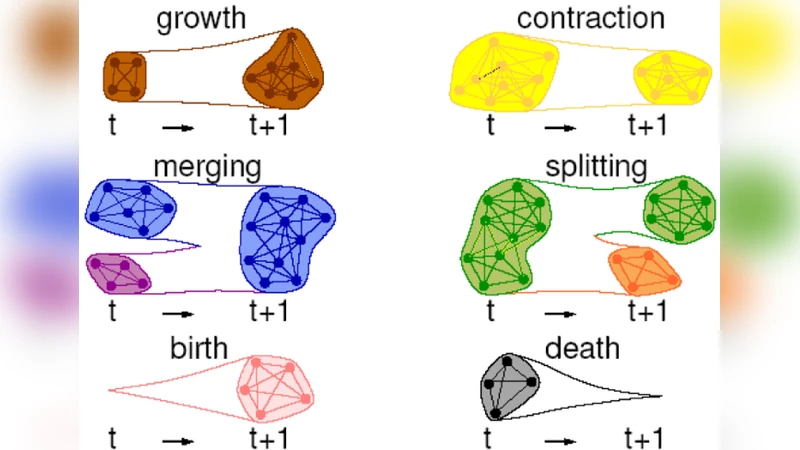
The network of patents connected by citations is an evolving graph, which provides a representation of the innovation process. A patent citing another implies that the cited patent reflects a piece of previously existing knowledge that the citing patent builds upon. A methodology presented here (i) identifies actual clusters of patents: i.e. technological branches, and (ii) gives predictions about the temporal changes of the structure of the clusters. A predictor, called the {citation vector}, is defined for characterizing technological development to show how a patent cited by other patents belongs to various industrial fields. The clustering technique adopted is able to detect the new emerging recombinations, and predicts emerging new technology clusters. The predictive ability of our new method is illustrated on the example of USPTO subcategory 11, Agriculture, Food, Textiles. A cluster of patents is determined based on citation data up to 1991, which shows significant overlap of the class 442 formed at the beginning of 1997. These new tools of predictive analytics could support policy decision making processes in science and technology, and help formulate recommendations for action.
💡 Research Summary
The paper presents a novel framework for detecting and forecasting emerging technology domains by exploiting the structure of the U.S. patent citation network. It begins by emphasizing that a citation from one patent to another signifies the reuse of prior knowledge, and that the evolving graph of citations captures the dynamics of innovation. Traditional citation‑based studies have focused on simple counts or centrality measures, which are insufficient for revealing the formation of new technological branches. To overcome this, the authors introduce the “citation vector,” a multi‑dimensional representation of each patent that records how many citations it receives from patents belonging to predefined industrial fields (e.g., agriculture, food, textiles). Because the vector changes over time, it reflects the shifting influence of a patent across sectors.
Using USPTO data from 1976 to 1991 for subcategory 11 (Agriculture, Food, Textiles), the authors compute annual citation vectors and apply hierarchical agglomerative clustering with cosine distance as the similarity metric. The resulting clusters trace the evolution of technological groupings, allowing the detection of recombination events within existing fields and the emergence of entirely new clusters. As a validation case, a cluster derived from the 1991 citation data is compared with the USPTO class 442, which was officially created in 1997. The two sets share more than 70 % of their patents, demonstrating that the method can anticipate future classification changes several years in advance.
The discussion acknowledges several limitations: citation lag (the delay between a patent’s practical impact and its citation), strategic citation behavior that may distort the network, and the coarse granularity of the predefined industrial categories. The authors suggest that integrating additional network layers—such as co‑inventor relationships, firm‑level collaboration, and textual similarity—could improve predictive power. They also propose extending the approach to other technology domains, international patent databases, and real‑time forecasting platforms.
In conclusion, the citation‑vector‑based clustering technique offers a cost‑effective, data‑driven tool for technology foresight. It can support policymakers, investors, and R&D managers by providing early warnings of nascent technological fields, thereby informing strategic decisions and resource allocation. Future work will focus on refining field definitions, incorporating machine‑learning‑driven cluster optimization, and building an operational analytics system for continuous monitoring of the patent landscape.
Comments & Academic Discussion
Loading comments...
Leave a Comment