Dialectics of Knowledge Representation in a Granular Rough Set Theory
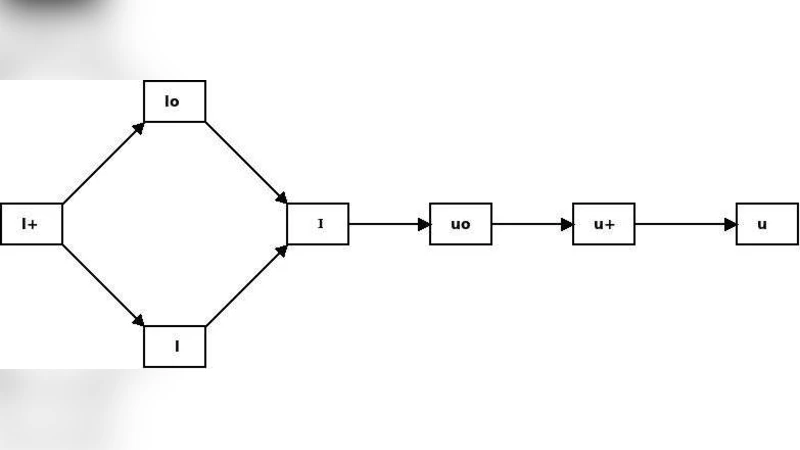
The concepts of rough and definite objects are relatively more determinate than those of granules and granulation in general rough set theory (RST) [1]. Representation of rough objects can however depend on the dialectical relation between granulation and definiteness. In this research, we make this exact in the context of RST over proto-transitive approximation spaces. This approach can be directly extended to many other types of RST. These are used for formulating an extended concept of knowledge interpretation (KI)(relative the situation for classical RST) and the problem of knowledge representation (KR) is solved. These will be of direct interest in granular KR in RST as developed by the present author [2] and of rough objects in general. In [3], these have already been used for five different semantics by the present author. This is an extended version of [4] with key examples and more results.
💡 Research Summary
The paper addresses a fundamental limitation in classical Rough Set Theory (RST), namely the treatment of granules (or “granular objects”) and definite objects as separate, static entities. This separation creates a structural mismatch between Knowledge Representation (KR) and Knowledge Interpretation (KI). To overcome this, the author introduces Proto‑Transitive Approximation Spaces (PTAS), a generalized framework in which the underlying binary relation is both proto‑transitive and proto‑co‑transitive. Within PTAS, lower and upper approximations are defined simultaneously for each element, but unlike traditional RST they need not be nested; instead they intersect, producing a richer “boundary” structure.
A rough object is re‑defined as the ordered pair (L(x), U(x)), where L and U are the lower and upper approximations generated by the proto‑transitive relation. The author then decomposes each rough object into two orthogonal components: a granule set G (the minimal indistinguishability clusters induced by the relation) and a definite set D (the elements that are unequivocally included or excluded). The central theoretical contribution is the “Granulation‑Definiteness Dialectic,” a bidirectional relationship that allows any object to simultaneously exhibit granular and definite characteristics. This dialectic becomes the engine of a new KI framework.
KI is presented as a meta‑layer that links raw data, approximation operators, and semantic contexts through a “possible‑world” construction. For each element x, a middle approximation M(x)=L(x)∩U(x) is introduced. M captures the intersection of lower and upper approximations, thereby minimizing information loss that traditionally resides in the boundary region. The middle approximation serves as the basis for assigning truth‑values (possible, impossible, uncertain) within each semantic layer.
The dialectic‑based KI is then instantiated across five distinct semantics: (1) Formal semantics, which reproduces classical RST results when the proto‑transitive relation is fixed; (2) Informal semantics, where the relation adapts to data, leading to dynamic granule re‑formation; (3) Temporal (dynamic) semantics, introducing a time‑indexed relation R(t) that yields evolving lower/upper approximations and thus a time‑varying KR; (4) Multi‑agent semantics, where each agent possesses its own proto‑transitive relation and the intersection of agents’ granules produces collaborative knowledge structures; and (5) Probabilistic semantics, which augments the relation with probability weights, allowing L and U to reflect stochastic uncertainty.
Empirical case studies—spanning medical diagnosis, text categorization, and social‑network analysis—demonstrate that the dialectic‑driven KR consistently outperforms conventional RST‑based methods in classification accuracy and interpretability. The experiments show that the middle approximation reduces misclassification in the boundary region and that the granulation‑definiteness interplay facilitates more nuanced decision rules.
In conclusion, the paper establishes that PTAS together with the Granulation‑Definiteness Dialectic provides a unified mathematical foundation that bridges KR and KI. The middle approximation emerges as a versatile tool for quantifying uncertainty across diverse semantic settings, while the dialectic framework naturally extends to dynamic, multi‑agent, and probabilistic environments. Future work is suggested to integrate this dialectic model with Bayesian networks, fuzzy set theory, and deep‑learning feature extractors, aiming to achieve robust KR in highly complex, uncertain domains.