Information-Theoretic Measures of Influence Based on Content Dynamics
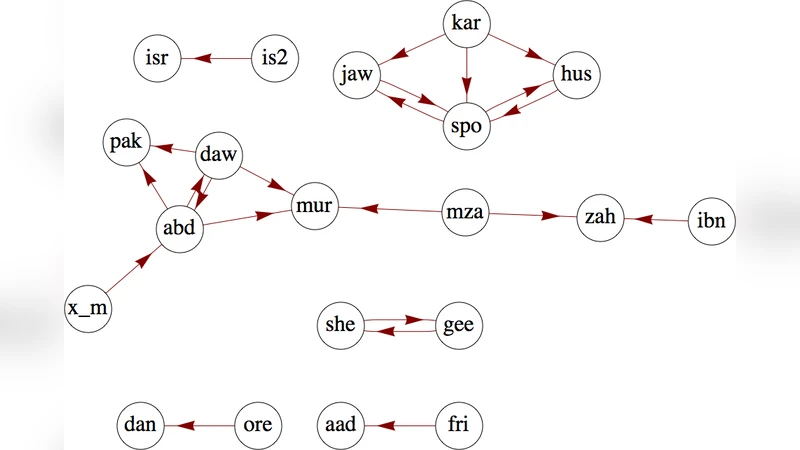
The fundamental building block of social influence is for one person to elicit a response in another. Researchers measuring a “response” in social media typically depend either on detailed models of human behavior or on platform-specific cues such as re-tweets, hash tags, URLs, or mentions. Most content on social networks is difficult to model because the modes and motivation of human expression are diverse and incompletely understood. We introduce content transfer, an information-theoretic measure with a predictive interpretation that directly quantifies the strength of the effect of one user’s content on another’s in a model-free way. Estimating this measure is made possible by combining recent advances in non-parametric entropy estimation with increasingly sophisticated tools for content representation. We demonstrate on Twitter data collected for thousands of users that content transfer is able to capture non-trivial, predictive relationships even for pairs of users not linked in the follower or mention graph. We suggest that this measure makes large quantities of previously under-utilized social media content accessible to rigorous statistical causal analysis.
💡 Research Summary
The paper tackles the fundamental problem of measuring social influence on online platforms: how the content posted by one user can elicit a response in another. Traditional approaches rely heavily on platform‑specific signals such as retweets, mentions, hashtags, or on detailed behavioral models that attempt to capture the myriad motivations behind human expression. Both strategies have serious drawbacks. Platform cues are sparse and biased, while behavioral models are often brittle, require extensive calibration, and cannot easily scale to the massive, heterogeneous text streams that dominate modern social media.
To overcome these limitations, the authors introduce content transfer, an information‑theoretic metric that quantifies the predictive effect of one user’s past content on another user’s future content in a completely model‑free manner. Formally, for users A and B, content transfer is defined as the conditional mutual information
\
Comments & Academic Discussion
Loading comments...
Leave a Comment